
Handstand is an inversion supported through the hands and arms, with meaningful fall risk. Do not kick up alone or use this article as a tutorial; learn progressions, spotting, and exit strategy from a qualified teacher in a clear space.
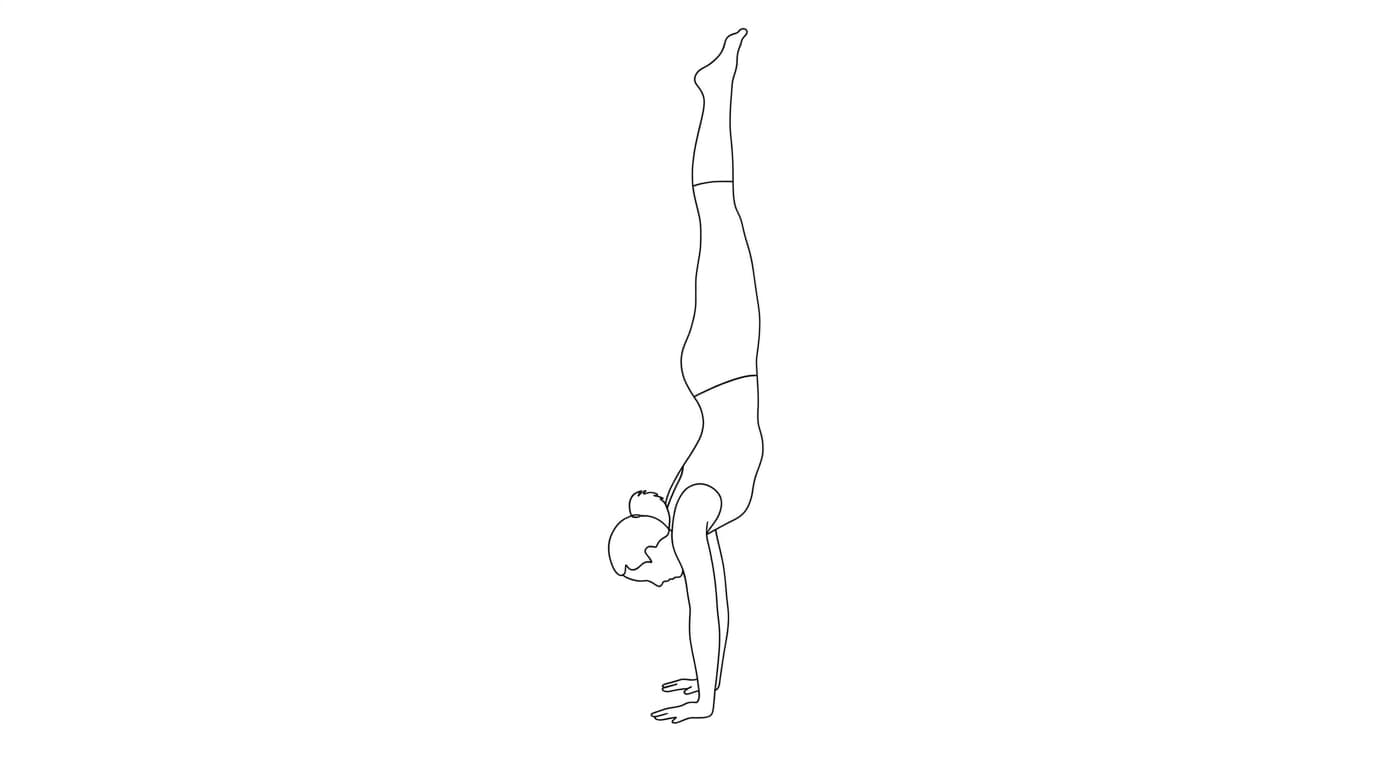
What is Handstand?
Adho Mukha Vrikshasana is a hand-supported inversion. Entry methods vary and require upper-body strength, balance, space, and a reliable way to exit.
How should the posture be approached?
Learn preparation and spotting from a qualified teacher. This page intentionally does not explain how to kick up.
- Do not practice alone or near hard furniture, walls, or glass.
- Do not place uncontrolled weight on the head or neck.
- Stop for wrist, shoulder, or back pain, dizziness, or visual symptoms.
- Use a teacher-approved non-inverted preparation instead if unsure.
What is a lower-demand alternative?
Practice a wall-supported standing posture or a knees-down Plank variation with both feet grounded.
Common question: Can I learn Handstand by kicking at a wall?
Not from text alone. Kicking up without instruction and supervision carries avoidable fall risk.
References and further reading
These references provide general context. They do not validate every cue on this page or replace instruction from a qualified teacher.
- Yoga: Effectiveness and Safety National Center for Complementary and Integrative Health (NCCIH). General context on yoga safety; not pose-specific instruction or endorsement.