
Elephant Trunk Pose is a seated arm balance with one leg positioned over an arm. It demands hip mobility and wrist/shoulder strength; do not pull the leg into place or attempt to lift without qualified instruction and a clear padded area.
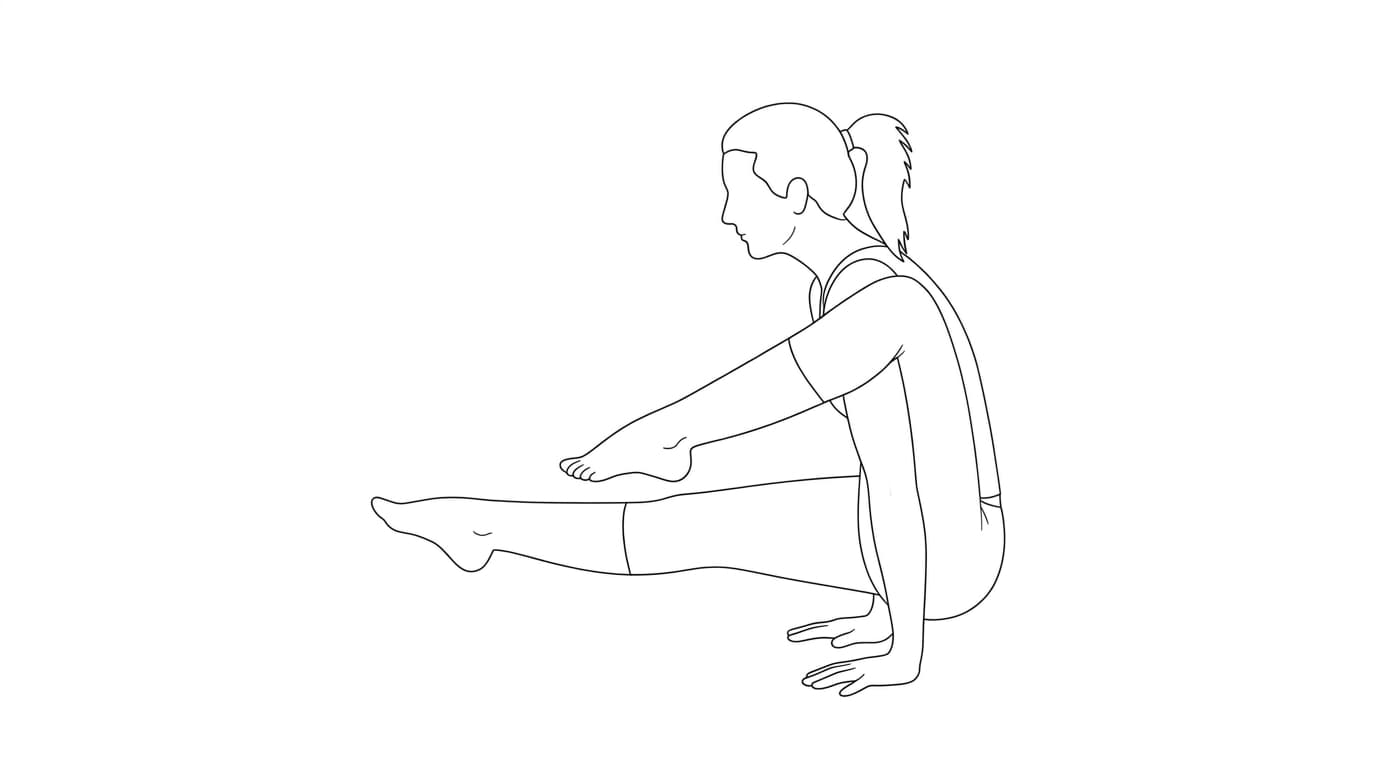
What is Elephant Trunk?
Eka Hasta Bhujasana is an advanced seated arm balance involving a leg positioned over one arm. The leg position and lift should be learned directly, not forced from a written description.
How should the pose be approached?
Work with a qualified teacher who can assess the hip, knee, wrist, and shoulder demands. This page intentionally does not provide lift-off steps.
- Do not pull the knee or ankle onto the arm.
- Keep the face clear of hard surfaces and use suitable supervision.
- Stop for joint pain, numbness, or wrist/shoulder strain.
- Exit with control before fatigue develops.
What is a lower-demand alternative?
Practice a comfortable seated posture with both feet grounded, or a supported hands-on-block press with no leg bind.
Common question: Can I use a strap to pull the leg higher?
Do not use a strap to force the leg into position; seek direct assessment.
References and further reading
These references provide general context. They do not validate every cue on this page or replace instruction from a qualified teacher.
- Yoga: Effectiveness and Safety National Center for Complementary and Integrative Health (NCCIH). General context on yoga safety; not pose-specific instruction or endorsement.