
Halasana, or Plough Pose, is an inverted forward-folding posture in which the legs travel overhead. It can place significant demand on the neck and shoulders, so this site provides an overview but no self-guided entry steps.
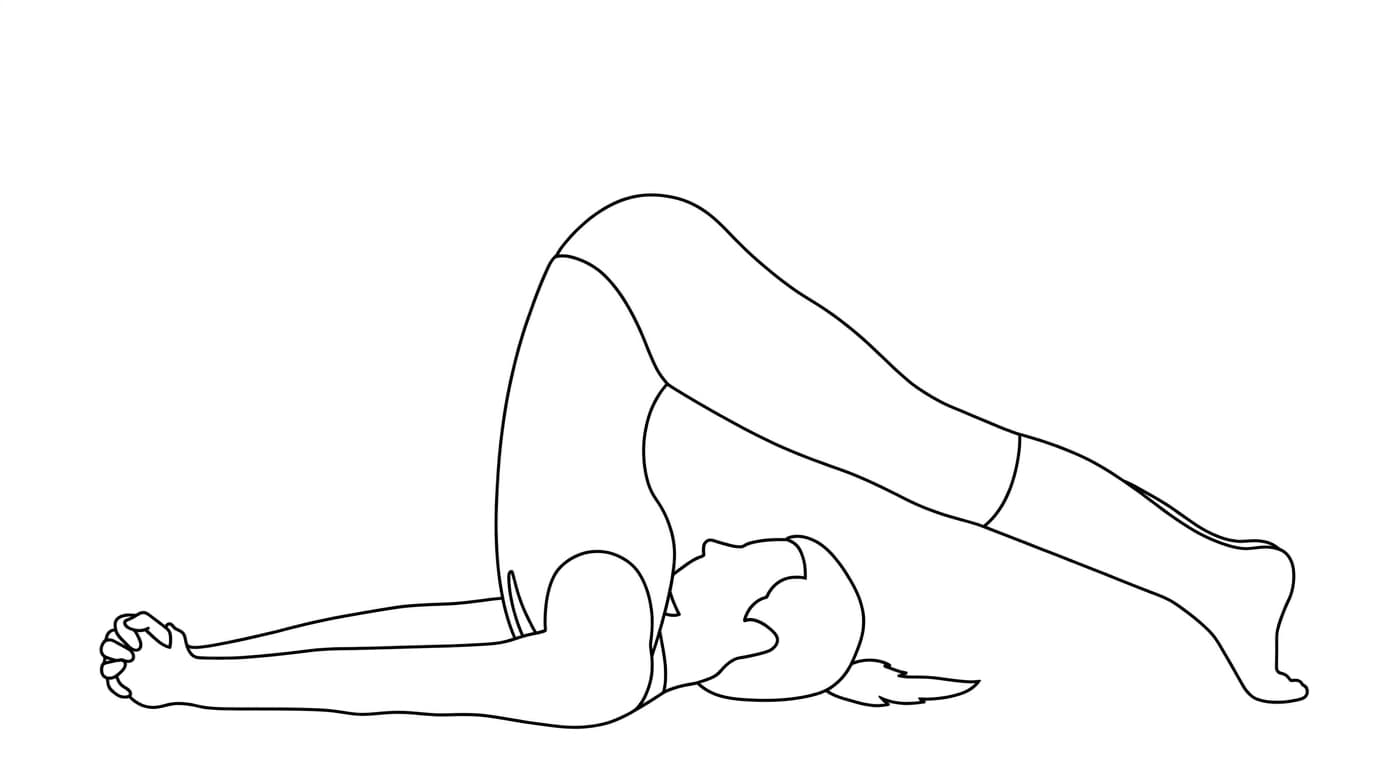
What is Plough Pose?
Plough is sometimes taught after Shoulderstand, but sequence and setup depend on the teacher and tradition. The feet do not need to reach the floor.
The pose is not a suitable place to force flexibility or compress the neck.
How do you practice Plough Pose?
Instruction intentionally omitted. Learn only through qualified in-person instruction; do not pull the legs overhead or use a wall as a substitute for supervision.
Alignment cues
- Avoid turning the head while inverted.
- Do not force the feet toward the floor or compress the neck.
Modifications
- Choose a non-inverted rest or a gentle supine movement instead. Ask an instructor about alternatives suited to you.
Variations
- Supported and bent-knee preparations are taught in some classes; learn them in person.
Common mistakes
- Using momentum to throw the legs overhead.
- Pushing through neck or shoulder pressure.
- Attempting the pose without a controlled exit.
Safety notes
- Beginners should avoid extreme inversions. Seek individualized guidance for neck, back, shoulder, eye, blood-pressure, balance, or pregnancy-related concerns.
- Stop for pain, numbness, visual changes, dizziness, or difficulty breathing.
Common questions
Do the feet need to touch the floor?
No. Do not force the feet toward the floor. This site does not provide a self-guided entry sequence for Plough Pose.
References and further reading
These references provide general context. They do not validate every cue on this page or replace instruction from a qualified teacher.
- Yoga: Effectiveness and Safety National Center for Complementary and Integrative Health (NCCIH). General background on yoga research, common injury considerations, and when to seek individualized guidance. It is not a pose-specific clinical assessment.