
Savasana is a supine resting posture commonly used at the end of a yoga practice. The body rests on the floor while the breath remains natural; bent knees, a side-lying position, or other supports are valid alternatives.
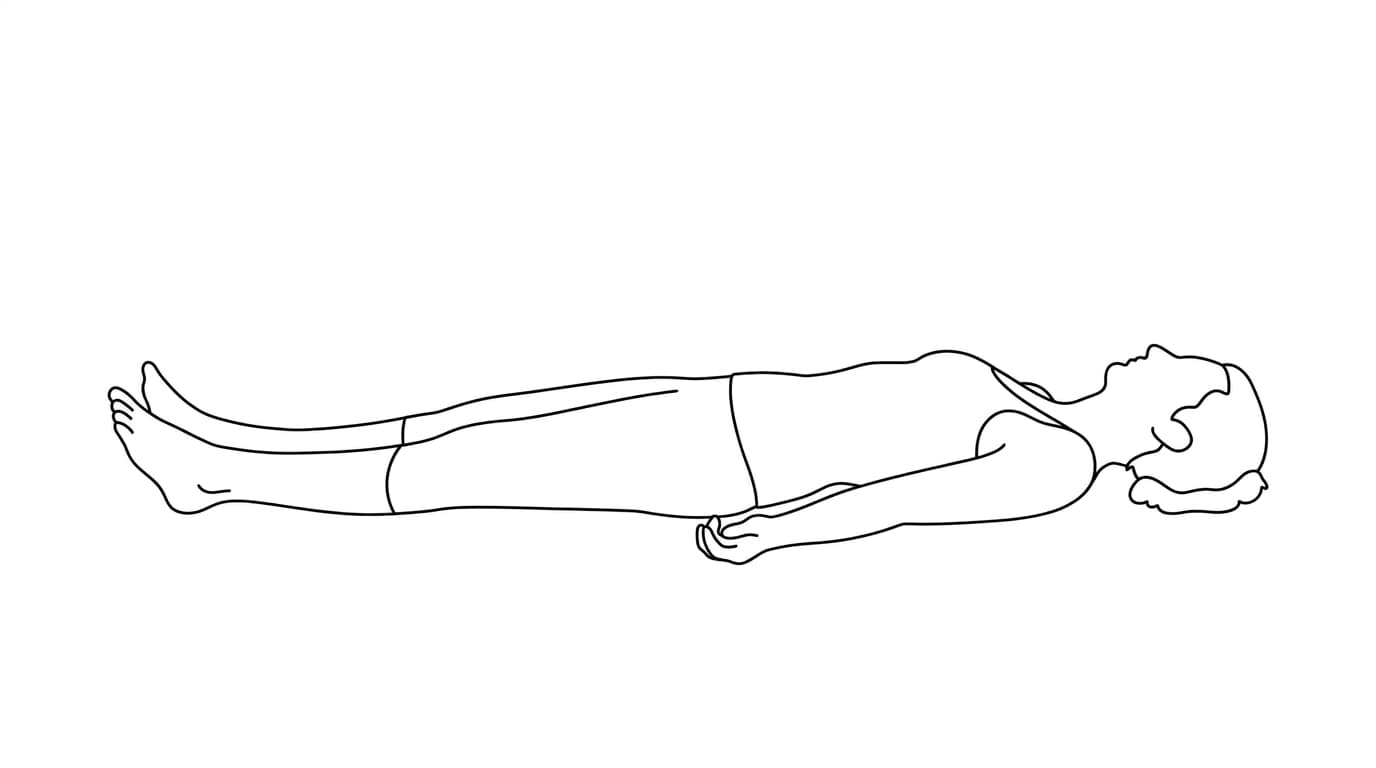
What is Corpse Pose?
Savasana is not a test of stillness. If lying on the back feels uncomfortable or emotionally unsettling, choose a supported side-lying or seated rest instead.
A blanket under the knees or head can change the amount of effort required to settle.
How do you practice Corpse Pose?
Move slowly, keep the breath comfortable, and use the version that feels stable for your body today.
- Lie on your back with the legs resting comfortably apart, or keep the knees bent.
- Place the arms in a position that allows the shoulders to soften.
- Support the head or knees if that feels more comfortable.
- Let the breath move naturally. If thoughts arise, notice them without needing to stop them.
- To finish, make a small movement, roll to one side if comfortable, and return to sitting slowly.
Alignment cues
- Choose a position that does not strain the lower back or neck.
- Keep the eyes open or closed according to preference.
- There is no need to control the breath.
Modifications
- Place a bolster or folded blanket beneath the knees.
- Rest on one side with support between the knees.
- Sit in a chair with the feet supported.
Variations
- Supported supine rest.
- Side-lying rest.
- Seated quiet pause.
Common mistakes
- Treating stillness as mandatory.
- Staying in a position that causes pain or distress.
- Trying to force the mind to become blank.
Safety notes
- Change position or stop if lying down causes pain, shortness of breath, or distress.
- Meditation and relaxation practices are not a replacement for medical or mental-health care.
- NCCIH notes that meditation safety has not been examined extensively; experiences vary.
Common questions
Do I have to lie completely still?
No. Adjust your position whenever needed. A supported or side-lying rest can serve the same purpose of pausing at the end of practice.
References and further reading
These references provide general context. They do not validate every cue on this page or replace instruction from a qualified teacher.
- Yoga: Effectiveness and Safety National Center for Complementary and Integrative Health (NCCIH). General background on yoga research, common injury considerations, and when to seek individualized guidance. It is not a pose-specific clinical assessment.
- Meditation and Mindfulness: Effectiveness and Safety National Center for Complementary and Integrative Health (NCCIH). Evidence overview and discussion of the limits of available safety research.