
Kurmasana is an advanced seated forward-folding posture with demanding hip and shoulder positions. It should not be forced or learned from text alone; use a qualified teacher, keep the knees supported, and choose a simple seated alternative if there is any strain.
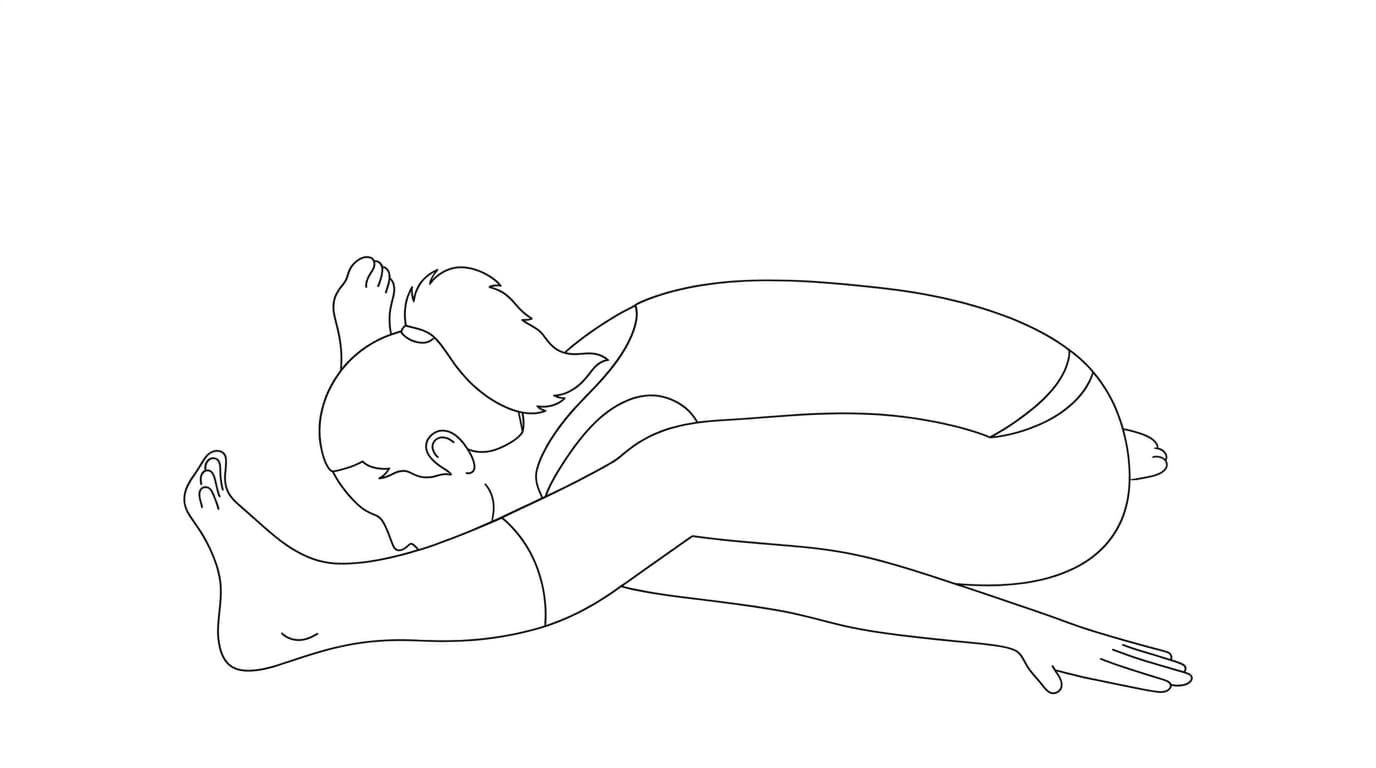
What is Tortoise Pose?
Kurmasana is a demanding seated posture associated with a deep forward fold and shoulder/hip positioning. Variations exist, and the catalog name alone is not enough to prescribe a safe entry technique.
How should this pose be approached?
Seek in-person instruction from a qualified teacher familiar with the specific version. This page intentionally does not provide steps for entering the advanced shape.
- Do not push the legs or shoulders into position.
- Stop if the knees, hips, back, or shoulders feel compressed or painful.
- Keep breathing freely and leave the posture slowly with teacher guidance.
What is a gentler alternative?
Practice Staff Pose or a mild, supported seated forward fold with knees bent. Rest the hands on the thighs and keep the spine comfortable rather than pursuing depth.
When should you avoid self-practice?
Do not attempt the full posture without direct instruction, especially if you have joint or back concerns, pain, numbness, or limited experience with deep forward folds. This draft requires qualified review.
Common question: Can I use this article to learn the full pose?
No. It explains the pose's general category and safety boundary; a qualified teacher should demonstrate and adapt the specific technique.
References and further reading
These references provide general context. They do not validate every cue on this page or replace instruction from a qualified teacher.
- Yoga: Effectiveness and Safety National Center for Complementary and Integrative Health (NCCIH). General context on yoga safety; not pose-specific instruction or endorsement.