
Seated Forward Bend I is catalogued as Paschimottanasana A. This page gives a gentle, bent-knee preparation rather than a lineage-specific version of A. Reaching the feet or bringing the torso to the thighs is not required; use support and stop before strain.
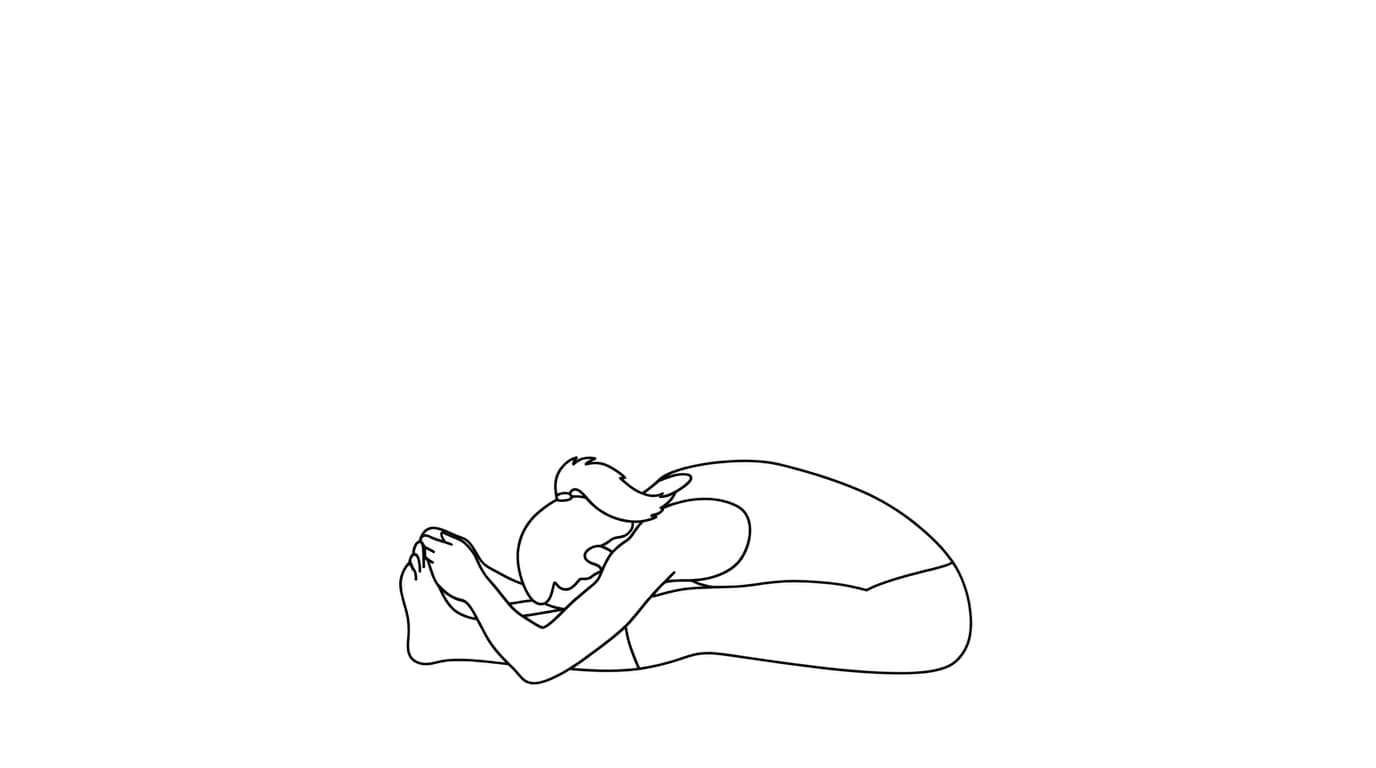
What is Seated Forward Bend I?
The catalog identifies this entry as Seated Forward Bend I (Paschimottanasana A). Lettered methods can differ; the instructions below are a gentle base-pose preparation, not a verified lineage-specific A-form tutorial. Keep the movement modest and avoid pulling on the feet.
A strap can provide reach without forcing the spine.
How do you explore a supported seated forward fold?
Move slowly, keep the breath comfortable, and use the version that feels stable for your body today.
- Sit on a folded blanket with the legs extended or knees slightly bent.
- Inhale and lengthen the torso upward without lifting the shoulders.
- Exhale and hinge forward from the hips only as far as comfortable.
- Rest the hands on the thighs, shins, or a strap; keep the knees bent if the back rounds strongly.
- Return upright slowly, using the hands for support if needed.
Alignment cues
- Prioritize a comfortable hinge over reaching the toes.
- Bend the knees enough to keep the back from being pulled into a painful curve.
- Let the neck remain relaxed.
Modifications
- Sit on a folded blanket.
- Bend the knees and place a bolster over the thighs.
- Use a strap loosely around the feet; do not pull yourself deeper.
Variations
- Bent-knee forward fold.
- Supported forward fold with a bolster on the thighs.
Common mistakes
- Pulling the feet to force depth.
- Locking the knees or rounding through pain.
- Holding the breath.
Safety notes
- Use care with back, hamstring, or knee concerns. Stop if pain, numbness, or tingling occurs.
- Choose a seated neutral position if forward folding is uncomfortable.
Common questions
Do I need to touch my toes in this preparation?
No. Hands can rest on the thighs, shins, or a strap. A smaller hinge is a complete variation.
References and further reading
These references provide general context. They do not validate every cue on this page or replace instruction from a qualified teacher.
- Seated Forward Bend I Pocket Yoga. Used to confirm this catalog entry's lettered name, not as the source for the modified preparation below.
- Yoga: Effectiveness and Safety National Center for Complementary and Integrative Health (NCCIH). General background on yoga research, common injury considerations, and when to seek individualized guidance. It is not a pose-specific clinical assessment.