
Head to Knee III is a lineage-specific variation in the Janu Sirsasana family, with a bent-leg foot position that can challenge the ankle and knee. Do not infer the setup from the name; use direct qualified instruction and a simpler seated alternative if uncertain.
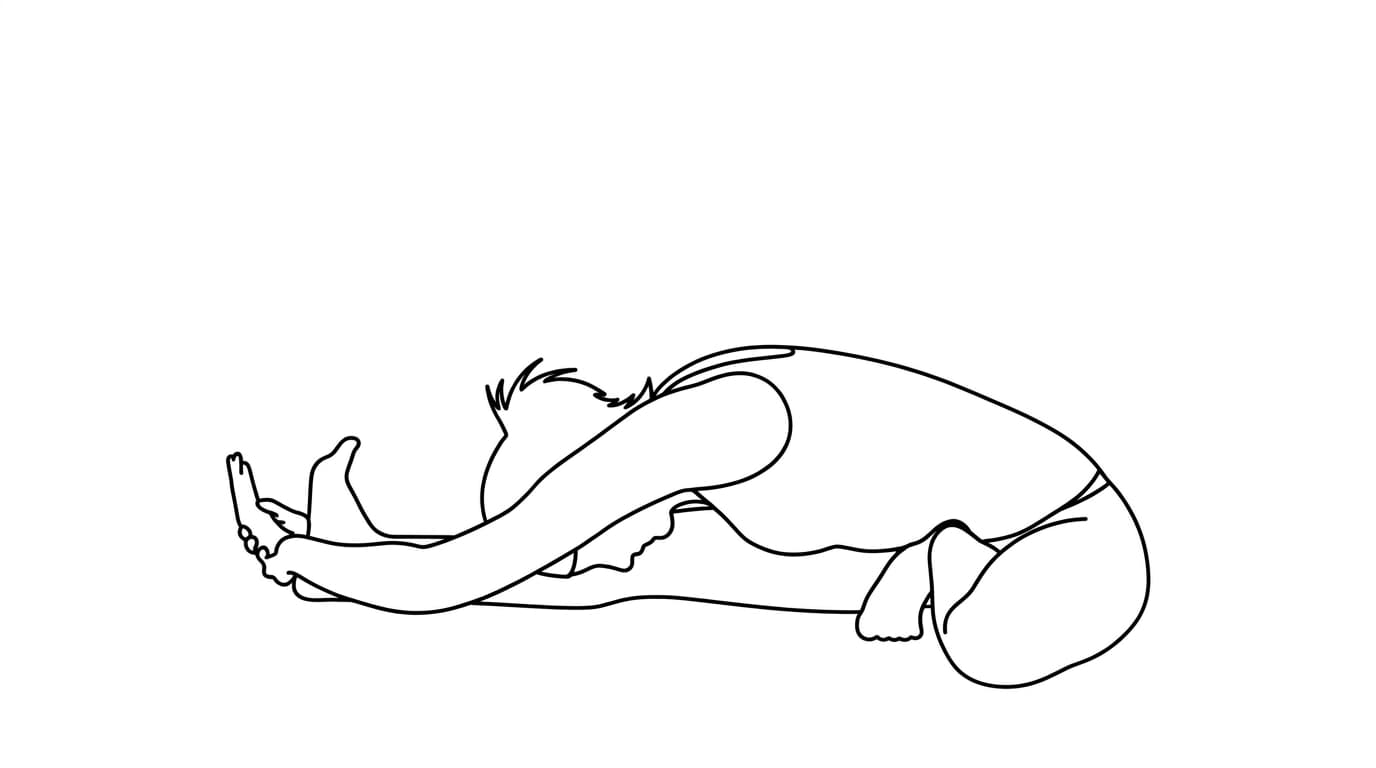
What is Head to Knee III?
Janu Sirsasana C is a named variation whose exact foot and ankle arrangement depends on the yoga method. The catalog entry does not establish a universally accepted setup.
How should this variation be approached?
Learn the specific version from a qualified teacher rather than forcing the foot into a position from text.
- Keep the torso upright until the leg arrangement is comfortable and stable.
- Do not press the bent knee toward the floor.
- Stop for ankle, knee, or hip pain, tingling, or numbness.
- Use support and leave the posture slowly with teacher guidance.
What is a lower-demand alternative?
Practice the A variation with a comfortable bent leg, sit on a chair, or return to Staff Pose.
When should you stop or seek guidance?
This variation should not be self-taught where the setup is unfamiliar. Detailed cues need lineage-specific verification and qualified review.
Common question: Should I fold forward once my foot is placed?
Only if a qualified teacher has confirmed the position is appropriate and it remains comfortable; a forward fold is not required.
References and further reading
These references provide general context. They do not validate every cue on this page or replace instruction from a qualified teacher.
- Yoga: Effectiveness and Safety National Center for Complementary and Integrative Health (NCCIH). General context on yoga safety; not pose-specific instruction.