
Wide-Legged Forward Bend I is a standing fold with the feet apart and hands supported on the floor, blocks, or a chair. Keep the knees soft and hinge only as far as comfortable; the head does not need to reach the floor.
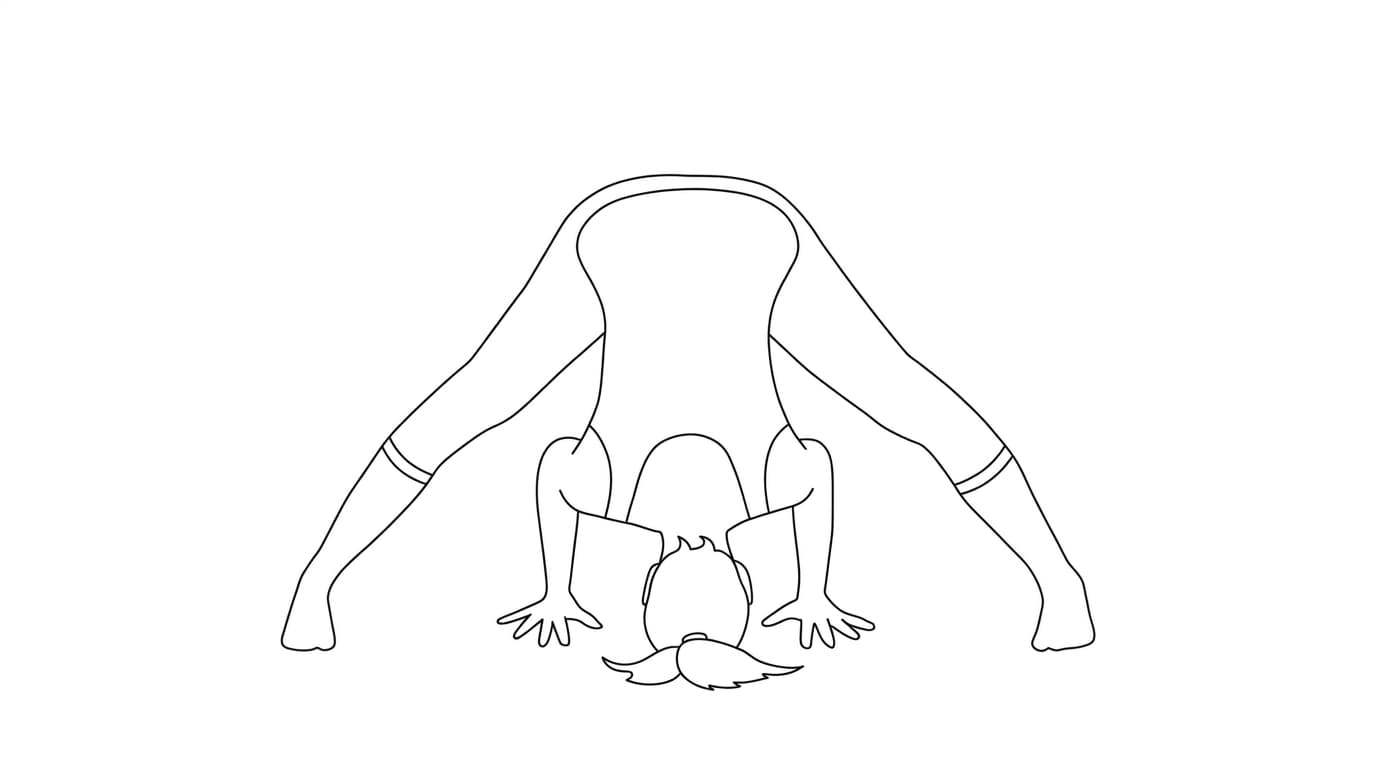
What is Wide-Legged Forward Bend I?
Prasarita Padottanasana A is one version of a wide-stance standing fold. Stance width and depth vary; a raised hand support is a useful adaptation.
How do you practice a supported version?
Stand on a stable surface with the feet wide enough for balance, not maximum range.
- Place the hands on the hips and soften the knees.
- Hinge forward from the hips a small amount while keeping the spine comfortable.
- Set the hands on blocks, a chair, or the floor at a height that does not strain the back.
- Keep weight distributed through both feet and breathe easily.
- Bend the knees slightly more, bring the hands to the hips, and rise slowly.
How can you modify the fold?
Narrow the stance, bend the knees, raise the hands, or keep the torso upright. Avoid lowering the head if that causes pressure or dizziness.
When should you stop or modify?
Stop for sharp back or leg pain, numbness, or dizziness. This draft awaits teacher review.
Common question: Do the hands need to reach the floor?
No. Use a block or chair to choose a comfortable height.
References and further reading
These references provide general context. They do not validate every cue on this page or replace instruction from a qualified teacher.
- Yoga: Effectiveness and Safety National Center for Complementary and Integrative Health (NCCIH). General context on yoga safety and adapting postures; not pose-specific instruction.