
Ardha Matsyendrasana is a seated twist practiced in several forms. Keep the rotation gentle and led by the torso; there is no need to bind the arms or force the knees into a particular position.
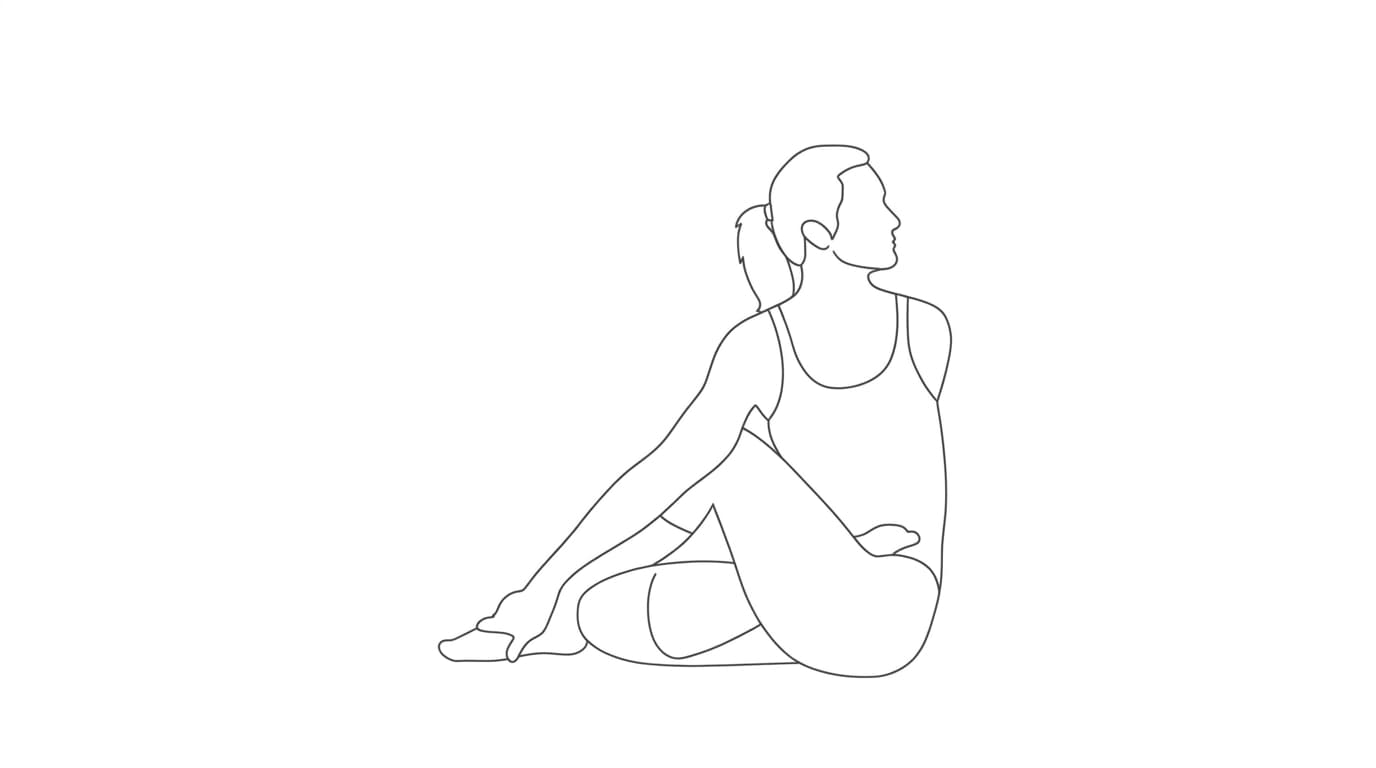
Sanskrit nameArdha Matsyendrasana
Practice typeSeated twist
Suggested levelBeginner to intermediate
Practice within a comfortable rangeThis guide is general education, not individualized medical advice. Stop if you experience sharp pain, numbness, dizziness, or breathing difficulty.
What is Half Spinal Twist?
Twisting poses vary across lineages and bodies. A seated version with both legs comfortable is a valid starting point.
Avoid using the arms as levers to wrench the spine.
How do you practice Half Spinal Twist?
Move slowly, keep the breath comfortable, and use the version that feels stable for your body today.
- Sit on a folded blanket with both legs extended or bent comfortably.
- Bend one knee and place the foot on the floor only if the hip and knee allow.
- Sit tall, then rotate the torso gently toward the bent knee without pulling.
- Rest the hands wherever they support an easy posture.
- Return to center slowly and repeat on the other side.
Alignment cues
- Keep the spine comfortably long.
- Let the breath remain natural.
- Reduce the twist if the hips or back feel strained.
Modifications
- Keep both legs extended and cross one ankle over the other.
- Sit on a chair and make a small turn.
- Use a folded blanket under the hips.
Variations
- Simple seated twist.
- Chair-supported twist.
Common mistakes
- Pulling hard with the arm to increase rotation.
- Forcing the knee down.
- Holding the breath.
Safety notes
- Modify or skip with back, hip, or knee concerns; avoid deep twists during pregnancy unless guided by a qualified prenatal instructor.
- Stop if pain, numbness, or dizziness occurs.
Common questions
How far should I twist?
Only as far as you can turn comfortably while breathing normally. A small rotation is enough.
References and further reading
These references provide general context. They do not validate every cue on this page or replace instruction from a qualified teacher.
- Yoga: Effectiveness and Safety National Center for Complementary and Integrative Health (NCCIH). General background on yoga research, common injury considerations, and when to seek individualized guidance. It is not a pose-specific clinical assessment.