
Tadasana, or Mountain Pose, is a standing yoga posture used to explore balance, foot contact, and an upright stance. The shape is quiet rather than rigid: the knees stay easy, the breath stays natural, and the gaze remains steady.
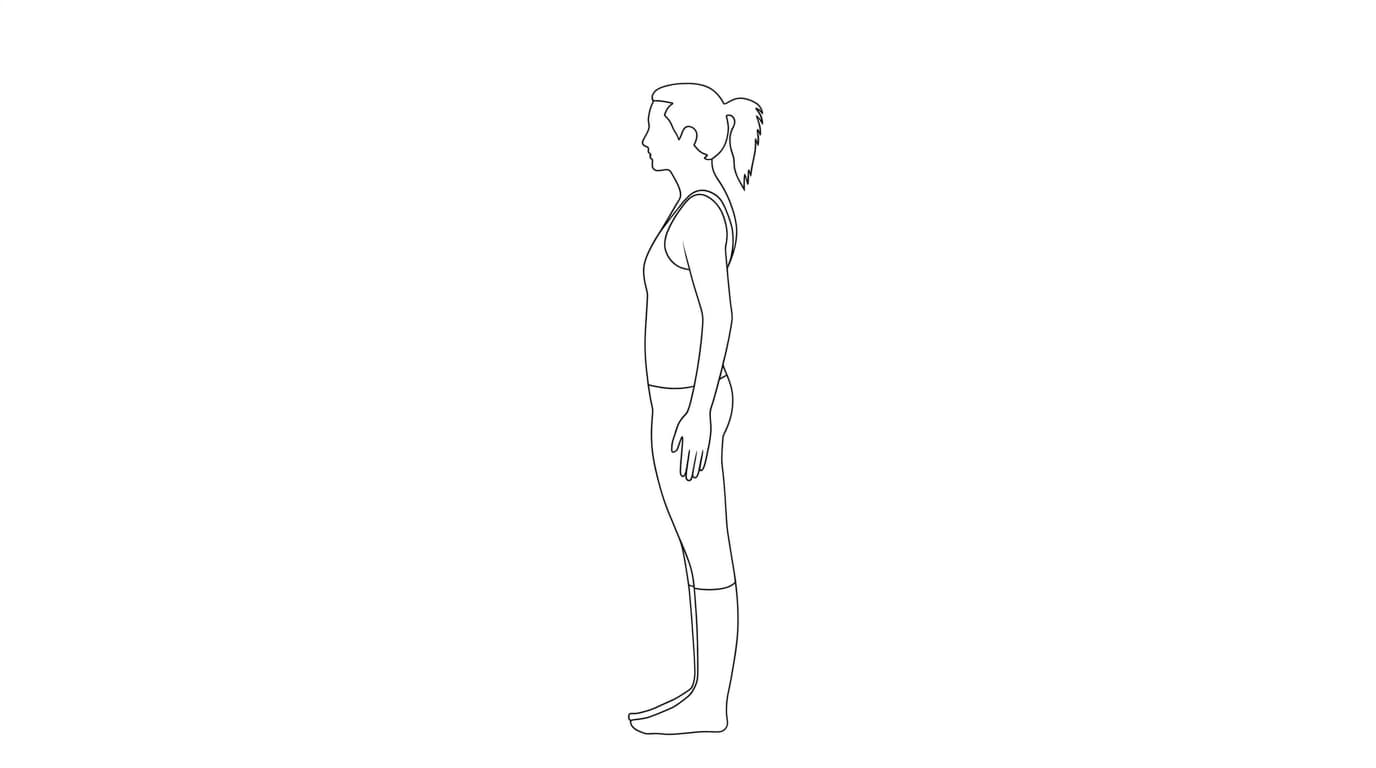
What is Mountain Pose?
Mountain Pose is often used as a starting or transition position. Small adjustments in the feet and weight can change how the stance feels.
There is no single ideal posture that fits every body. Use a comfortable stance and, when needed, stand near a wall or chair for support.
How do you practice Mountain Pose?
Move slowly, keep the breath comfortable, and use the version that feels stable for your body today.
- Stand with the feet together or about hip-width apart.
- Spread the toes if comfortable and notice how weight meets the floor across the feet.
- Keep the knees soft rather than locked. Let the pelvis rest neutrally without forcing it forward or back.
- Allow the shoulders to soften and the arms to rest by the sides.
- Look ahead, breathe naturally, and notice the support of the floor.
Alignment cues
- Distribute weight comfortably across both feet.
- Keep the jaw and shoulders relaxed.
- Think tall, not stiff.
Modifications
- Stand with feet hip-width apart for a broader base.
- Use a wall behind you or keep one hand on a stable chair if balance is uncertain.
- Sit tall in a chair to explore an upright position without standing.
Variations
- Arms overhead variation, only if the shoulders remain comfortable.
- Supported standing with the back near a wall.
Common mistakes
- Locking the knees or gripping the toes.
- Holding the breath while trying to create a “perfect” posture.
- Leaning into one foot without noticing.
Safety notes
- Use a stable support if balance is uncertain.
- Stop if standing brings on dizziness or pain and seek individualized guidance for persistent symptoms.
- NCCIH notes that people with balance issues or health conditions may need pose modifications.
Common questions
Is Mountain Pose just standing?
It is a deliberate standing practice: notice the feet, balance, and relaxed upright alignment without making the body rigid.
References and further reading
These references provide general context. They do not validate every cue on this page or replace instruction from a qualified teacher.
- Yoga: Effectiveness and Safety National Center for Complementary and Integrative Health (NCCIH). General background on yoga research, common injury considerations, and when to seek individualized guidance. It is not a pose-specific clinical assessment.