
Kakasana, often called Crow Pose, is an arm balance that requires wrist loading, balance, and a controlled exit. This page explains the pose category but does not provide a self-guided lift-off sequence.
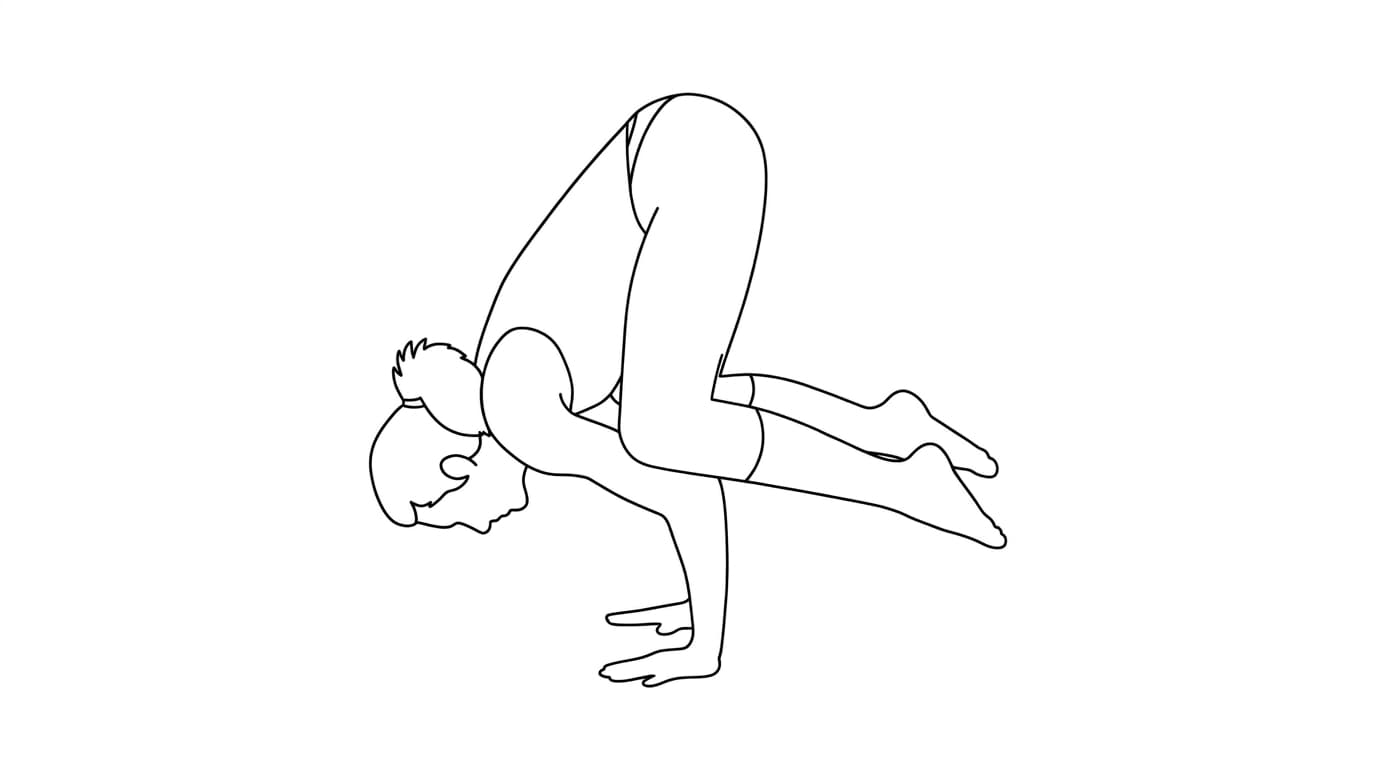
What is Crow Pose?
Crow and Crane are sometimes distinguished by arm position, but naming conventions vary. Both are weight-bearing balances and can involve a fall risk.
This page is an overview, not a recommendation to attempt an arm balance without instruction.
How do you practice Crow Pose?
Instruction intentionally omitted. Learn arm balances with a qualified teacher, appropriate preparation, and a clear exit; do not practice alone if a fall could cause injury.
Alignment cues
- A qualified teacher should assess wrist loading and safe entry/exit.
- Do not put pressure on the head or neck.
Modifications
- Practice a stable squat or supported tabletop instead.
Variations
- Preparatory arm-balance shapes vary; learn in person.
Common mistakes
- Attempting lift-off without understanding how to exit.
- Looking down and risking a forward fall.
- Practicing through wrist pain.
Safety notes
- Avoid self-teaching if balance, wrist, shoulder, or bone-health concerns apply.
- NCCIH advises beginners to avoid extreme practices and recommends qualified instruction.
Common questions
Is Crow Pose the same as Crane Pose?
Some teachers distinguish them by arm bend; terminology varies. Learn the specific form from the teacher using the name.
References and further reading
These references provide general context. They do not validate every cue on this page or replace instruction from a qualified teacher.
- Yoga: Effectiveness and Safety National Center for Complementary and Integrative Health (NCCIH). General background on yoga research, common injury considerations, and when to seek individualized guidance. It is not a pose-specific clinical assessment.