
Downward-Facing Dog is a weight-bearing yoga posture shaped like an inverted V. Hands and feet press into the floor while the hips move back; the knees may stay bent so the spine can lengthen without forcing the heels down.
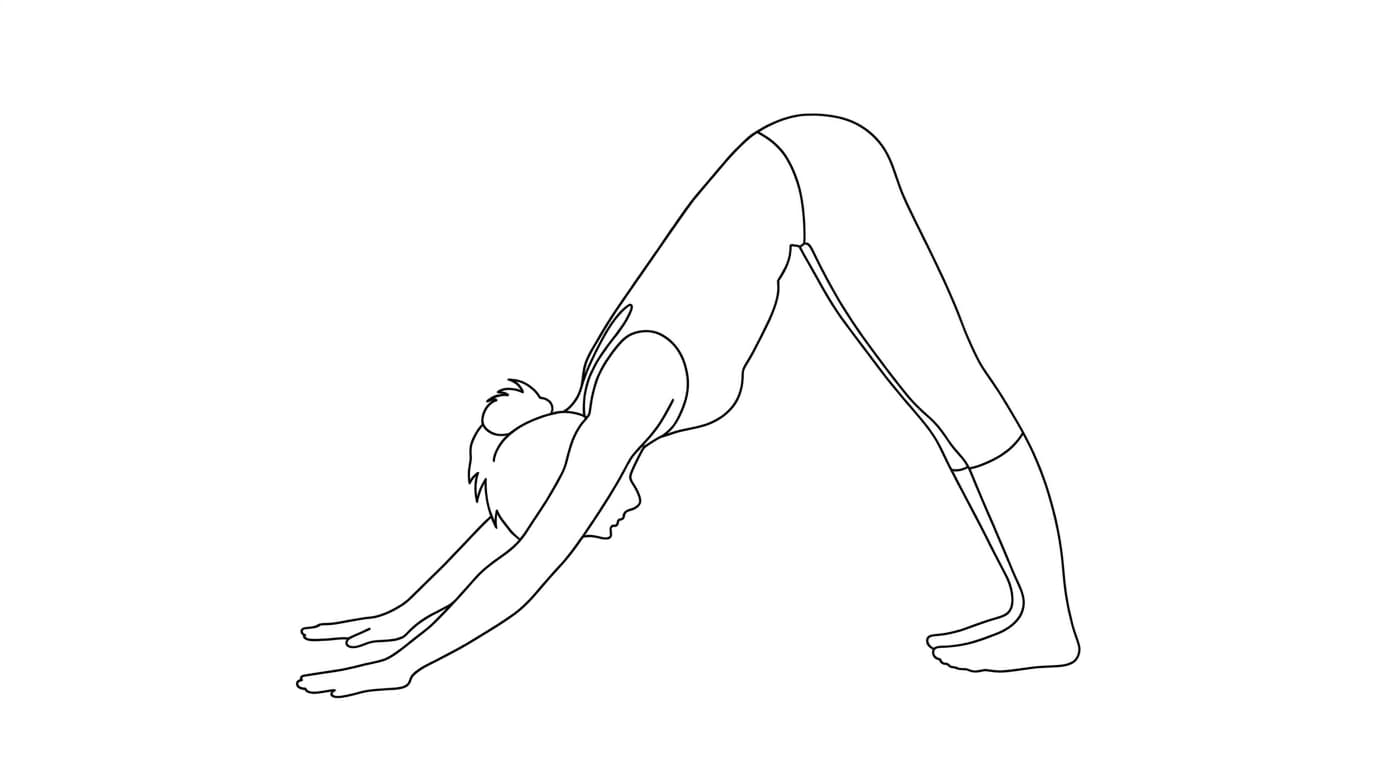
What is Downward-Facing Dog?
This posture asks the wrists, shoulders, and legs to share weight. It can be adapted with bent knees, hands on a wall, or a shorter stance.
The heels do not need to touch the floor. A long, comfortable spine matters more than making the shape look exact.
How do you practice Downward-Facing Dog?
Move slowly, keep the breath comfortable, and use the version that feels stable for your body today.
- Begin on hands and knees with hands slightly forward of the shoulders.
- Spread the fingers and press through the base of the fingers and palms.
- Tuck the toes and lift the knees, sending the hips up and back.
- Keep the knees bent as needed. Let the head rest between the upper arms without hanging heavily.
- Press the floor away, breathe comfortably, then lower the knees to exit.
Alignment cues
- Keep the neck relaxed and gaze toward the legs or floor.
- Bend the knees if the back rounds or the hamstrings pull strongly.
- Avoid sinking heavily into the wrists; distribute pressure across the hands.
Modifications
- Place the hands on a wall or sturdy counter to reduce floor loading.
- Use a shorter stance and bent knees.
- Rest in tabletop or Child’s Pose if the posture is not comfortable.
Variations
- Wall-supported Downward-Facing Dog.
- Short-stance version with deeply bent knees.
Common mistakes
- Forcing the heels to the floor.
- Rounding the back to straighten the legs.
- Holding the breath or pushing through wrist pain.
Safety notes
- This is a weight-bearing position. Adapt it for wrist, shoulder, or balance concerns and use a stable wall if appropriate.
- Avoid practicing through pain, numbness, or dizziness. Ask a qualified teacher or clinician about individual limitations.
- NCCIH advises people with health conditions or preexisting injuries to discuss modifications with appropriate professionals.
Common questions
Do my heels have to touch the floor?
No. Keep the knees bent and heels lifted if that allows a more comfortable, lengthened shape.
References and further reading
These references provide general context. They do not validate every cue on this page or replace instruction from a qualified teacher.
- Yoga: Effectiveness and Safety National Center for Complementary and Integrative Health (NCCIH). General background on yoga research, common injury considerations, and when to seek individualized guidance. It is not a pose-specific clinical assessment.