
Matsyasana, or Fish Pose, is a supine backbend that may be practiced with support under the upper back. Neck position and the range of extension vary; keep the throat comfortable and use a supported alternative if needed.
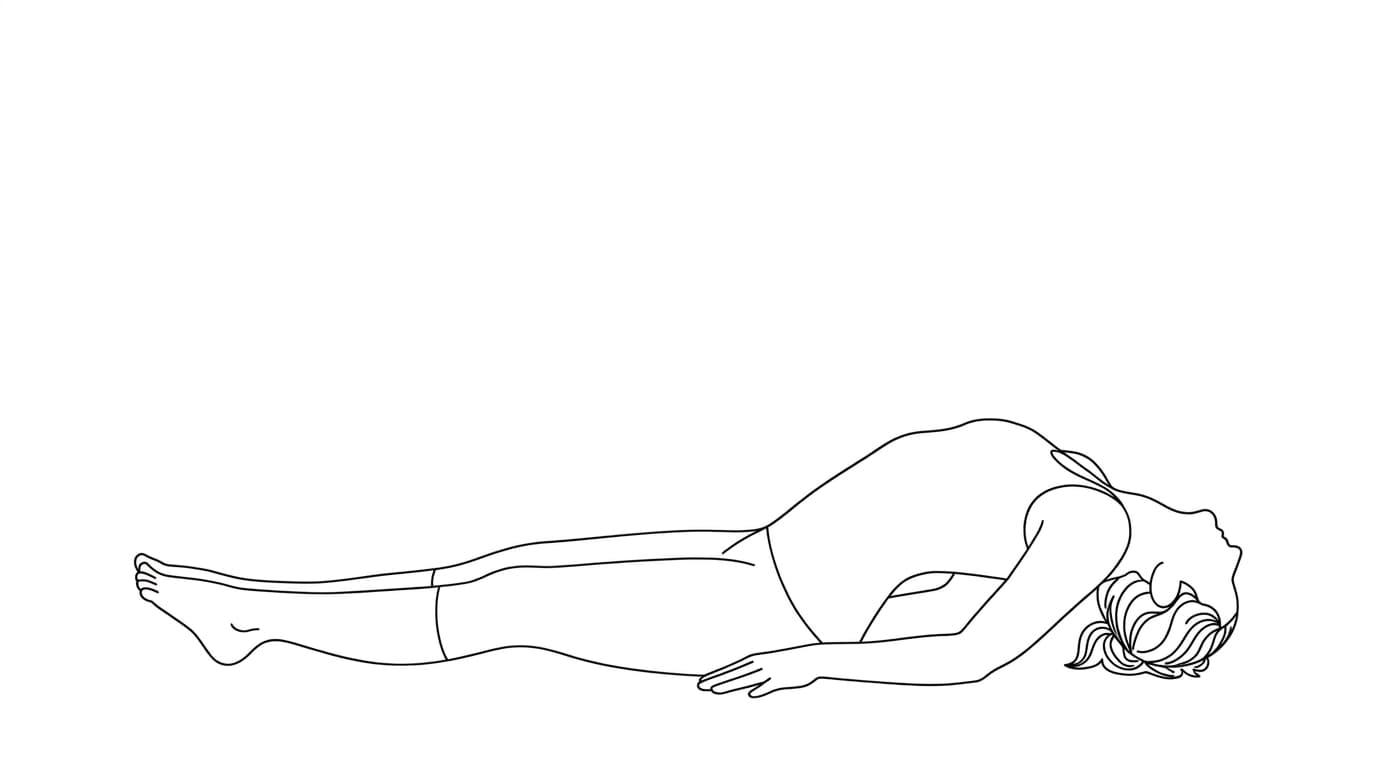
What is Fish Pose?
Fish Pose is taught in multiple forms, including versions with the legs crossed or extended and supported versions using props. This description focuses on a gentle, supported approach.
The head does not need to bear weight.
How do you practice Fish Pose?
Move slowly, keep the breath comfortable, and use the version that feels stable for your body today.
- Lie on your back with the knees bent and feet supported, or extend the legs if comfortable.
- Place a folded blanket or low bolster beneath the upper back, keeping the head supported.
- Let the shoulders rest without forcing the chest upward.
- Stay only while breathing and the neck remain comfortable, then roll to one side to come out.
Alignment cues
- Keep the head supported; avoid compressing the back of the neck.
- Use a low support and reduce the range if the throat feels strained.
Modifications
- Keep the head on the floor and use a low support under the upper back.
- Bend the knees and keep the feet grounded.
- Skip the backbend and rest neutrally if the neck or back is uncomfortable.
Variations
- Supported Fish with a low bolster.
- Small chest lift with the head fully supported.
Common mistakes
- Dropping the head backward without support.
- Pressing down through the crown of the head.
- Forcing a deep chest lift.
Safety notes
- Modify or skip for neck, back, shoulder, or balance concerns. Do not practice through pain, tingling, or dizziness.
- Seek individualized advice for spinal or eye conditions and other health concerns.
Common questions
Should the head press into the floor?
No. Keep the head supported and the neck comfortable; avoid using the head as a weight-bearing pivot.
References and further reading
These references provide general context. They do not validate every cue on this page or replace instruction from a qualified teacher.
- Yoga: Effectiveness and Safety National Center for Complementary and Integrative Health (NCCIH). General background on yoga research, common injury considerations, and when to seek individualized guidance. It is not a pose-specific clinical assessment.