
Bridge Pose is a supine backbend in which the feet stay grounded and the pelvis lifts to a comfortable height. The lift is optional and should remain controlled, with the neck relaxed and the breath unforced.
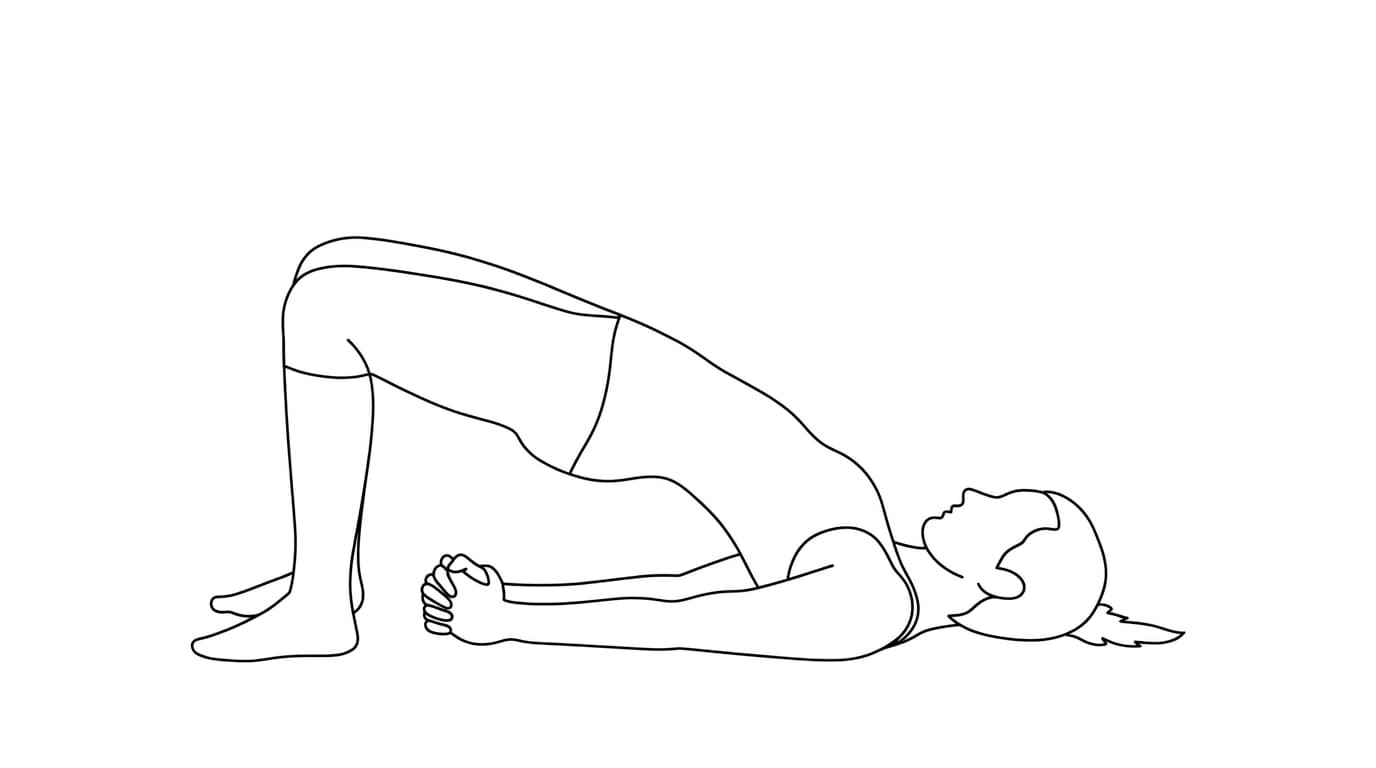
What is Bridge Pose?
Bridge Pose can be practiced as a small pelvic lift or with support beneath the pelvis. The supported version is a distinct restorative variation.
Keep the head centered and avoid turning the neck while the pelvis is lifted.
How do you practice Bridge Pose?
Move slowly, keep the breath comfortable, and use the version that feels stable for your body today.
- Lie on your back with knees bent and feet on the floor about hip-width apart.
- Rest the arms alongside the body and let the shoulders feel broad.
- Press through the feet and lift the pelvis a small amount, keeping the movement comfortable.
- Pause for a few easy breaths without turning the head.
- Lower slowly. If using a block, place it under the pelvis only when you can do so comfortably and safely.
Alignment cues
- Keep the knees tracking forward rather than drifting widely apart.
- Use a small lift if the lower back feels compressed.
- Keep weight off the neck and head.
Modifications
- Practice a small pelvic lift.
- Place a yoga block under the sacrum for a supported variation, at a height that feels comfortable.
- Skip the lift and rest with knees bent.
Variations
- Low dynamic bridge.
- Supported bridge with a stable block under the pelvis.
Common mistakes
- Turning the head while lifted.
- Pushing the ribs upward or arching beyond a comfortable range.
- Placing support on the lower back rather than beneath the pelvis.
Safety notes
- Do not turn the head while the pelvis is lifted.
- Adapt or avoid the pose if it causes neck, back, or knee pain; use props only if stable.
- Seek individualized guidance for spinal concerns, pregnancy, or recent surgery.
Common questions
Where does the block go in supported Bridge?
A stable block supports the pelvis, not the lower back. Choose a low height and come out if the support feels uncomfortable.
References and further reading
These references provide general context. They do not validate every cue on this page or replace instruction from a qualified teacher.
- Yoga: Effectiveness and Safety National Center for Complementary and Integrative Health (NCCIH). General background on yoga research, common injury considerations, and when to seek individualized guidance. It is not a pose-specific clinical assessment.