
Supported Headstand is catalogued as Salamba Shirshasana A. It is an advanced inversion with substantial balance and load demands and is not appropriate for self-teaching; this page intentionally gives no step-by-step entry.
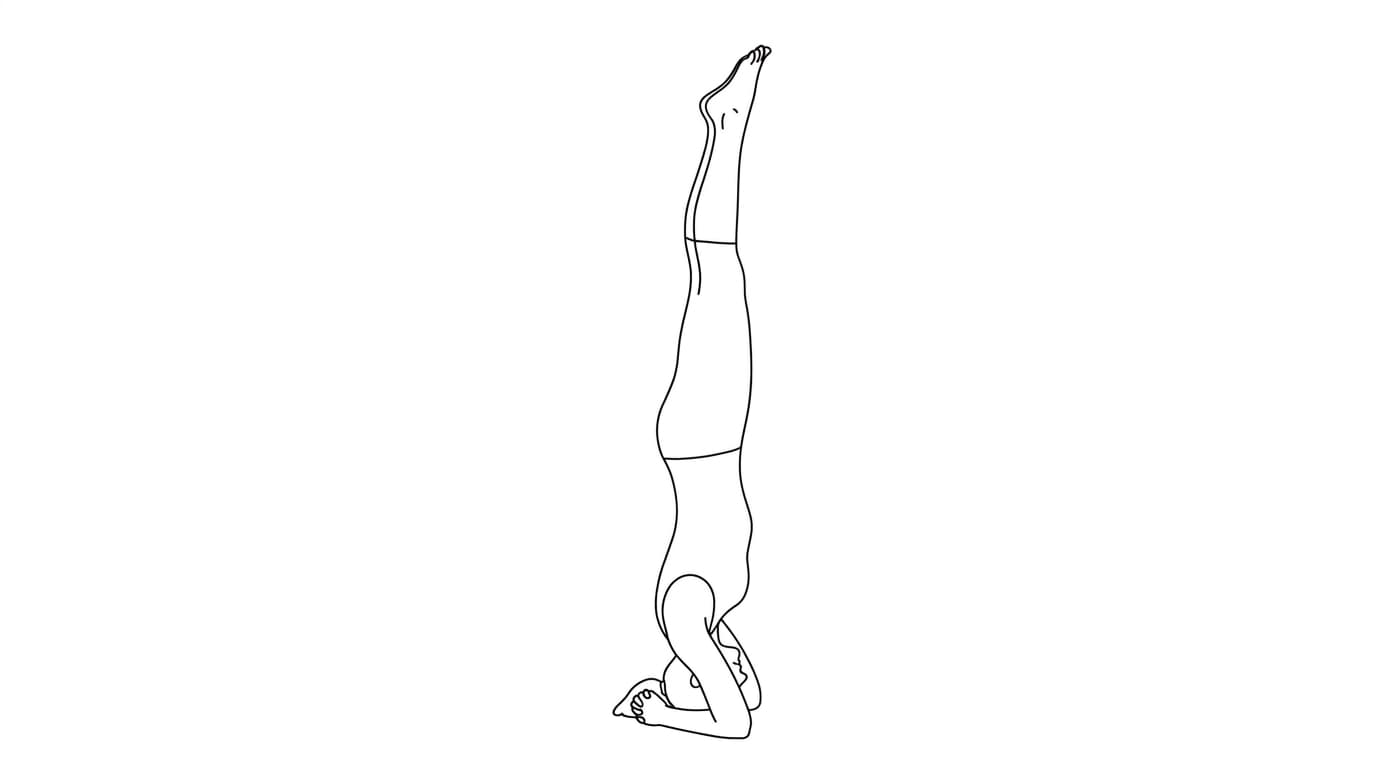
What is Supported Headstand?
This catalog entry is labeled Supported Headstand (Salamba Shirshasana A). It is an advanced inversion with a risk of falling and significant neck-loading concerns. Teaching approaches and support arrangements differ; this page does not establish a safe setup.
This page is a contextual overview, not an invitation to attempt the posture.
How do you practice Supported Headstand?
Instruction intentionally omitted. Learn this inversion only through qualified, in-person instruction after individual screening; do not practice it alone or against a wall without instruction.
Alignment cues
- Do not use the head or neck as a place to forcefully bear weight.
- A qualified teacher should assess entry, support, and exit before any attempt.
Modifications
- Choose a non-inverted balance or a supported standing posture instead.
Variations
- Traditions teach different supported and tripod forms; this site does not offer self-guided variations.
Common mistakes
- Attempting the pose without instruction or a safe exit plan.
- Treating wall support as a substitute for qualified supervision.
Safety notes
- NCCIH advises beginners to avoid extreme practices such as headstands. People with neck or spinal conditions, high blood pressure, glaucoma, balance concerns, or pregnancy should seek individualized professional advice and avoid unsupervised attempts.
- Stop and seek care for pain, numbness, visual disturbance, dizziness, or other concerning symptoms.
Common questions
Is Supported Headstand suitable for beginners?
This site does not recommend self-teaching Headstand. NCCIH advises beginners to avoid extreme practices such as headstands; seek qualified, in-person instruction and individualized guidance.
References and further reading
These references provide general context. They do not validate every cue on this page or replace instruction from a qualified teacher.
- Supported Headstand Pocket Yoga. Used to confirm the catalog's supported-variation label and transliteration, not as a safety authority or entry tutorial.
- Yoga: Effectiveness and Safety National Center for Complementary and Integrative Health (NCCIH). General background on yoga research, common injury considerations, and when to seek individualized guidance. It is not a pose-specific clinical assessment.