
Triangle Pose is a wide standing posture with the legs straight but not locked and the torso lengthened over one leg. The lower hand can rest on a block or the shin; it does not need to reach the floor.
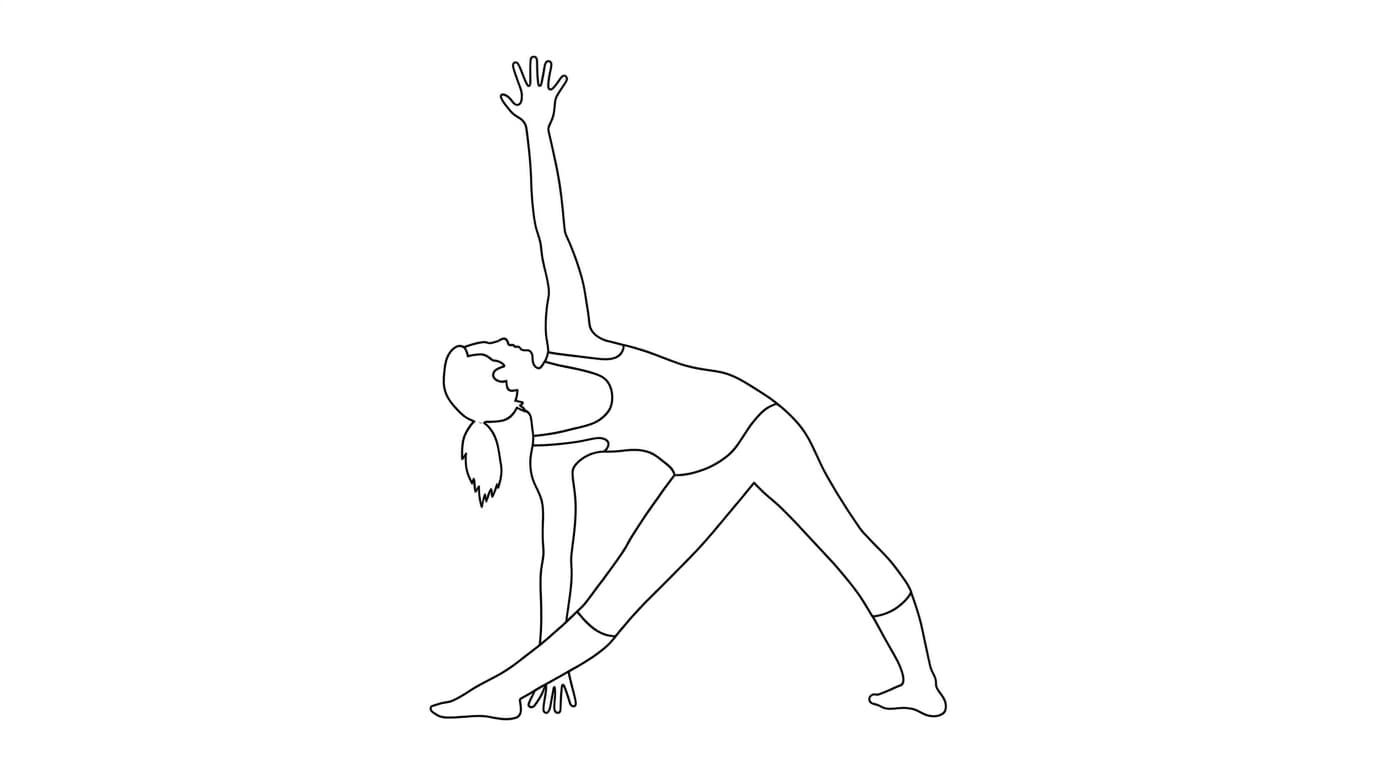
Sanskrit nameTrikonasana
Practice typeStanding side stretch
Suggested levelBeginner to intermediate
Practice within a comfortable rangeThis guide is general education, not individualized medical advice. Stop if you experience sharp pain, numbness, dizziness, or breathing difficulty.
What is Triangle Pose?
Triangle Pose combines a wide stance with a sideward hinge. A block makes the floor closer and can help keep the torso long.
The gaze can stay forward or downward. Turning the head upward is optional.
How do you practice Triangle Pose?
Move slowly, keep the breath comfortable, and use the version that feels stable for your body today.
- Stand with the feet wide and turn one foot outward while angling the other slightly inward.
- Extend the arms to shoulder height and reach toward the turned foot.
- Hinge from the hip and rest the lower hand on a block, shin, or thigh, avoiding pressure on the knee.
- Lengthen the upper arm upward only if the shoulder is comfortable.
- Keep the breath easy, then press through the feet to rise and change sides.
Alignment cues
- Use a block so the torso can lengthen instead of collapsing toward the floor.
- Keep both sides of the waist as long as is comfortable.
- Do not lock the knees.
Modifications
- Place a block outside or inside the front foot.
- Rest the top hand on the hip.
- Use a shorter stance or keep the gaze downward.
Variations
- Block-supported Triangle.
- Top hand resting on the hip.
Common mistakes
- Reaching the hand to the floor at the cost of twisting or collapsing.
- Resting body weight directly on the knee.
- Forcing the neck to turn upward.
Safety notes
- Use a shorter stance or skip the pose if balance is uncertain.
- Modify for hip, knee, neck, or back concerns; stop if pain or dizziness occurs.
- NCCIH recommends individualized modifications for people with existing injuries or health conditions.
Common questions
Does the lower hand need to reach the floor?
No. A block, shin, or thigh provides a useful support. Do not press directly on the knee.
References and further reading
These references provide general context. They do not validate every cue on this page or replace instruction from a qualified teacher.
- Yoga: Effectiveness and Safety National Center for Complementary and Integrative Health (NCCIH). General background on yoga research, common injury considerations, and when to seek individualized guidance. It is not a pose-specific clinical assessment.