
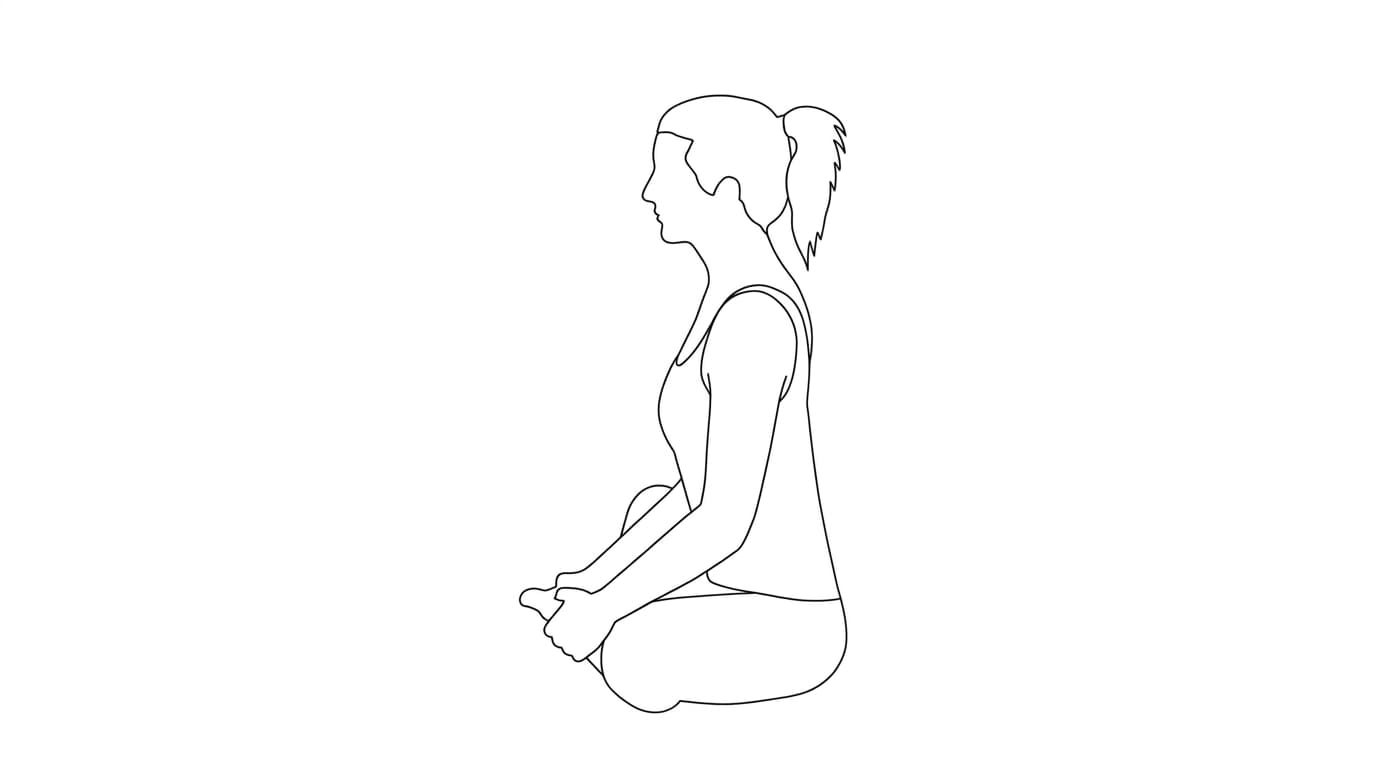
Bound Angle Pose brings the soles of the feet together while sitting, with the knees opening to the sides. Keep the feet farther from the pelvis and support the thighs if needed; there is no need to press the knees down.
What is Bound Angle Pose?
Baddha Konasana is a seated posture with the soles of the feet together. It is often called Butterfly Pose, though teaching styles differ in whether the legs remain still or move.
How do you practice Bound Angle Pose?
Sit on a folded blanket or cushion if that helps the pelvis tip comfortably.
- Sit with the legs extended, then bend the knees and bring the soles of the feet together.
- Slide the feet farther from the pelvis if the inner thighs or knees feel strongly stretched.
- Hold the ankles or rest the hands on the floor or thighs; do not pull the feet inward.
- Allow the knees to rest where they naturally fall. Stay upright or hinge forward slightly from the hips if comfortable.
- Return upright and guide the knees together with the hands before extending the legs.
What alignment cues can help?
- Keep the spine long without forcing a flat-back shape.
- Avoid bouncing or pressing down on the knees.
- Let the feet sit at a distance that keeps the stretch mild.
How can you modify Bound Angle Pose?
Place cushions or blocks under the outer thighs, sit higher, or practice seated in a chair with the soles of the feet apart and supported.
When should you stop or modify?
Ease out for sharp knee, groin, or hip pain, numbness, or tingling. People with recent hip or knee concerns should seek individualized guidance. This draft awaits teacher review.
Common question: Should the knees touch the floor?
No. Their height depends on each person’s anatomy and position; forcing them down is unnecessary.
Quellen und weiterführende Literatur
Diese Referenzen bieten allgemeinen Kontext. Sie bestätigen nicht jeden einzelnen Hinweis auf dieser Seite und ersetzen keinen Unterricht bei qualifizierten Lehrkräften.
- Yoga: Effectiveness and Safety National Center for Complementary and Integrative Health (NCCIH). General context on yoga safety and adapting postures; not pose-specific instruction.