
Hanumanasana is a deep front-split posture requiring substantial hip and leg range. Do not slide into the floor or force the hamstrings or hip flexors; use substantial support and qualified instruction, or choose a gentler lunge instead.
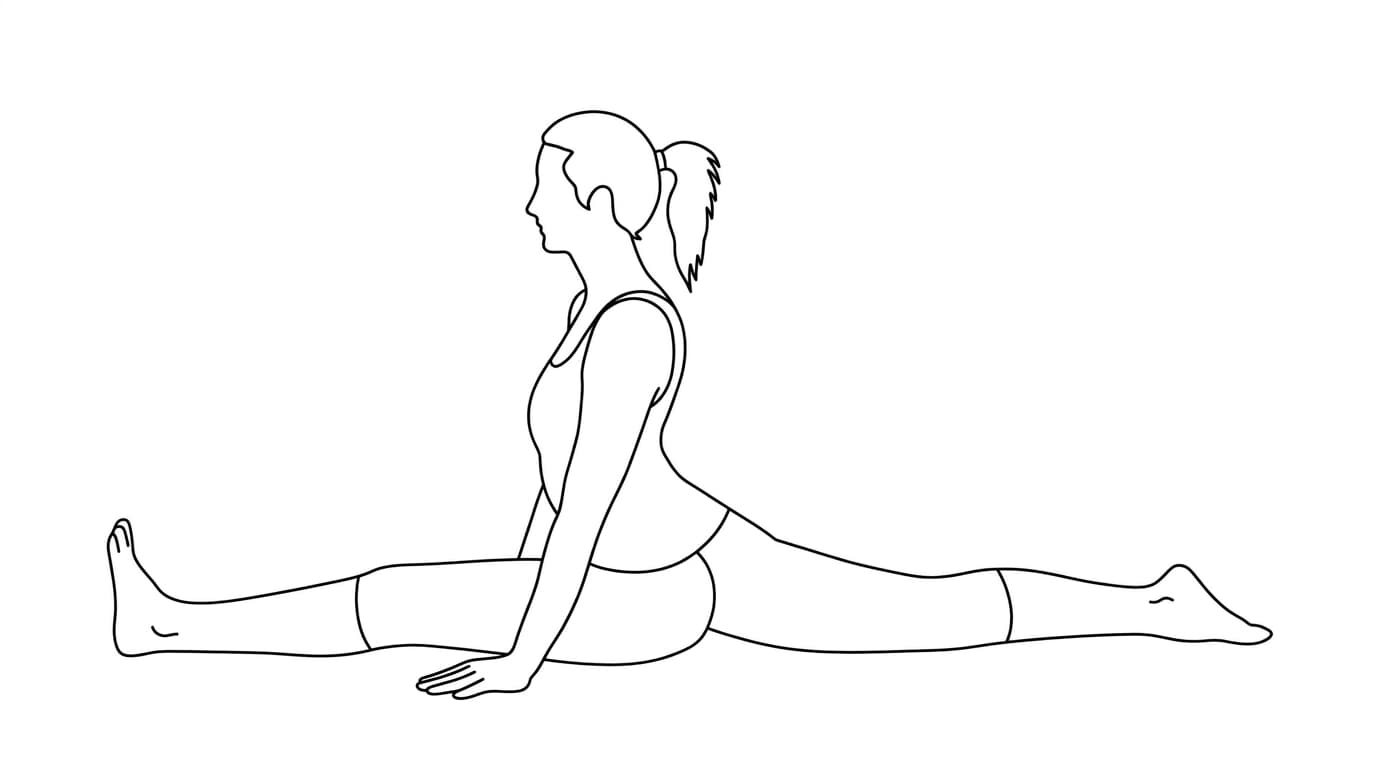
What is Front Splits?
Hanumanasana is a deep front-split shape associated with Hanuman. It requires significant range through the front and back legs and should not be pursued by pushing the pelvis toward the floor.
How should this pose be approached?
Use direct guidance from a qualified teacher. This page does not prescribe a progression to the full split.
- Keep blocks or a chair supporting the hands and pelvis.
- Stop well before sharp stretching, pulling, or joint pain.
- Do not bounce or use body weight to force more range.
- Come out slowly with support rather than pushing suddenly upward.
What is a gentler alternative?
Use a short low lunge with padding, or a seated leg position with both knees bent. These can explore related areas without requiring a split.
Common question: Should the pelvis reach the floor?
No. Floor contact is not a goal, and the full posture is not suitable for everyone.
Quellen und weiterführende Literatur
Diese Referenzen bieten allgemeinen Kontext. Sie bestätigen nicht jeden einzelnen Hinweis auf dieser Seite und ersetzen keinen Unterricht bei qualifizierten Lehrkräften.
- Yoga: Effectiveness and Safety National Center for Complementary and Integrative Health (NCCIH). General context on yoga safety and adapting postures; not pose-specific instruction.