
Seated Gate Pose is a side-reaching position practiced from a seated base, though the catalog name may overlap with kneeling Gate Pose. Keep both sitting bones supported, use a chair or bolster, and verify which version is intended.
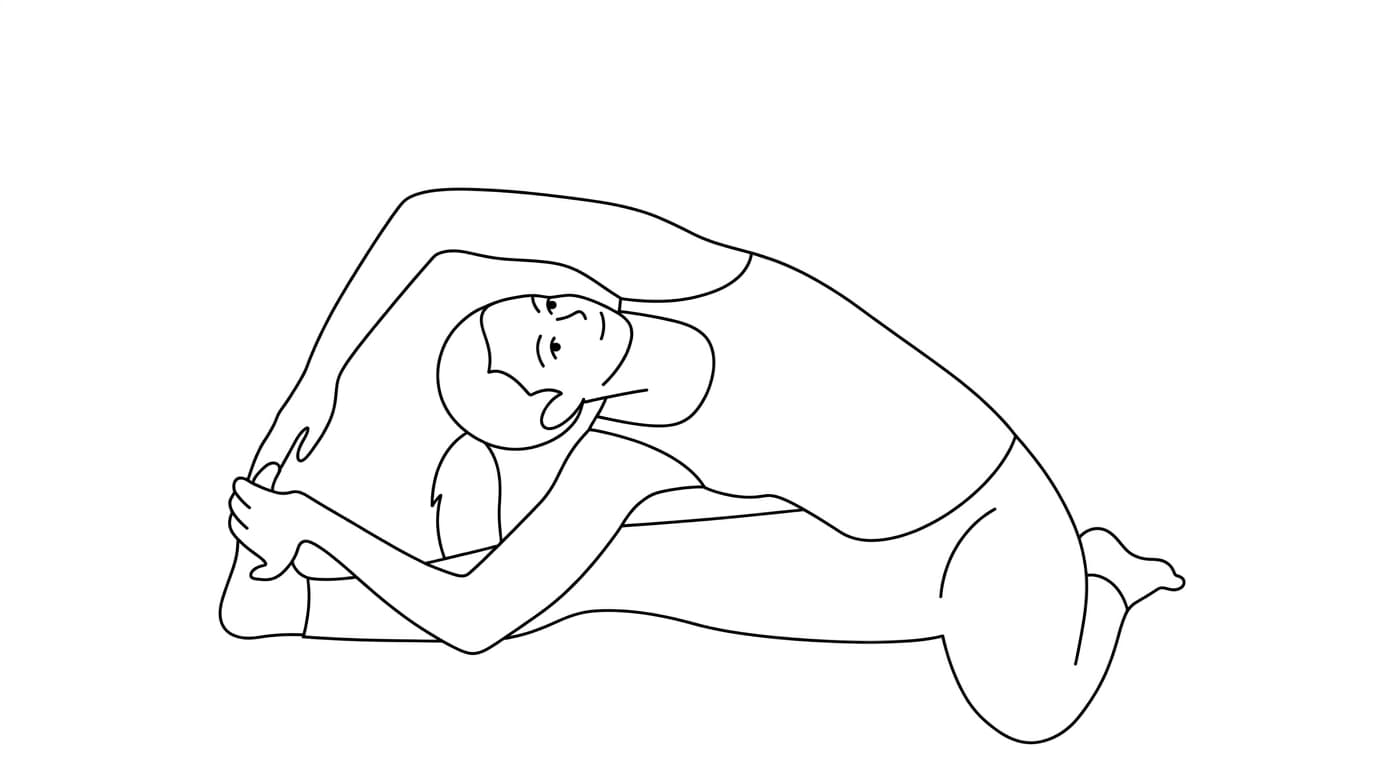
What does Seated Gate Pose refer to?
Parighasana is often known as a kneeling side stretch, while this catalog also lists a seated version. The precise seated form should be confirmed with its source teacher.
How can you explore a gentle seated side reach?
Sit cross-legged on a cushion or in a chair with both feet grounded.
- Place one hand on the seat or thigh for support.
- Reach the other arm upward only if the shoulder is comfortable.
- Incline the torso slightly to the side without lifting the opposite sitting bone.
- Keep the neck neutral and breathe easily.
- Return upright slowly and repeat on the other side.
How can you modify the side reach?
Keep both hands on the thighs, reduce the angle, or practice seated in a chair. Do not force an overhead arm position.
When should you stop or modify?
Stop for sharp side, back, or shoulder pain, dizziness, or numbness. This draft awaits source clarification and teacher review.
Common question: Is this the same as kneeling Gate Pose?
Not necessarily. The catalog includes both, and the seated version's source needs verification.
Quellen und weiterführende Literatur
Diese Referenzen bieten allgemeinen Kontext. Sie bestätigen nicht jeden einzelnen Hinweis auf dieser Seite und ersetzen keinen Unterricht bei qualifizierten Lehrkräften.
- Yoga: Effectiveness and Safety National Center for Complementary and Integrative Health (NCCIH). General context on yoga safety and adapting postures; not pose-specific instruction.