
Revolved Bird of Paradise adds rotation to an already demanding bound standing balance. This combination should not be self-taught from text; confirm the specific lineage form with a qualified teacher and use a non-instructional supported preparation until reviewed.
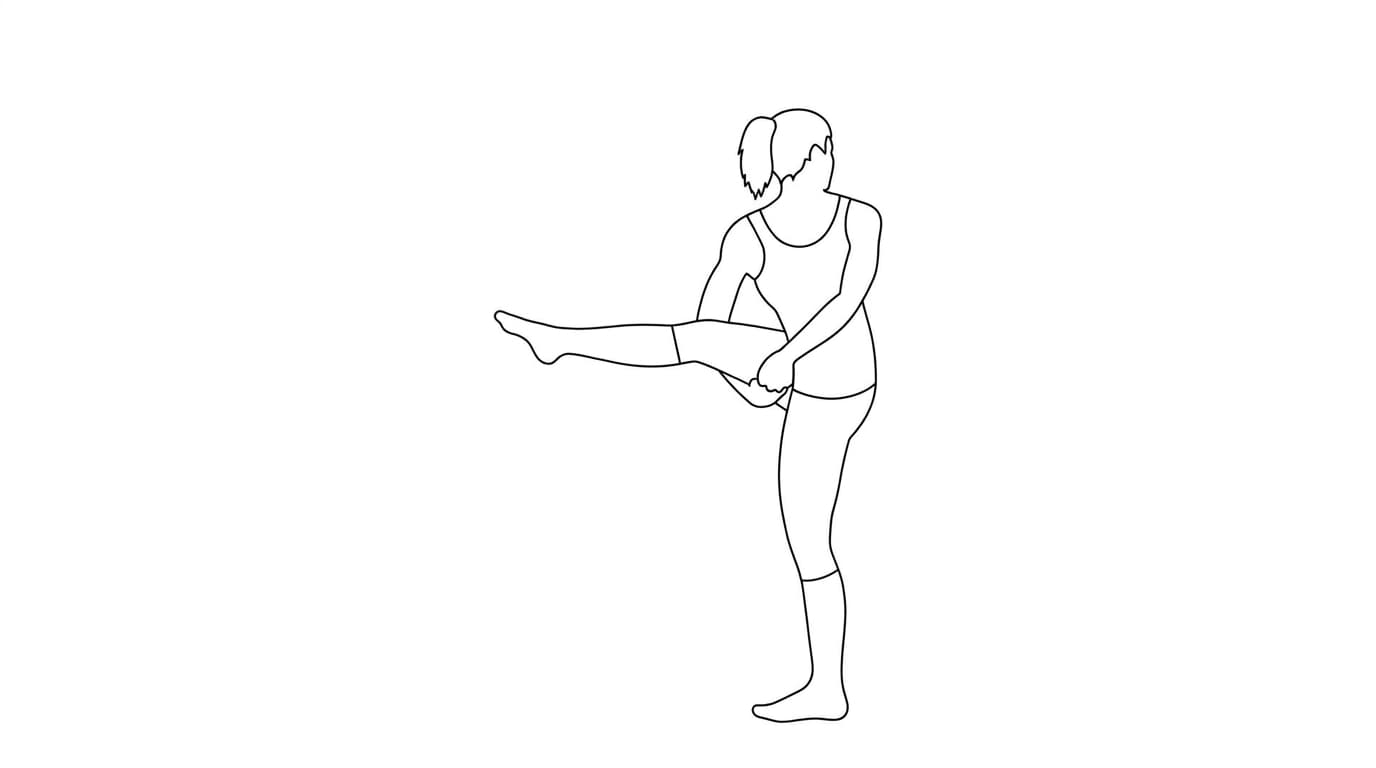
What is Revolved Bird of Paradise?
Parivritta Svarga Dvijasana is a name used for a rotated variation of Bird of Paradise. It combines balance, a bind, leg extension, and torso rotation; exact execution depends on the teaching method.
How should this pose be approached?
This guide intentionally does not provide an entry sequence. Work directly with a qualified teacher who can confirm the version and monitor the bind and balance.
- Do not force the twist or pull the arms into a bind.
- Use stable support during any preparation.
- Keep the feet grounded unless the teacher has assessed the balance.
- Exit slowly and release the bind before changing position.
What is a lower-demand alternative?
Explore a grounded standing twist or a supported Bird of Paradise preparation without leg extension.
When should you stop or seek instruction?
Stop for shoulder, spine, hip, knee, ankle, or balance symptoms. Do not practice the full pose unsupported from written cues. This draft awaits qualified review.
Common question: Is this simply Bird of Paradise with a bigger twist?
It adds another demand, and the form is method-specific; do not improvise the transition.
Quellen und weiterführende Literatur
Diese Referenzen bieten allgemeinen Kontext. Sie bestätigen nicht jeden einzelnen Hinweis auf dieser Seite und ersetzen keinen Unterricht bei qualifizierten Lehrkräften.
- Yoga: Effectiveness and Safety National Center for Complementary and Integrative Health (NCCIH). General context on yoga safety and balance; not pose-specific instruction.