
Pindasana is an advanced bound posture often associated with a shoulderstand or lotus-like leg position. It can place load on the neck and knees; do not attempt the full form without qualified in-person instruction.
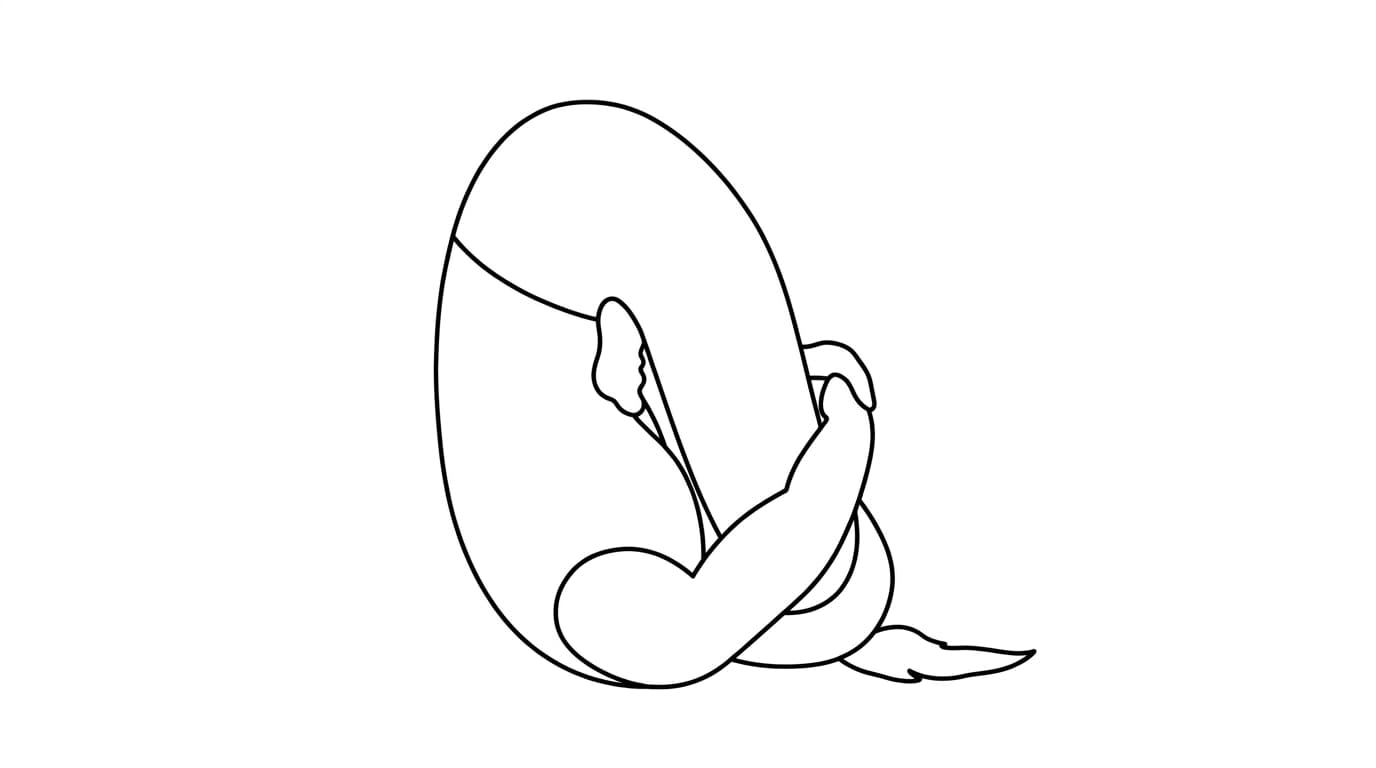
What is Embryo Pose?
Pindasana is used for a compact, bound posture, often in an inverted context. Variations differ, and shoulderstand or lotus components should not be improvised from text.
How should this posture be approached?
Do not attempt an inverted bind without direct qualified instruction and a clear exit plan.
- Never place uncontrolled weight on the neck.
- Do not force a lotus leg or bind the knees tightly.
- Stop for neck pressure, pain, numbness, dizziness, or breathing difficulty.
- Avoid practicing alone or near hard objects.
What is a lower-demand alternative?
Choose a neutral supine rest or a teacher-approved supported posture that keeps the neck free of load.
Common question: Can I fold into this pose from Shoulderstand?
Do not attempt that transition without direct instruction; this page does not provide an inversion sequence.
Quellen und weiterführende Literatur
Diese Referenzen bieten allgemeinen Kontext. Sie bestätigen nicht jeden einzelnen Hinweis auf dieser Seite und ersetzen keinen Unterricht bei qualifizierten Lehrkräften.
- Yoga: Effectiveness and Safety National Center for Complementary and Integrative Health (NCCIH). General context on yoga safety; not pose-specific instruction or endorsement.