
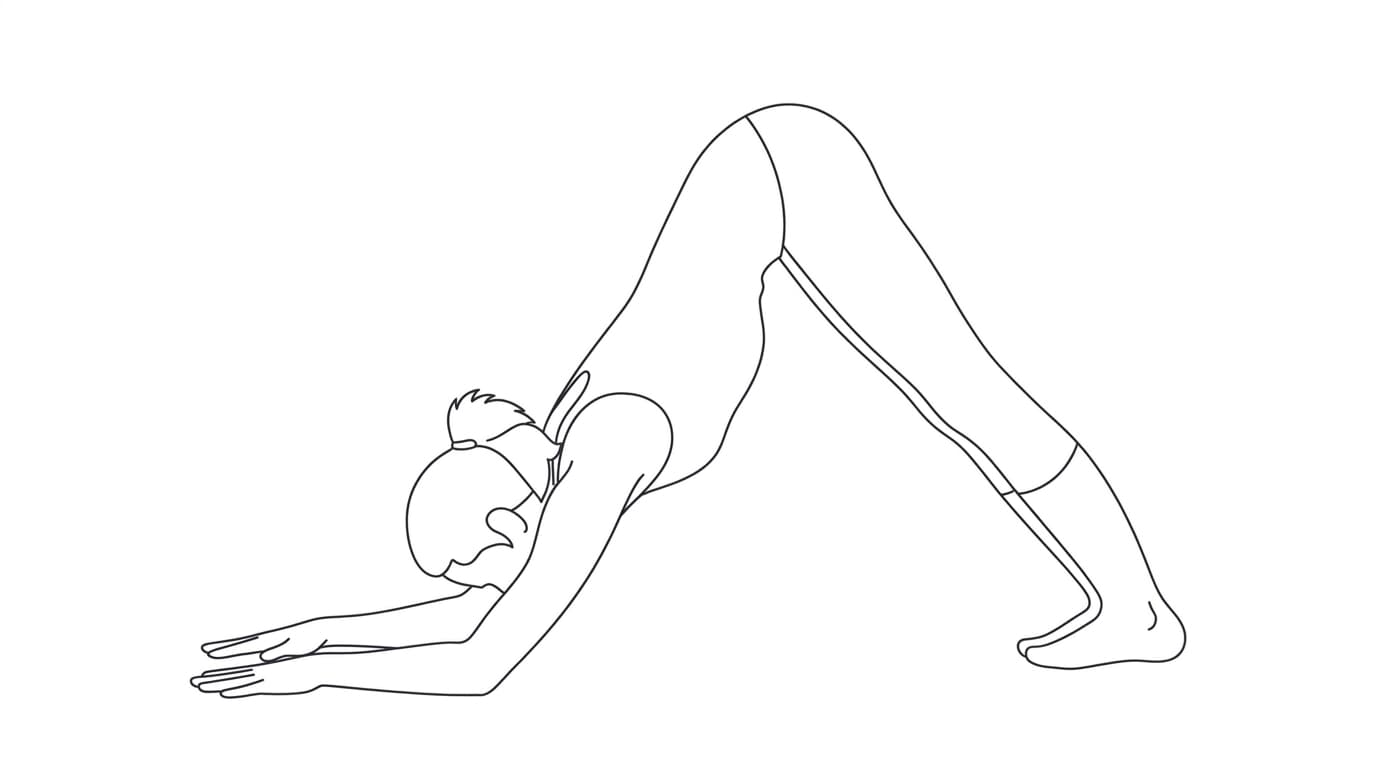
Dolphin Pose is a forearm-supported posture with the hips lifted. Keep the head off the floor, bend the knees, and use a wall or chair if needed; do not treat it as a headstand entry drill without qualified instruction.
What is Dolphin Pose?
Shishumarasana is commonly taught from the forearms and feet with the hips lifting. The head remains off the floor; this distinction matters because Dolphin is not a headstand.
How do you explore a supported version?
Use a padded surface and keep enough space to lower the knees safely.
- Begin on hands and knees and lower the forearms to the floor, keeping the elbows comfortable.
- Tuck the toes and lift the hips only a little; bend the knees as needed.
- Keep the head relaxed between the upper arms without placing weight on it.
- Hold briefly while breathing normally.
- Lower the knees before resting.
How can you modify Dolphin Pose?
Keep the knees down, raise the forearms onto a chair seat, or use Downward-Facing Dog with hands supported. Do not kick up from this position without direct instruction.
When should you stop or modify?
Stop for shoulder, wrist, neck, or back pain, numbness, or dizziness. This draft awaits teacher review.
Common question: Is Dolphin Pose a headstand preparation?
It may appear in some progressions, but this page does not recommend using it to attempt an inversion without a qualified teacher.
References and further reading
These references provide general context. They do not validate every cue on this page or replace instruction from a qualified teacher.
- Yoga: Effectiveness and Safety National Center for Complementary and Integrative Health (NCCIH). General context on yoga safety and adapting postures; not pose-specific instruction.