
Lunge Pose is a general label for several forward and low-lunge shapes. Use padding under a kneeling knee, keep the front foot stable, and choose a hand support; confirm which lunge variation a class or source intends.
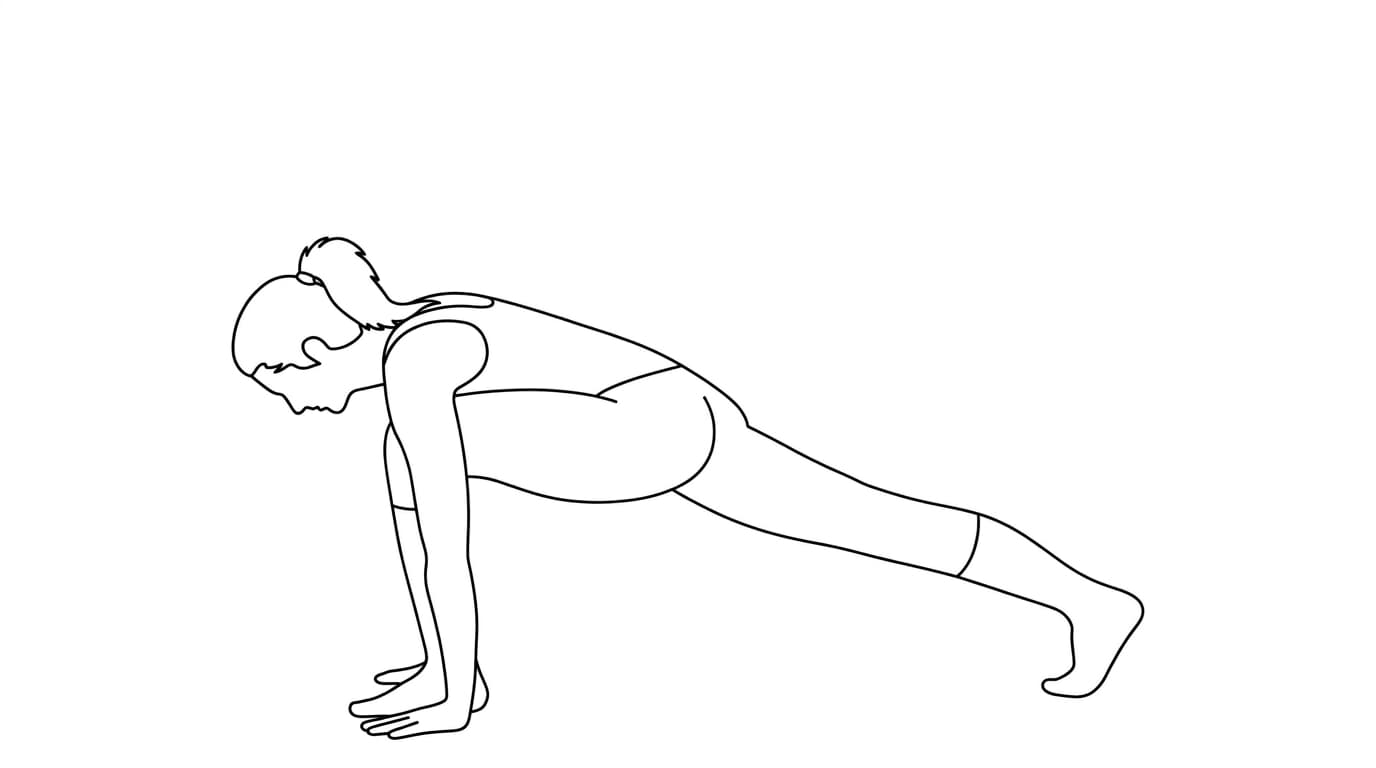
What does Lunge Pose refer to?
“Lunge Pose” is a broad English label that may refer to a high lunge, low kneeling lunge, or other stance. This guide offers a general supported setup rather than defining one universal form.
How do you explore a basic supported lunge?
Use a stable chair or blocks and pad the back knee if it rests on the floor.
- From hands and knees, step one foot forward between the hands.
- Check that the front foot is grounded and the front knee bends comfortably.
- Keep the back knee down with padding or leave it lifted only if balance is easy.
- Rest the hands on blocks, a chair, or the front thigh.
- Return to hands and knees carefully and change sides.
How can you modify a lunge?
Shorten the stance, reduce the bend, keep the back knee padded, or practice holding a chair while standing.
When should you stop or modify?
Stop for knee, hip, or back pain, numbness, or balance difficulty. This draft awaits teacher review.
Common question: Is every lunge the same pose?
No. Check the intended version and adapt the stance to your body.
Referenties en verdere lectuur
Deze referenties bieden algemene context. Ze valideren niet elke aanwijzing op deze pagina en vervangen geen instructie van een gekwalificeerde leraar.
- Yoga: Effectiveness and Safety National Center for Complementary and Integrative Health (NCCIH). General context on yoga safety and adapting postures; not pose-specific instruction.