
Rabbit Pose is a kneeling forward-fold variation whose form differs across yoga schools. Avoid placing body weight on the head or pulling the neck; use a supported Child's Pose if the intended version is unfamiliar.
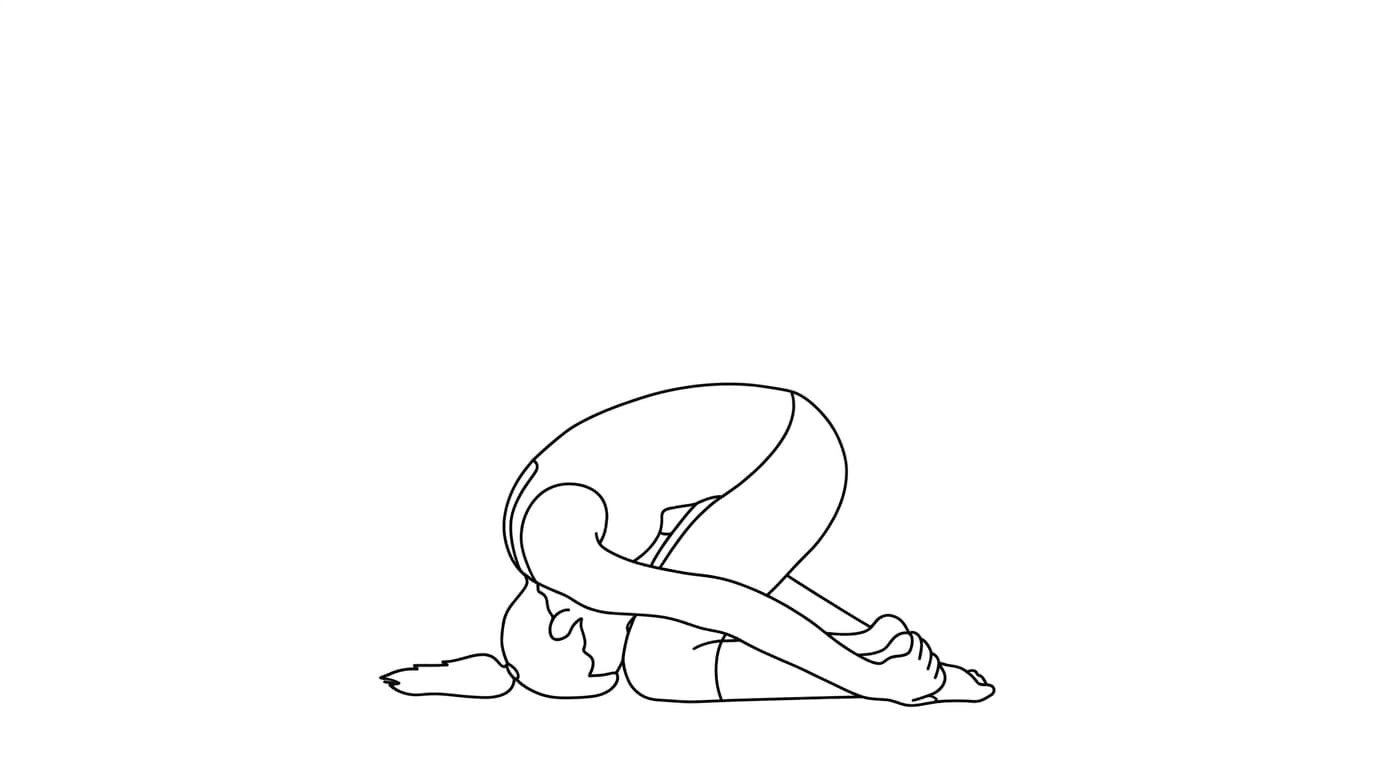
What does Rabbit Pose refer to?
Shashankasana is used for different kneeling forward-fold shapes. Some versions curl the spine or involve holding the heels, so confirm the intended method before attempting a specific form.
How can you choose a supported alternative?
Use a padded kneeling rest without loading the head or neck.
- Begin on hands and knees with a blanket under the knees.
- Move the hips back only as far as the knees and ankles remain comfortable.
- Rest the torso on a bolster or the thighs and keep the head supported.
- Keep the hands relaxed; do not pull on the heels or neck.
- Return to hands and knees slowly.
How can you modify the posture?
Use Child's Pose with a bolster, sit on a chair and rest the torso forward, or remain on hands and knees.
When should you stop or modify?
Stop for neck, knee, ankle, or back pain, numbness, or breathing discomfort. This draft awaits source verification and teacher review.
Common question: Should the crown of my head carry weight?
No. Avoid loading the head or neck; use a supported alternative unless a qualified teacher instructs otherwise.
Quellen und weiterführende Literatur
Diese Referenzen bieten allgemeinen Kontext. Sie bestätigen nicht jeden einzelnen Hinweis auf dieser Seite und ersetzen keinen Unterricht bei qualifizierten Lehrkräften.
- Yoga: Effectiveness and Safety National Center for Complementary and Integrative Health (NCCIH). General context on yoga safety; not pose-specific instruction.