
Durvasasana is an advanced standing balance involving a leg-behind-head position. It can place substantial demand on the hips, knees, neck, and balance; this page provides no entry steps and recommends direct qualified instruction or a non-binding alternative.
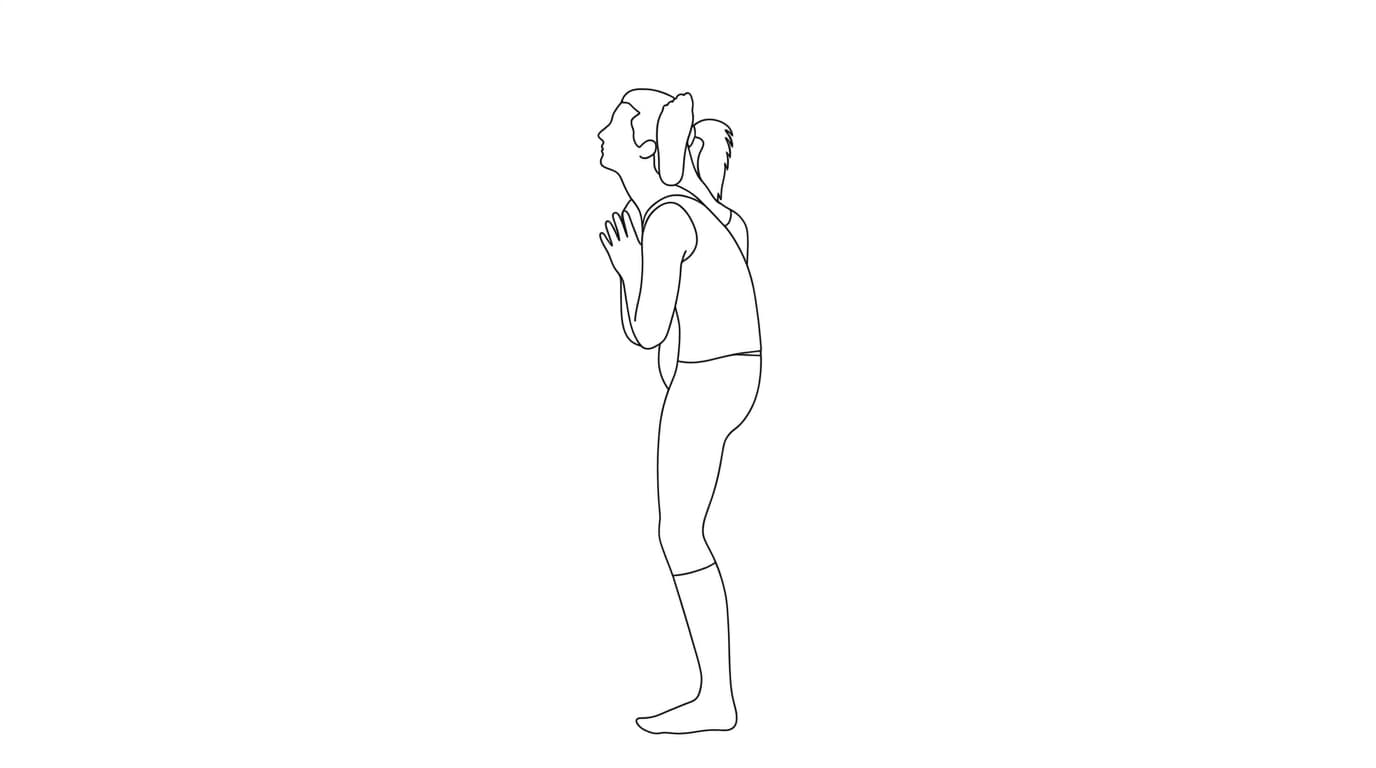
What is Standing Leg Behind the Head?
Durvasasana is an advanced standing variation associated with placing a leg behind the head. Names and exact forms can vary, but this is not a posture to enter by following written steps.
How should this pose be approached?
Only explore it under direct instruction from a qualified teacher who can assess the hips, knees, spine, and balance. This draft intentionally omits entry and exit mechanics.
- Do not pull the leg behind the head or use the neck as a support.
- Do not attempt the standing version near hard surfaces or without a spotter/teacher.
- Stop immediately for pain, numbness, tingling, or instability.
- Choose a neutral standing balance instead if the position is uncertain.
What is a safer alternative?
Practice Tree Pose or a supported standing leg lift that keeps the foot in front of the body.
Common question: Can flexibility drills prepare me to try this alone?
No. Flexibility alone does not establish safe technique or readiness; direct assessment matters.
References and further reading
These references provide general context. They do not validate every cue on this page or replace instruction from a qualified teacher.
- Yoga: Effectiveness and Safety National Center for Complementary and Integrative Health (NCCIH). General context on yoga safety; not pose-specific instruction or endorsement.