
Crane Pose is an arm balance that places body weight through the hands and requires a controlled forward shift. Use a qualified teacher, a clear padded area, and grounded feet during preparation; do not hop or balance near hard objects.
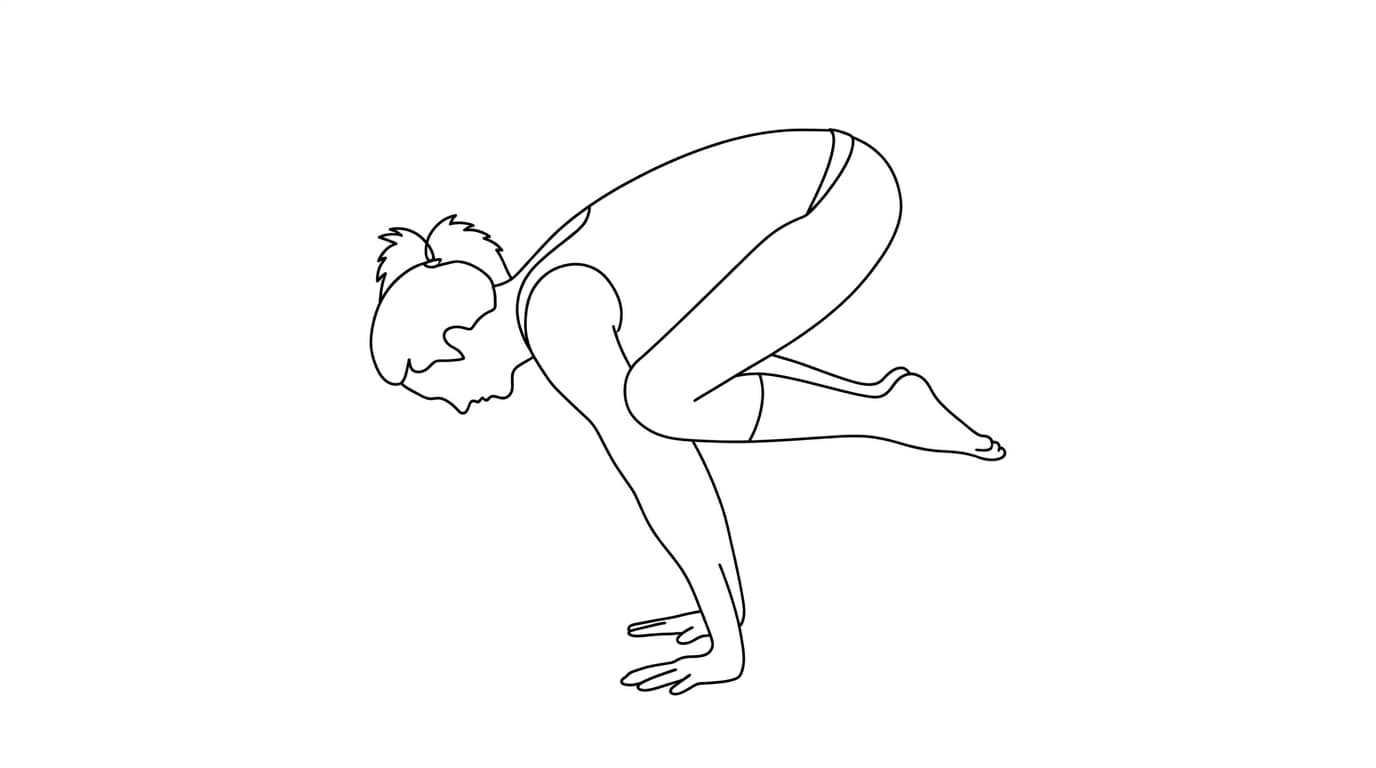
What is Crane Pose?
Bakasana is an arm balance supported by the hands. Teachers distinguish Crane from Crow in different ways, so confirm the specific form being taught before attempting a full balance.
How should preparation be approached?
Learn the balance from a qualified teacher in a clear, padded space. This page does not provide a hop or entry sequence.
- Keep both feet on the floor while learning hand placement.
- Avoid placing the face near hard objects; use supervision and appropriate padding.
- Do not force the knees onto the upper arms or collapse the shoulders.
- Return the feet to the floor slowly and stop before fatigue affects control.
What is a lower-demand alternative?
Practice a supported squat with hands on blocks, or a hands-and-knees position that builds comfort with hand support without lifting the feet.
Common question: Is a jump needed to enter Crane?
No. Do not jump into an arm balance; learn controlled setup and exit directly with a teacher.
Referenties en verdere lectuur
Deze referenties bieden algemene context. Ze valideren niet elke aanwijzing op deze pagina en vervangen geen instructie van een gekwalificeerde leraar.
- Yoga: Effectiveness and Safety National Center for Complementary and Integrative Health (NCCIH). General context on yoga safety and adapting postures; not pose-specific instruction.