
Shayanasana is catalogued as Elbow Balance, but the name is used inconsistently and does not define a safe standardized inversion. Verify the intended pose from an authoritative teaching source; do not attempt an unsupported balance based only on this page.
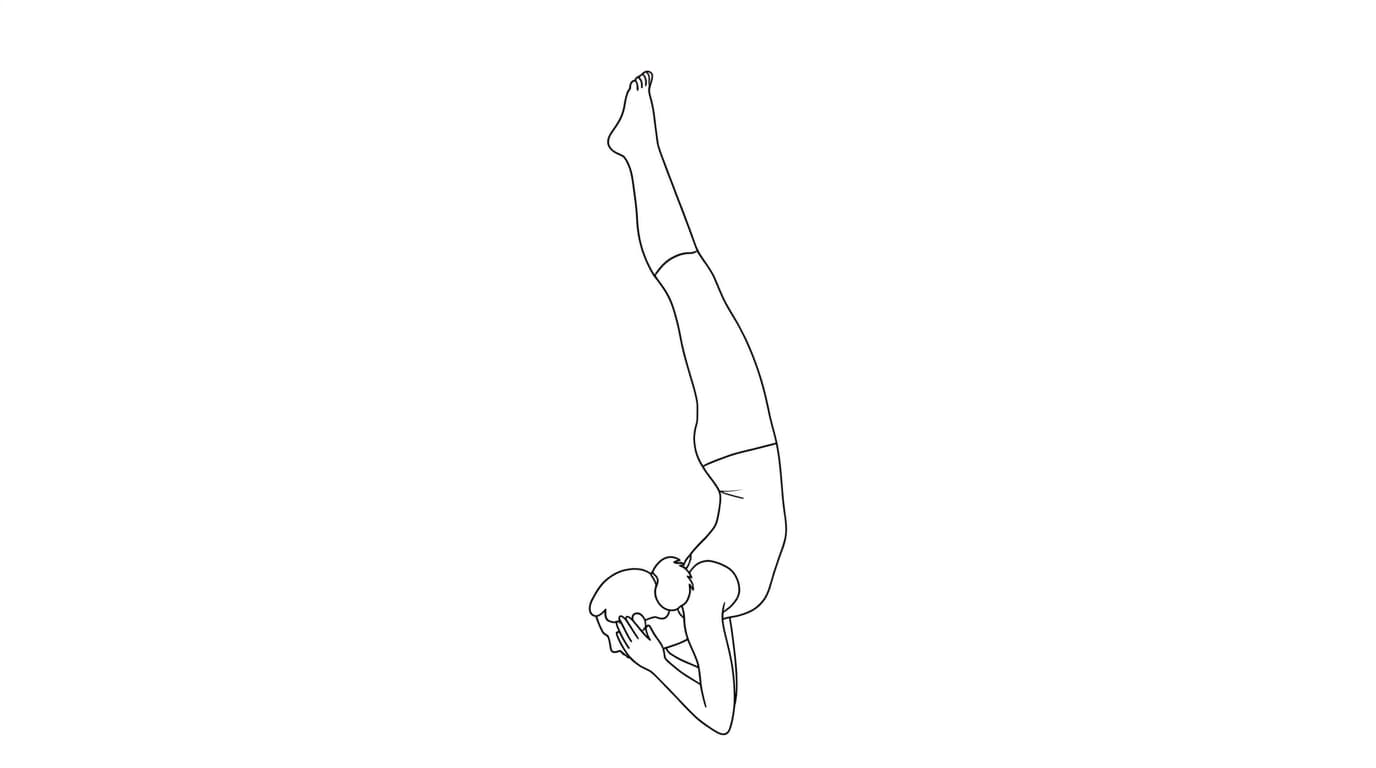
What does Elbow Balance refer to?
Shayanasana is used for different reclining or balance shapes in yoga references. The English catalog label “Elbow Balance” is not enough to identify a particular inversion safely.
How should the pose be identified?
Verify the intended form with the originating teacher or a reliable pose reference before writing technique instructions.
- Do not place weight on the head or neck.
- Do not kick into an unknown inversion.
- Practice only with appropriate space, teacher supervision, and a controlled exit.
- Stop for pain, dizziness, or visual or breathing discomfort.
What is a safer alternative?
Use a grounded forearm-supported posture such as a low Dolphin variation, without attempting to balance on the head or elbows.
Common question: Is this interchangeable with Forearm Balance?
No. The catalog mapping needs verification; do not assume the poses are equivalent.
References and further reading
These references provide general context. They do not validate every cue on this page or replace instruction from a qualified teacher.
- Yoga: Effectiveness and Safety National Center for Complementary and Integrative Health (NCCIH). General context on yoga safety; not pose-specific instruction.