
Shiva Squat is a contemporary name used for several dynamic single-leg squat patterns. Because the movement is not standardized, this page avoids prescribing a specific sequence; use a stable support and learn the intended version from a qualified teacher.
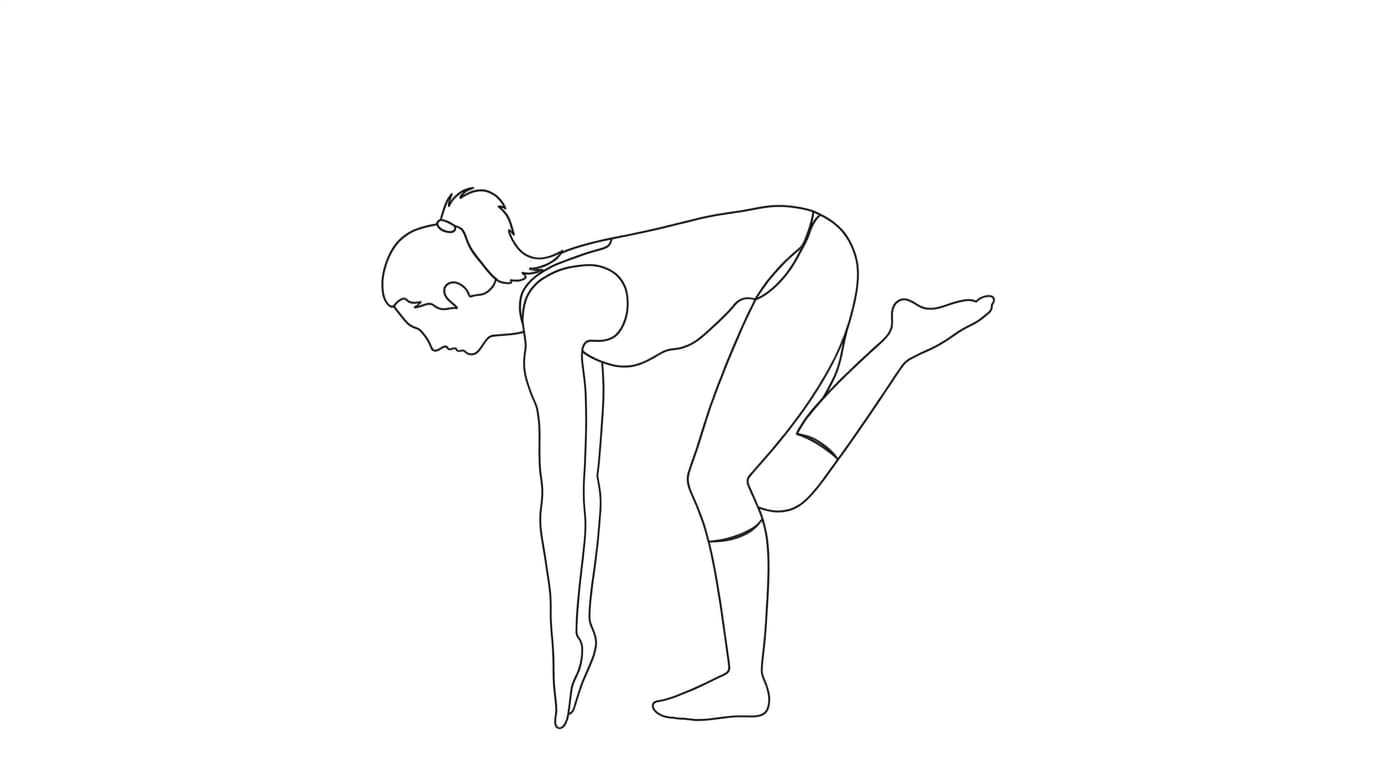
What does Shiva Squat refer to?
Shiva Squat is a contemporary label for dynamic single-leg squat or balance sequences. Different teachers may use different foot paths, torso positions, and transitions.
How should the pose be approached?
Confirm the specific movement from the teacher or program that uses the name. Do not infer a sequence from the label alone.
- Practice near a wall or sturdy chair.
- Keep the range small and movement controlled.
- Avoid hopping or rotating quickly if balance is uncertain.
- Stop if the knee, hip, or ankle feels painful or unstable.
What is a simpler alternative?
Use a shallow supported squat with both feet grounded, or practice a static wide stance such as Goddess Pose.
When should you stop or seek guidance?
Seek individualized instruction before repeating a dynamic or single-leg version. This catalog draft awaits source verification and teacher review.
Common question: Is there one standard Shiva Squat?
The name is used for different movements, so the exact version should be identified before detailed instruction.
References and further reading
These references provide general context. They do not validate every cue on this page or replace instruction from a qualified teacher.
- Yoga: Effectiveness and Safety National Center for Complementary and Integrative Health (NCCIH). General context on yoga safety and balance modifications; not pose-specific instruction.