
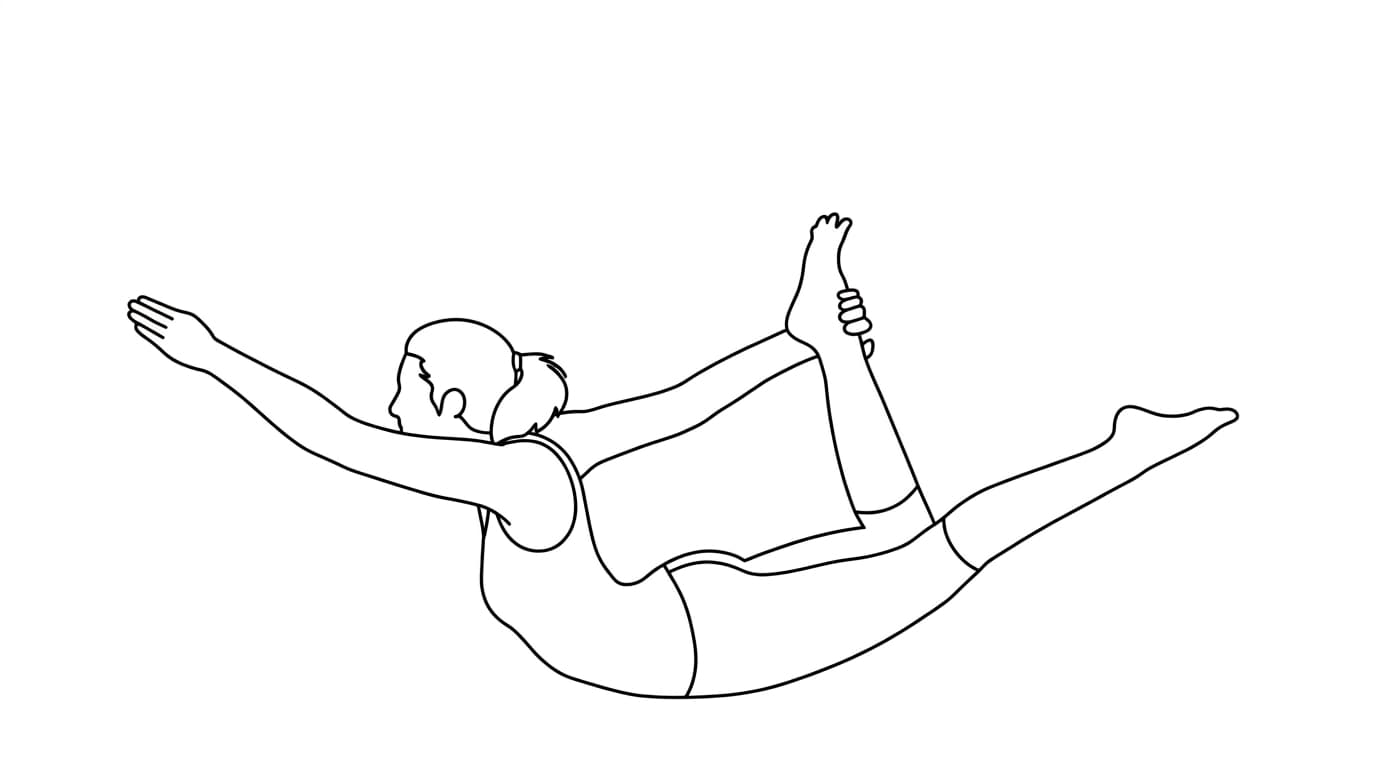
Half Bow is a prone backbend variation in which one knee bends and the same-side hand may reach toward the foot. The grasp is optional; keep the lift small and use a strap only if a teacher has shown a comfortable setup.
What is Half Bow?
Ardha Dhanurasana is a one-sided variation from the prone Bow family. The name can refer to different shapes, so keep the range modest and follow the version taught by a qualified teacher.
How do you explore a low-range variation?
Lie face down on a padded surface with the forehead supported.
- Bend one knee only as far as comfortable, keeping the pelvis grounded.
- Rest the arm beside the body; reaching for the foot is optional.
- If a teacher has shown a suitable strap variation, use it without pulling the heel toward the body.
- Keep the neck neutral and breathe easily.
- Release the leg slowly and rest before changing sides.
How can you modify Half Bow?
Keep both legs down, practice a small single-leg bend, or use a folded blanket beneath the pelvis. Do not force the hand-to-foot grip.
When should you stop or modify?
Stop for sharp knee, shoulder, neck, or back pain, numbness, or breath restriction. This draft awaits qualified review.
Common question: Must I hold my foot?
No. A small bent-knee position without a grasp is a valid option.
Quellen und weiterführende Literatur
Diese Referenzen bieten allgemeinen Kontext. Sie bestätigen nicht jeden einzelnen Hinweis auf dieser Seite und ersetzen keinen Unterricht bei qualifizierten Lehrkräften.
- Yoga: Effectiveness and Safety National Center for Complementary and Integrative Health (NCCIH). General context on yoga safety and adapting postures; not pose-specific instruction.