
Chaturanga Dandasana is a low push-up transition requiring shoulder and trunk strength. Do not lower until the shoulders are ready; use knees-down or wall-supported versions and keep the movement small and controlled.
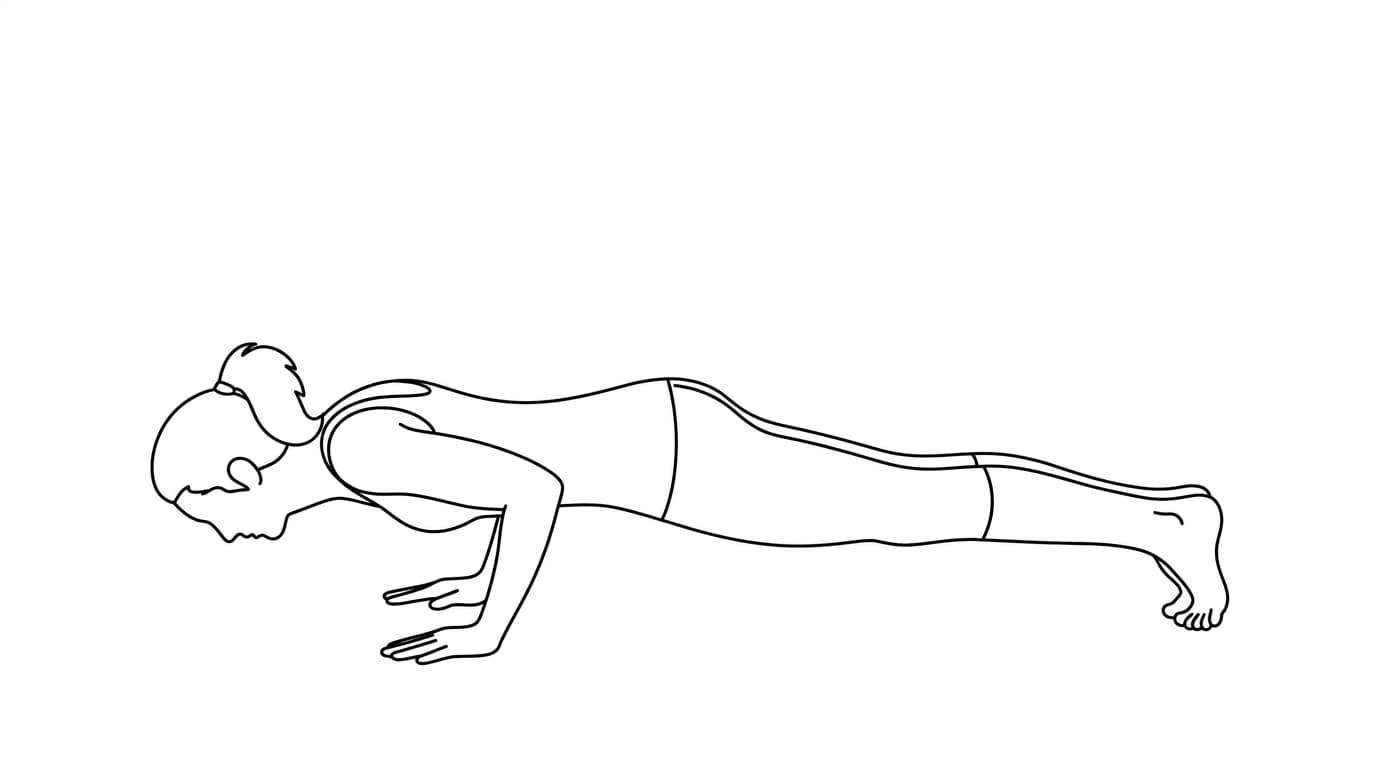
What is Low Push-up?
Chaturanga Dandasana is a demanding arm-supported lowering often used in flowing sequences. It is not necessary to lower close to the floor, and dropping the shoulders can strain the joints.
How should you approach a supported version?
Learn the transition from a qualified teacher, especially if new to weight-bearing movement.
- Start at a wall or with knees down.
- Keep the elbows near the torso and lower only a small distance if that remains controlled.
- Stop before the shoulders dip below the elbows or the breath becomes held.
- Lower the knees and rest rather than repeating a fatigued attempt.
How can you modify Chaturanga?
Practice a wall push-up, knees-down plank, or a controlled lowering from hands and knees. These are alternatives, not failures.
When should you stop or modify?
Stop for wrist, elbow, shoulder, or back pain, numbness, or breath restriction. This draft awaits teacher review.
Common question: Should I lower until my chest reaches the floor?
No. The transition is not a floor push-up, and depth is not the goal.
Références et lectures complémentaires
Ces références fournissent un contexte général. Elles ne valident pas chaque indication de cette page et ne remplacent pas les conseils d’un enseignant qualifié.
- Yoga: Effectiveness and Safety National Center for Complementary and Integrative Health (NCCIH). General context on yoga safety and adapting postures; not pose-specific instruction.