
Heron Pose is a seated posture that may involve lifting and extending one leg while the other leg is folded. Use a strap and keep the lifted knee bent; do not pull the foot toward the face or force the folded knee.
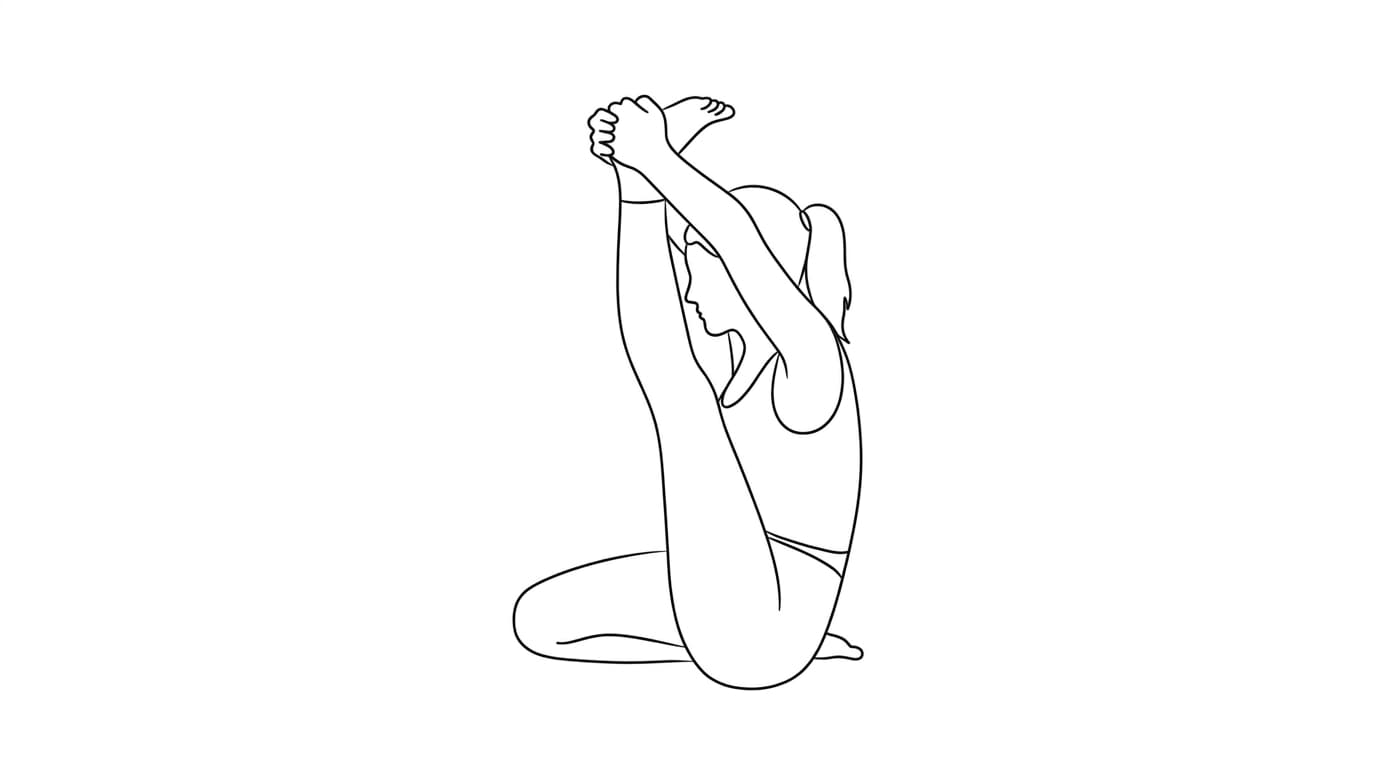
What is Heron Pose?
Kraunchasana is a seated leg-extension posture. Its full form combines a folded-leg seat with a raised extended leg, so a strap, bent knee, or chair can be useful adaptations.
How do you explore a supported version?
Sit on a folded blanket and keep the strap loose enough not to pull the leg.
- Begin with one leg extended and the other folded only if the knee and ankle are comfortable.
- Loop a strap around the extended foot and hold the ends with relaxed arms.
- Lift the leg slightly with the knee bent, or keep the heel on the floor and practice the strap hold there.
- Keep the torso upright and breathe freely.
- Lower the leg gently, extend both legs, and change sides if comfortable.
How can you modify Heron Pose?
Keep the lifted foot low, bend the knee, support the folded leg, or practice seated in a chair using a strap around one foot.
When should you stop or modify?
Stop for knee, hip, back, or hamstring pain, numbness, or dizziness. This draft awaits teacher review.
Common question: Does the leg need to straighten?
No. A bent-knee or heel-down variation is a useful starting point.
Références et lectures complémentaires
Ces références fournissent un contexte général. Elles ne valident pas chaque indication de cette page et ne remplacent pas les conseils d’un enseignant qualifié.
- Yoga: Effectiveness and Safety National Center for Complementary and Integrative Health (NCCIH). General context on yoga safety and adapting postures; not pose-specific instruction.