
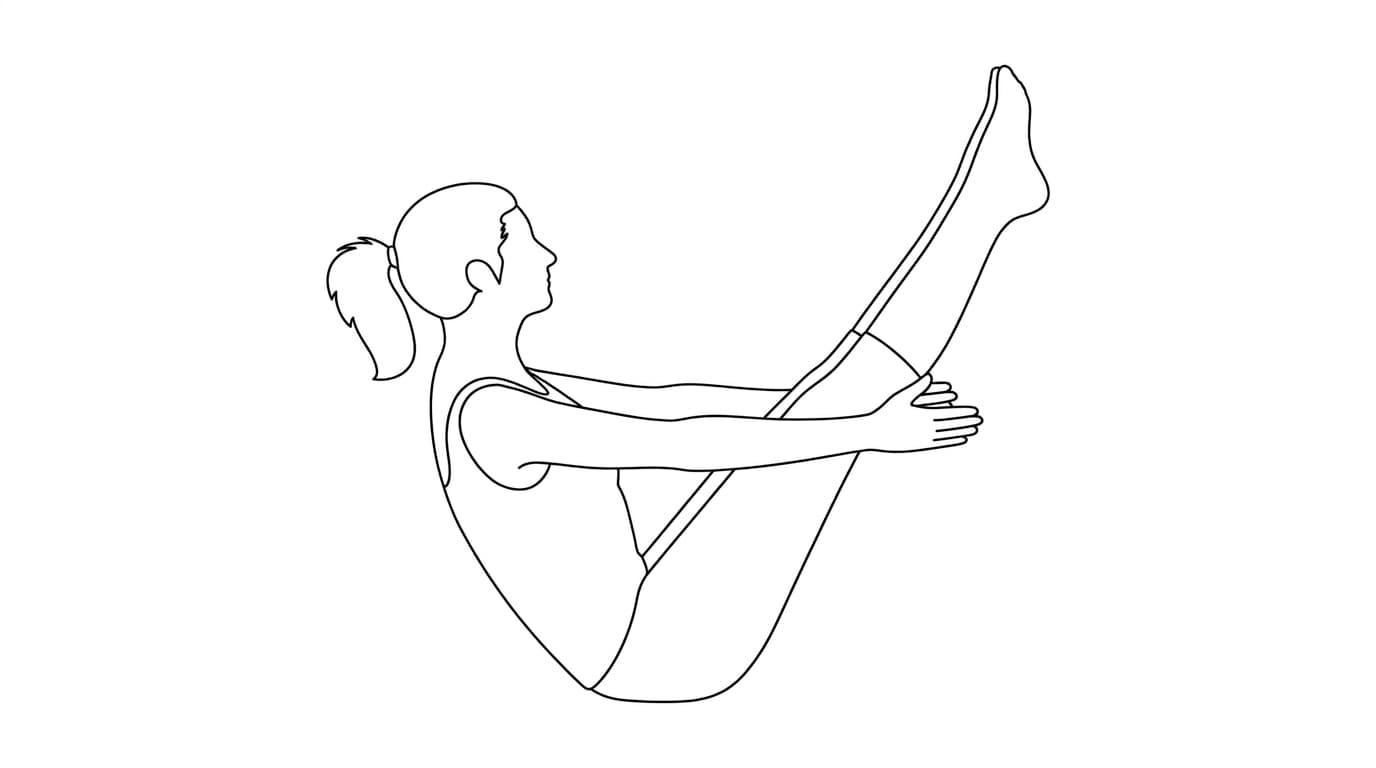
Boat Pose is a seated balance that may involve lifting the feet while keeping the torso upright. The feet can stay on the floor, knees can remain bent, and hands can support the thighs; lifting the legs is optional.
What is Boat Pose?
Navasana is a seated balance often taught with the knees bent and feet lifted. Versions differ, and keeping the feet down or holding the thighs can make the position more accessible.
How do you practice a supported Boat Pose variation?
Sit on a non-slip surface with the knees bent and feet resting on the floor.
- Place the hands behind the thighs and lengthen the torso comfortably.
- Lean back only a small amount while keeping the feet grounded.
- If stable and comfortable, lift one foot briefly, then lower it and try the other; lifting both feet is optional.
- Keep the breath easy and avoid holding it.
- Return upright and place both feet down before resting.
What alignment cues can help?
- Choose a small range that does not cause the lower back to round painfully.
- Keep the neck relaxed and gaze forward.
- Use the hands for support rather than straining to reach the arms forward.
How can you modify Boat Pose?
Keep both feet on the floor, lift one foot at a time, or sit on a chair and practice a gentle supported lean. Avoid adding straight-leg variations unless they feel comfortable and controlled.
When should you stop or modify?
Stop if you feel sharp back or hip pain, dizziness, or breath restriction. People with back or abdominal concerns may need individualized guidance. This draft awaits teacher review.
Common question: Do both feet need to lift?
No. A feet-down or one-foot-lift version can explore the balance without requiring the full variation.
Références et lectures complémentaires
Ces références fournissent un contexte général. Elles ne valident pas chaque indication de cette page et ne remplacent pas les conseils d’un enseignant qualifié.
- Yoga: Effectiveness and Safety National Center for Complementary and Integrative Health (NCCIH). General context on yoga safety and adapting postures; not pose-specific instruction.