
Revolved Half Moon combines a one-legged balance with torso rotation and is demanding for balance and coordination. Use a wall and high support, keep the lifted toes down if needed, and do not practice the unsupported full pose from text alone.
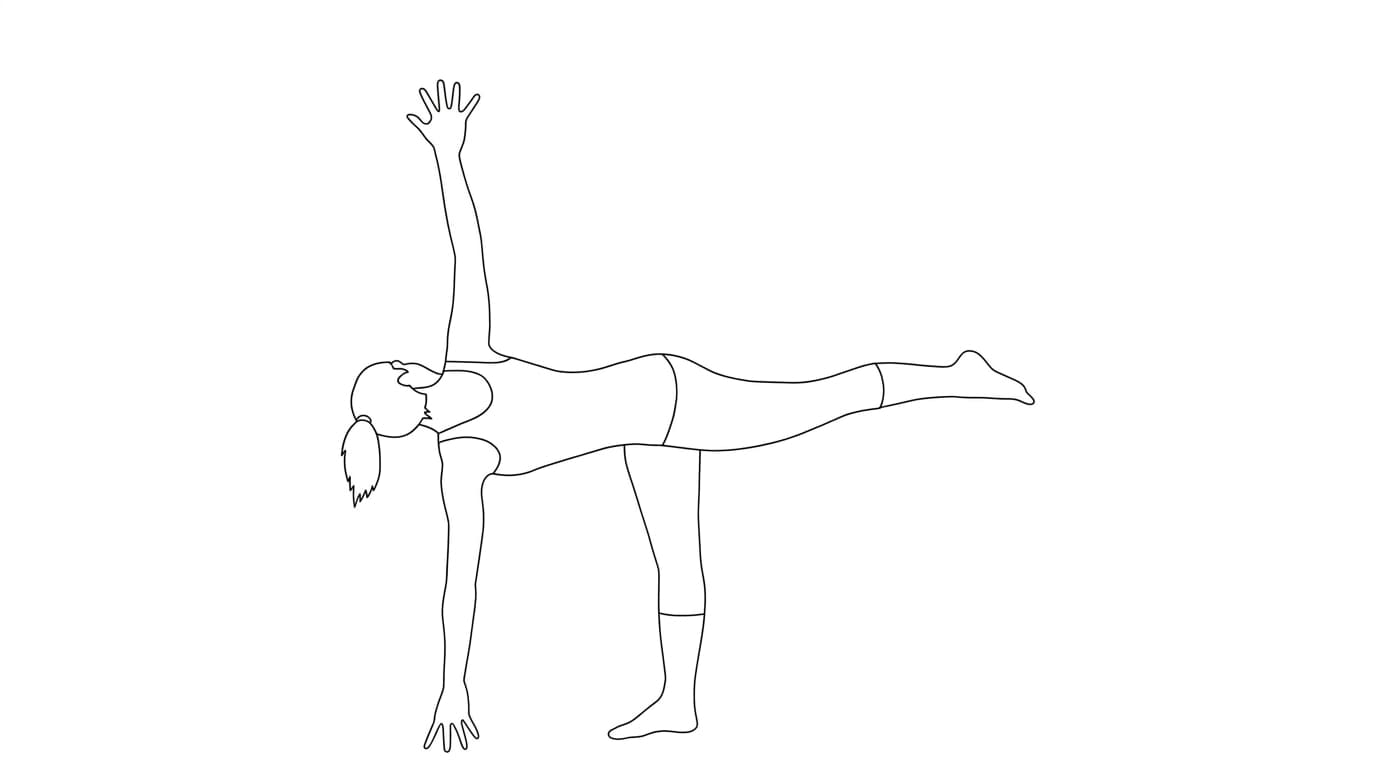
What is Revolved Half Moon?
Parivritta Ardha Chandrasana is a revolved standing balance. The combination of balance and rotation can be challenging; this page focuses on supported preparation rather than a full entry tutorial.
How should a supported exploration work?
Use a wall and a stable chair or high block, and practice only if you already have appropriate balance experience.
- Stand beside a wall with both feet grounded and one hand on the support.
- Shift weight slightly toward one foot without locking the knee.
- Hinge forward a small amount and let the other toes slide back as a kickstand.
- If stable, turn the torso only slightly; keep the raised foot low or on the floor.
- Return to two feet before changing sides.
How can you modify the posture?
Keep both feet grounded, use a chair for the hand, omit the rotation, and practice ordinary supported Half Moon first.
When should you stop or seek instruction?
Do not attempt the unsupported full balance without in-person guidance. Stop for pain, dizziness, numbness, or instability. This draft awaits qualified review.
Common question: Is the full pose a beginner balance?
No. It combines rotation and single-leg balance, so supported instruction is important.
Références et lectures complémentaires
Ces références fournissent un contexte général. Elles ne valident pas chaque indication de cette page et ne remplacent pas les conseils d’un enseignant qualifié.
- Yoga: Effectiveness and Safety National Center for Complementary and Integrative Health (NCCIH). General safety context for yoga and balance modifications; not pose-specific instruction.