
Skandasana is a lateral lunge with one knee bending while the other leg lengthens to the side. Use blocks or a chair for balance, keep the bent knee comfortable, and do not force the straight leg or heel to the floor.
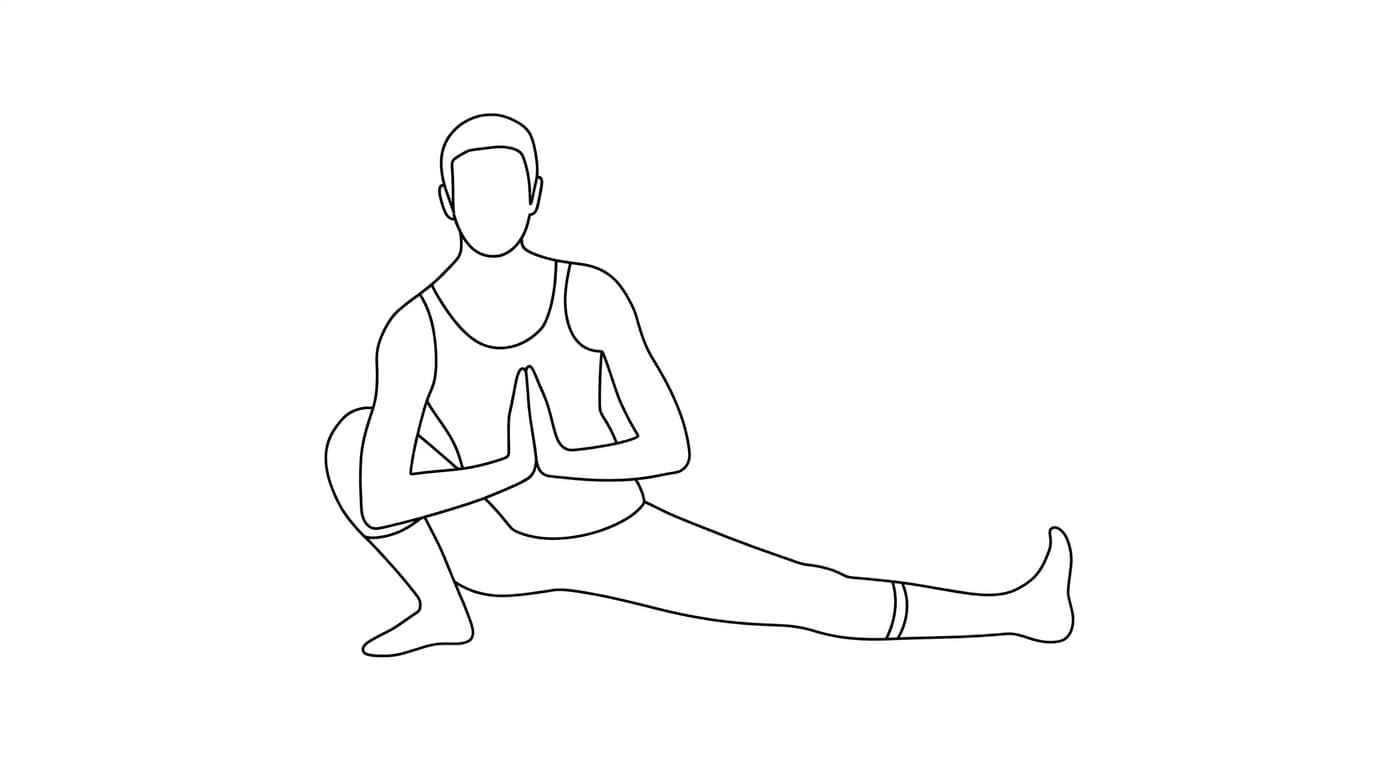
What is Side Lunge?
Skandasana is commonly taught as a side-to-side lunge from a wide stance. The depth and foot orientation vary; a high, supported version is a useful starting point.
How do you explore a supported side lunge?
Stand near a chair or wall and keep the stance wide enough for balance.
- Turn the toes slightly outward and bend one knee a small amount.
- Keep the other leg long but not locked; let its foot angle naturally.
- Place the hands on blocks, a chair, or the bent thigh.
- Shift only as far as the hips, knees, and ankles remain comfortable.
- Return to center with support and practice the other side.
How can you modify Side Lunge?
Keep both knees slightly bent, raise the hands, narrow the stance, or use a chair-supported squat instead.
When should you stop or modify?
Stop for sharp knee, hip, ankle, or groin pain, numbness, or balance loss. This draft awaits teacher review.
Common question: Does the straight leg need to stay perfectly straight?
No. Keep it soft and comfortable rather than locking the knee.
Références et lectures complémentaires
Ces références fournissent un contexte général. Elles ne valident pas chaque indication de cette page et ne remplacent pas les conseils d’un enseignant qualifié.
- Yoga: Effectiveness and Safety National Center for Complementary and Integrative Health (NCCIH). General context on yoga safety and adapting postures; not pose-specific instruction.