
Supine Straddle is a reclined leg-opening position with the legs moving apart. Support the legs with straps or a wall and keep the range small; do not use gravity or the hands to force a wide stretch.
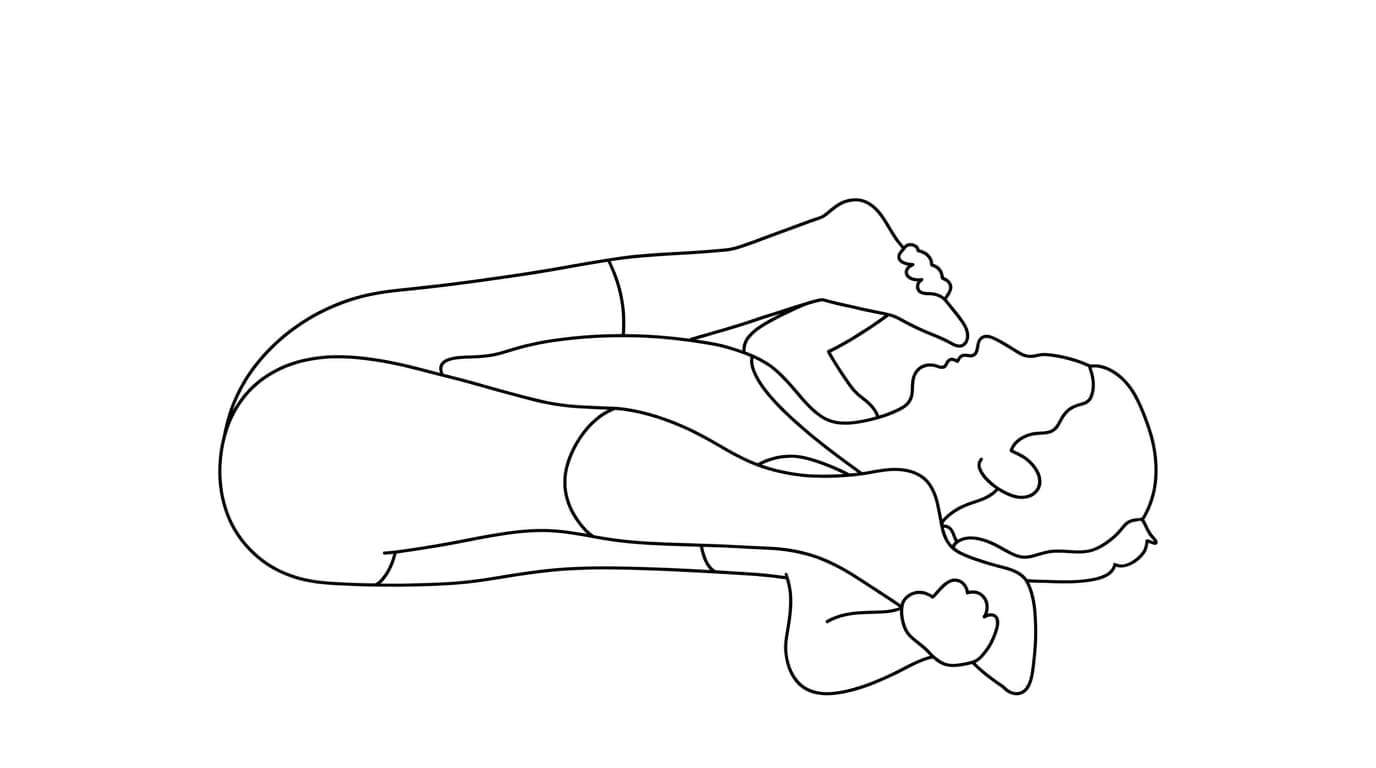
What is Supine Straddle?
Supta Samakonasana is a supine leg-opening posture. The catalog name does not specify whether the legs are actively held or supported, so choose a stable, low-range version.
How do you explore a supported position?
Lie on the back with a wall or strap available.
- Keep both knees bent and feet grounded to begin.
- If comfortable, raise one leg at a time and support it with a strap or against a wall.
- Allow the legs to move apart only a small distance while the pelvis remains settled.
- Keep the knees soft and breathe normally.
- Bring the legs back together with support before lowering the feet.
How can you modify Supine Straddle?
Keep the feet on the floor, bend the knees, or place cushions beneath the thighs. A seated Bound Angle variation may feel more manageable.
When should you stop or modify?
Stop for sharp groin, hip, back, or knee pain, numbness, or tingling. This draft awaits teacher review.
Common question: Should I lower my legs as wide as possible?
No. A small supported range is enough; forcing the stretch is not the goal.
Références et lectures complémentaires
Ces références fournissent un contexte général. Elles ne valident pas chaque indication de cette page et ne remplacent pas les conseils d’un enseignant qualifié.
- Yoga: Effectiveness and Safety National Center for Complementary and Integrative Health (NCCIH). General context on yoga safety and adapting postures; not pose-specific instruction.