
Standing Splits is a forward-fold balance in which one leg lifts behind the body. Keep both hands on blocks or a chair and the lifted leg low; hip height is optional, and the standing knee may bend.
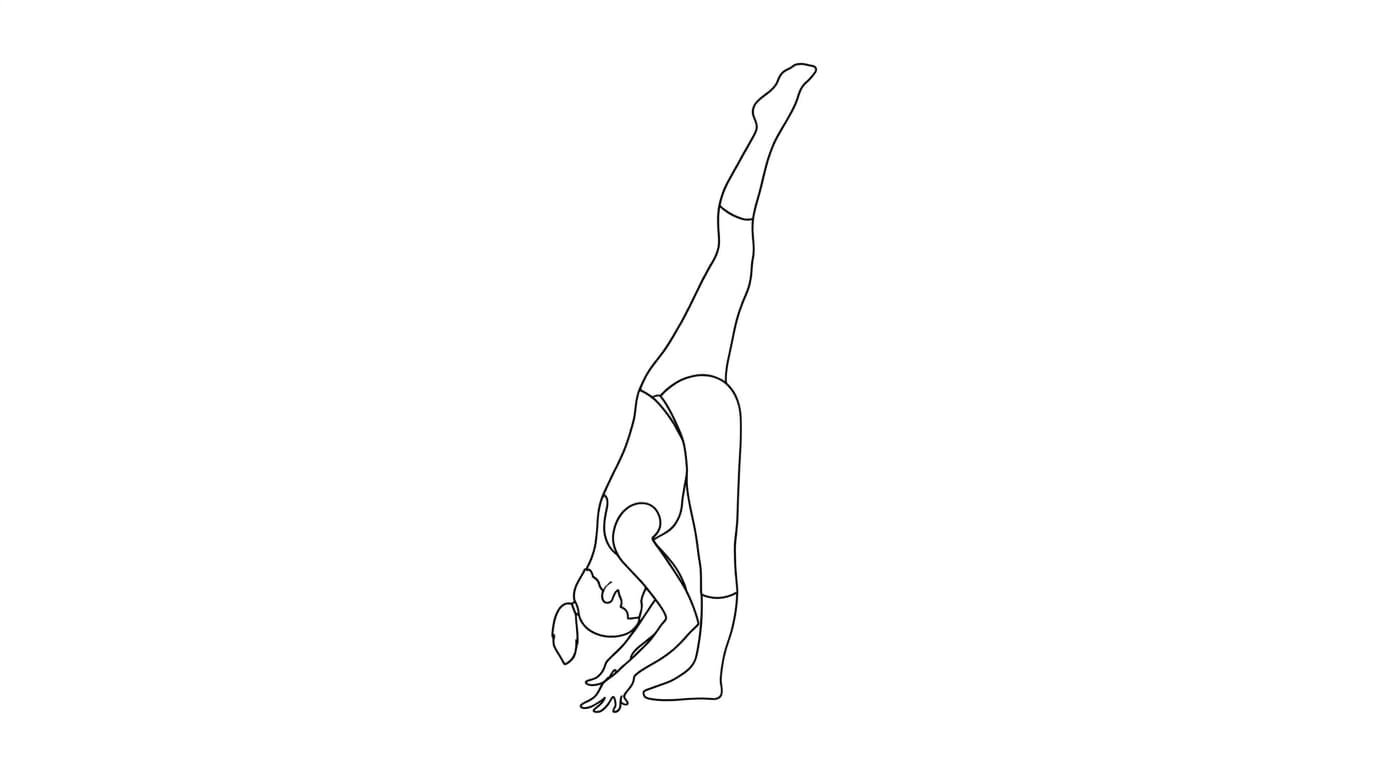
What is Standing Splits?
Urdhva Prasarita Eka Padasana is a balance variation of a standing forward fold. The lifted leg can stay low, and the hands can rest on raised support.
How do you explore a supported variation?
Place a chair or blocks in front of you and keep the stance stable.
- Begin in a shallow forward fold with both feet grounded.
- Bend the standing knee and place both hands on support.
- Slide the other toes back along the floor; only float the foot if balance remains easy.
- Keep the pelvis comfortable and the neck relaxed; do not push the lifted leg higher.
- Lower the lifted foot before slowly rising.
How can you modify Standing Splits?
Keep the lifted toes down, bend the standing knee, raise the hands, or practice with hands on a wall. Skip the balance if it feels unsteady.
When should you stop or modify?
Stop for pain, dizziness, or balance loss. This draft awaits qualified teacher review.
Common question: Does the lifted leg need to reach overhead?
No. A low, supported leg lift is a complete variation.
Références et lectures complémentaires
Ces références fournissent un contexte général. Elles ne valident pas chaque indication de cette page et ne remplacent pas les conseils d’un enseignant qualifié.
- Yoga: Effectiveness and Safety National Center for Complementary and Integrative Health (NCCIH). General context on yoga safety and balance modifications; not pose-specific instruction.