
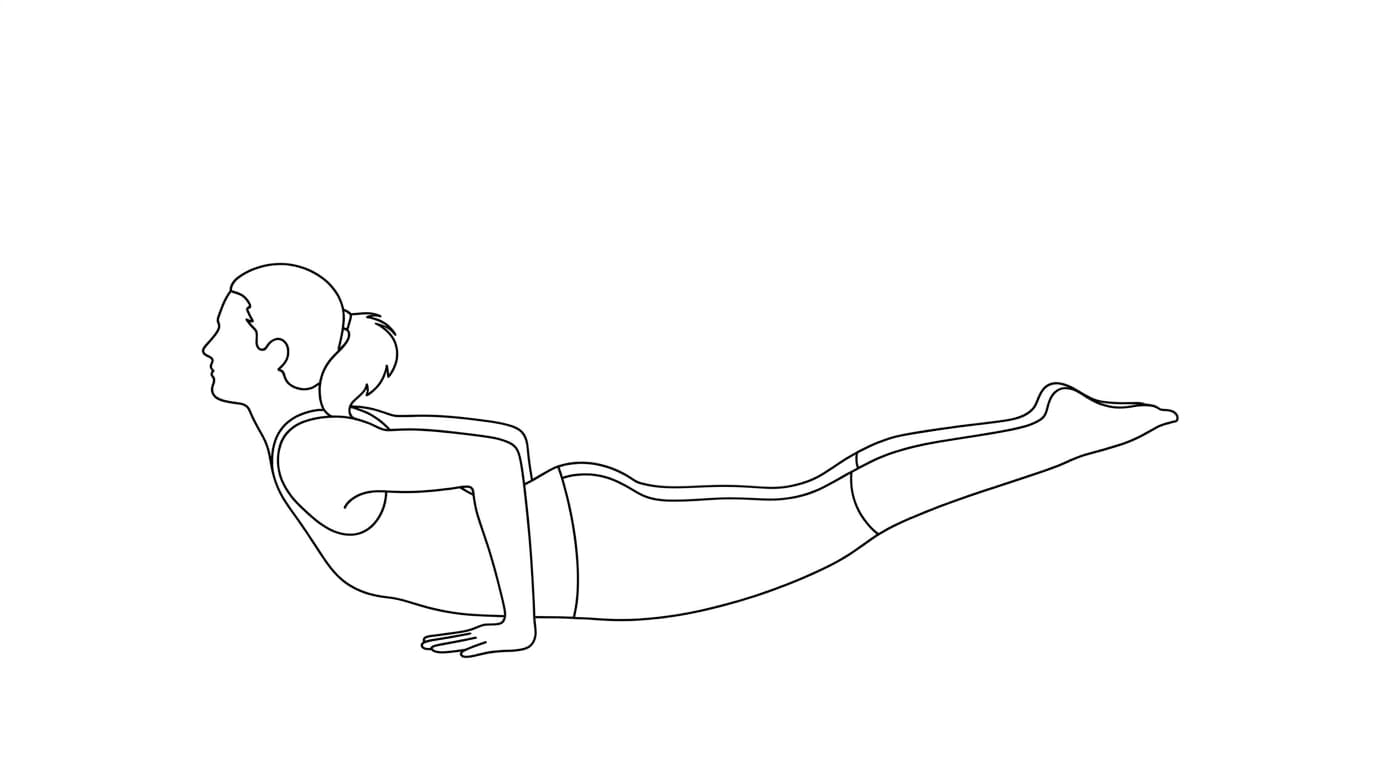
Locust II is one variation in the Shalabhasana family, commonly practiced lying face down with some combination of arm or leg lift. The variations differ by school; use a small lift and avoid compressing the lower back or straining the neck.
What is Locust II?
Shalabhasana B is a named variation of Locust Pose, but the exact arm and leg arrangement is not consistent across all teaching sources. This page offers only a low-range exploratory version, not a definitive lineage-specific form.
How do you explore a small-range prone lift?
Lie on a padded surface with the neck neutral and the legs resting.
- Place the forehead or one cheek on the mat and let the arms rest beside the body.
- Gently lengthen through the legs and lift one leg a small amount without turning the pelvis.
- Lower it, pause, and try the other side; lifting both legs or adding the arms is optional and should be teacher-guided.
- Keep the breath easy and avoid forcing the lift higher.
- Rest prone or turn to one side to come out.
How can you modify the posture?
Keep both legs down and gently engage the back of the body, or practice a low single-leg lift. Use a folded blanket under the pelvis if pressure is uncomfortable.
When should you stop or modify?
Stop for back, neck, or shoulder pain, numbness, or breath restriction. Exact Shalabhasana B technique needs qualified-source verification before detailed instruction.
Common question: Is there one universally agreed Locust II shape?
Variations are taught differently. Follow a qualified teacher from the tradition or method you practice.
Referenties en verdere lectuur
Deze referenties bieden algemene context. Ze valideren niet elke aanwijzing op deze pagina en vervangen geen instructie van een gekwalificeerde leraar.
- Yoga: Effectiveness and Safety National Center for Complementary and Integrative Health (NCCIH). General context on yoga safety and adapting postures; not pose-specific instruction.