
Camel Pose is a kneeling backbend that can be practiced with the hands on the hips and only a small chest lift. Reaching for the heels is optional; keep the neck neutral and avoid pushing the lower back into a deep arch.
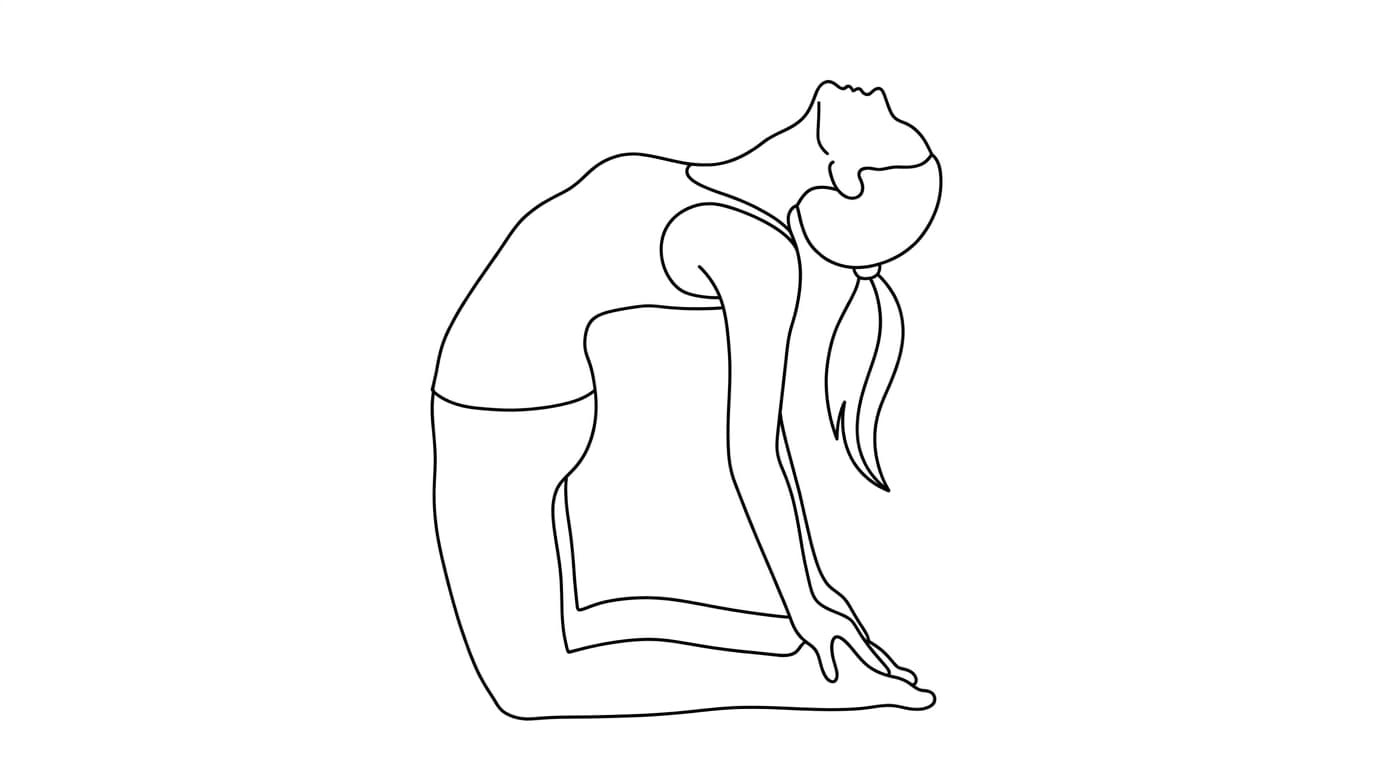
What is Camel Pose?
Ushtrasana is a kneeling backbend often taught with the hands reaching toward the heels. The hands can stay on the hips, and the movement can remain very small.
How do you explore a low-range Camel Pose?
Use padding under the knees and keep the gaze forward.
- Kneel with the knees comfortably spaced and the toes tucked or untucked according to comfort.
- Place the hands on the hips and lengthen upward through the torso.
- Move the chest slightly upward and back only while the lower back remains comfortable.
- Keep the neck neutral; do not drop the head backward.
- Return upright by pressing the hips forward gently and rest in a neutral position.
How can you modify Camel Pose?
Keep the hands on the hips, place blocks beside the heels for a higher reach, or practice a supported seated chest opening instead. Heel-grabbing is not required.
When should you stop or modify?
Stop for sharp back, knee, or neck pain, dizziness, or breath restriction. People with back or neck concerns should seek individualized instruction. This draft awaits teacher review.
Common question: Do the hands need to reach the heels?
No. Hands on the hips or blocks are valid modifications.
Referenties en verdere lectuur
Deze referenties bieden algemene context. Ze valideren niet elke aanwijzing op deze pagina en vervangen geen instructie van een gekwalificeerde leraar.
- Yoga: Effectiveness and Safety National Center for Complementary and Integrative Health (NCCIH). General context on yoga safety and adapting postures; not pose-specific instruction.