
Seated Forward Bend II is a named variation in the Paschimottanasana family, but the catalog does not specify its method-specific leg or hand arrangement. Use a supported seated fold with bent knees and verify the exact version before teaching its variant cues.
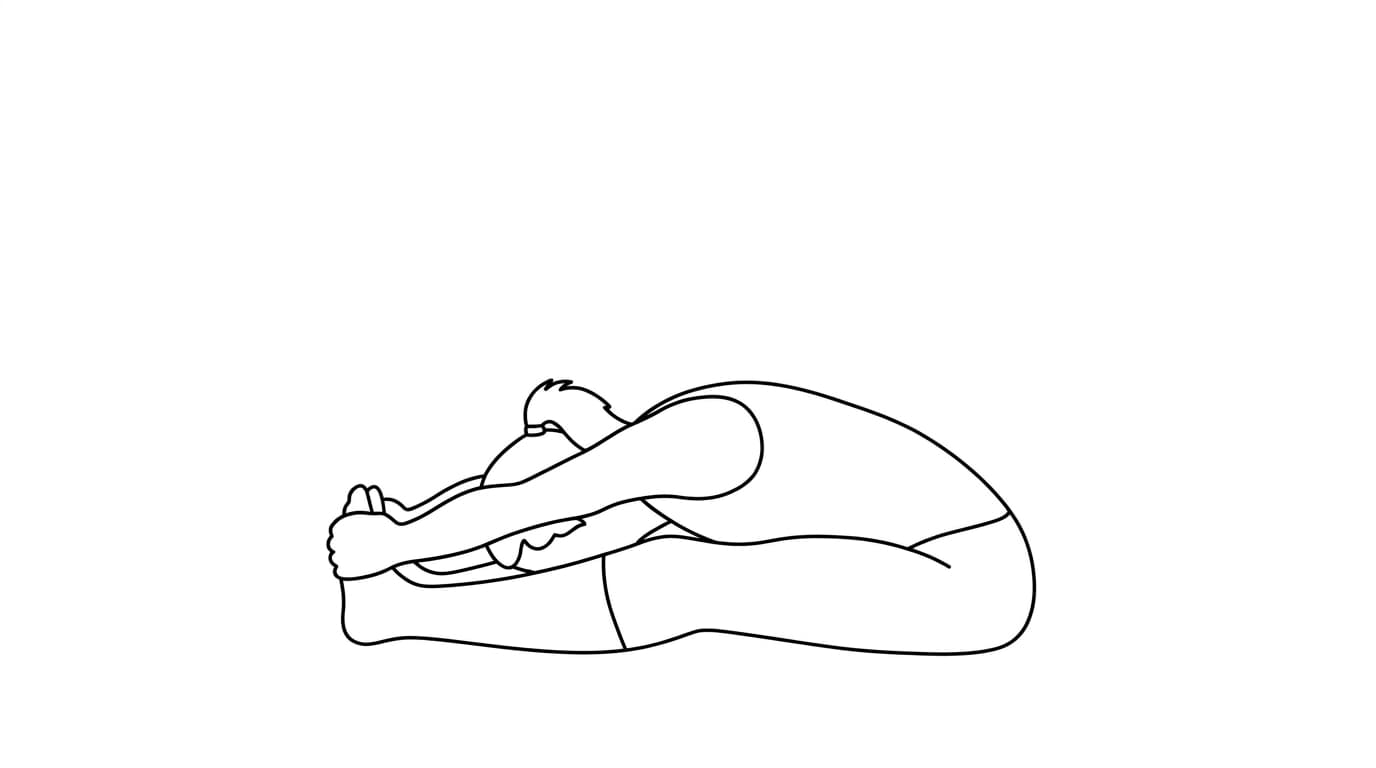
What is Seated Forward Bend II?
Paschimottanasana B is a lettered variation in the Seated Forward Bend family. Lettered forms differ among methods, and the catalog does not establish a universal distinction for this version.
How can you practice a supported seated fold?
Use a folded blanket and a bolster or chair for support.
- Sit with the legs in a comfortable extended position and knees softly bent.
- Rest the hands on the thighs or a support.
- Hinge forward only slightly, or remain upright.
- Let the breath remain easy and avoid pulling on the feet.
- Return upright slowly.
How can you modify the variation?
Bend the knees more, sit on a chair, or rest the torso on a bolster. Confirm the specific B-form from a qualified source before adding distinctive technique.
When should you stop or modify?
Stop for sharp back, knee, or hamstring discomfort, numbness, or dizziness. This draft awaits source verification and teacher review.
Common question: How is version B different from A?
That distinction is method-dependent and needs confirmation from the source tradition being taught.
References and further reading
These references provide general context. They do not validate every cue on this page or replace instruction from a qualified teacher.
- Yoga: Effectiveness and Safety National Center for Complementary and Integrative Health (NCCIH). General context on yoga safety; not pose-specific instruction.