
Half Moon Pose is a standing balance with one hand supported and the other leg lifting to the side. Use a wall or block, keep the lifted leg low, and avoid treating the full-height balance as necessary.
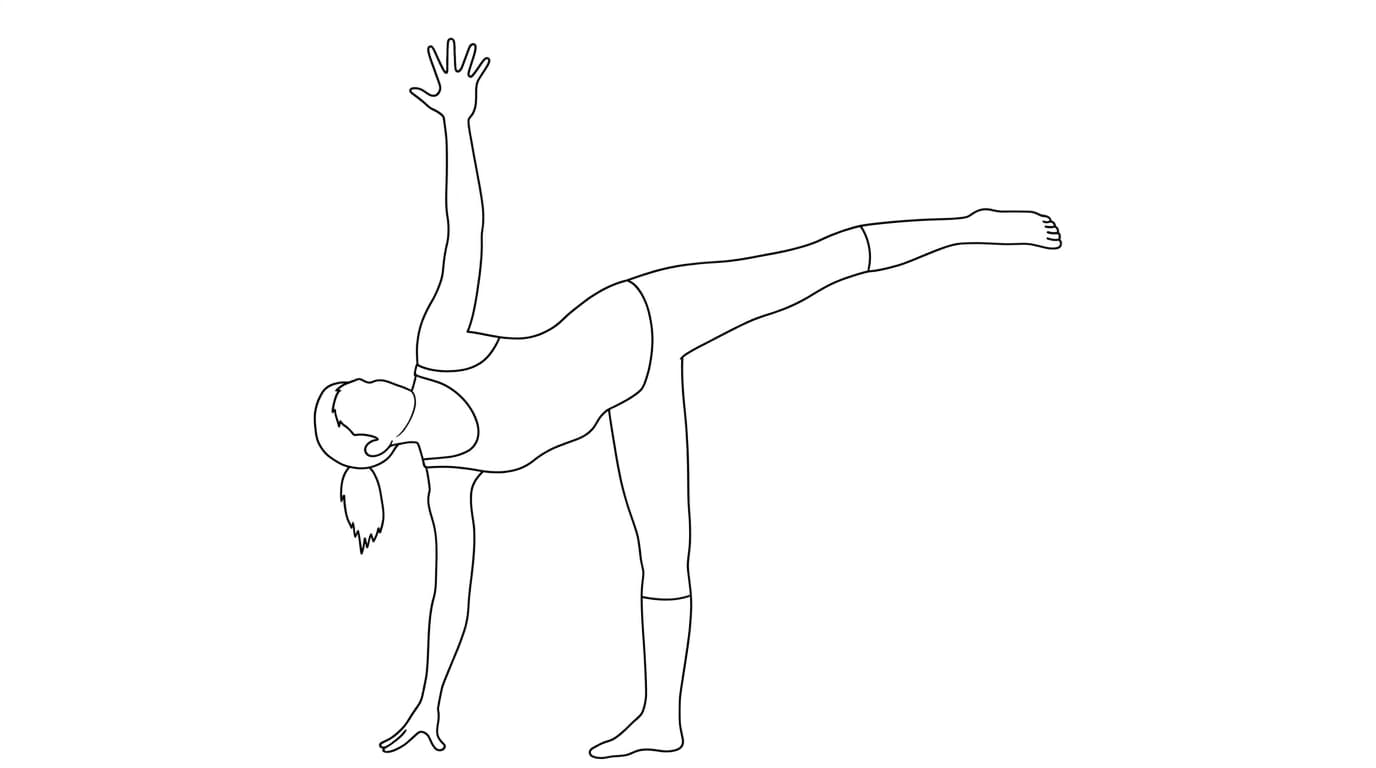
What is Half Moon Pose?
Ardha Chandrasana is a one-legged standing balance often entered from Triangle Pose. The hand can stay on a block or chair, and the lifted leg may remain low.
How do you explore a supported version?
Practice beside a wall with a block or stable chair available.
- Begin in a wide stance and bend one knee slightly.
- Place one hand on a block or chair in front of that foot.
- Shift weight gradually into the bent leg and let the other foot slide back, keeping its toes near the floor.
- If stable, lift the back leg a small amount while keeping the support and gaze low.
- Lower the leg, return to the starting stance, and change sides.
How can you modify Half Moon?
Keep the lifted toes on the floor, use a wall behind the back, and keep the supporting hand on a chair. Reduce the torso rotation.
When should you stop or modify?
Use support if balance is uncertain. Stop for pain, dizziness, or instability. This draft awaits qualified teacher review.
Common question: Does the lifted leg need to reach hip height?
No. A low lift or toe-supported position is a valid exploration.
Références et lectures complémentaires
Ces références fournissent un contexte général. Elles ne valident pas chaque indication de cette page et ne remplacent pas les conseils d’un enseignant qualifié.
- Yoga: Effectiveness and Safety National Center for Complementary and Integrative Health (NCCIH). General context on yoga safety and balance adaptations; not pose-specific instruction.