
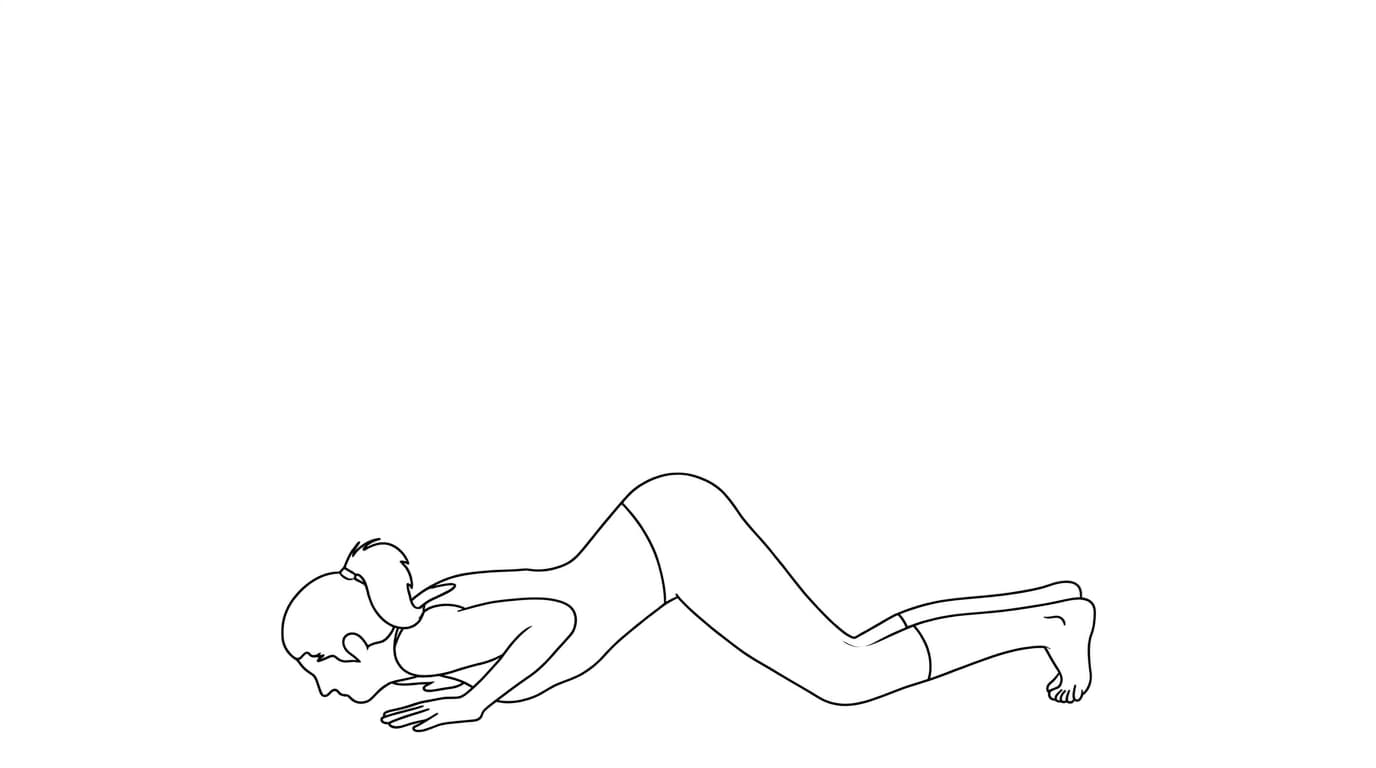
Eight-Point Pose is commonly taught as a prone lowering position with several body points supported. The neck and shoulders should not bear sudden load; use a knees-down alternative and learn the specific transition from a qualified teacher.
What is Eight-Point Pose?
Ashtangasana is used in some sequences as a transition from a supported plank toward the floor. Teachers differ on its exact setup; the name does not require placing weight on the neck.
How should this transition be approached?
Learn the sequence from a qualified teacher. This page avoids prescribing a rapid lowering movement.
- Keep the knees grounded if lowering from plank.
- Place the hands comfortably and lower the chest under control only within a range you can manage.
- Keep the neck long and avoid dropping the chin forcefully.
- Use the floor or props to support the body rather than collapsing into joints.
How can you modify the movement?
Lower from hands and knees, keep the torso upright, or use a wall-supported push-up. A transition is optional; a rest on hands and knees is valid.
When should you stop or modify?
Stop for wrist, shoulder, neck, or back pain, numbness, or breath restriction. This draft awaits qualified review.
Common question: Does the neck count as a weight-bearing point?
No. Do not drop weight onto the front of the neck.
Références et lectures complémentaires
Ces références fournissent un contexte général. Elles ne valident pas chaque indication de cette page et ne remplacent pas les conseils d’un enseignant qualifié.
- Yoga: Effectiveness and Safety National Center for Complementary and Integrative Health (NCCIH). General context on yoga safety and adapting postures; not pose-specific instruction.