
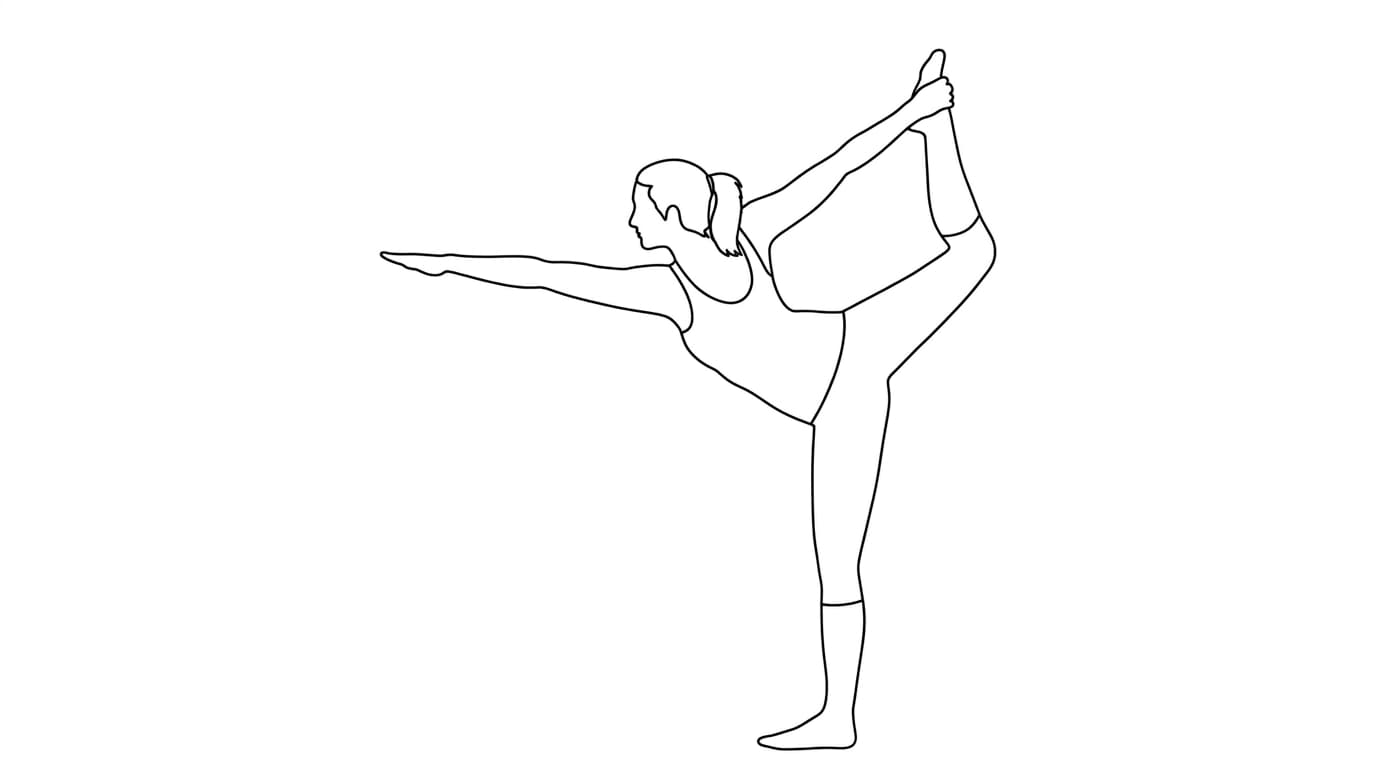
Standing Bow is a one-legged balance with a backbend and a hand holding the lifted foot. It combines balance, shoulder range, and spinal extension; use direct qualified instruction and do not pull the foot higher or practice unsupported near hazards.
What is Standing Bow?
Dandayamana Dhanurasana is a standing balance that combines a foot hold and backbend. A full version can be demanding and should not be learned from a text description alone.
How should it be approached?
Practice only after a qualified teacher has shown a suitable setup and exit. This draft does not prescribe the full entry.
- Stand near a wall or stable support.
- Keep the standing foot grounded and the lifted leg low.
- Do not pull the foot upward or force the chest forward.
- Release the foot gently and return to two feet before changing sides.
What is a gentler alternative?
Practice a supported standing balance without a backbend, or a low-range prone back-body posture with teacher guidance.
When should you stop or seek instruction?
Stop for shoulder, knee, back, or ankle pain, dizziness, or instability. Avoid the full pose without direct instruction. This draft awaits qualified review.
Common question: Should I kick the foot high to deepen the backbend?
No. Do not force the leg or spine; use the version a qualified teacher has assessed for you.
Références et lectures complémentaires
Ces références fournissent un contexte général. Elles ne valident pas chaque indication de cette page et ne remplacent pas les conseils d’un enseignant qualifié.
- Yoga: Effectiveness and Safety National Center for Complementary and Integrative Health (NCCIH). General context on yoga safety and balance modifications; not pose-specific instruction.