
Waterfall Pose is commonly used for a reclined leg lift with the legs supported upward. Keep the head and back comfortable, bend the knees if needed, and use a wall or chair rather than holding the legs unsupported.
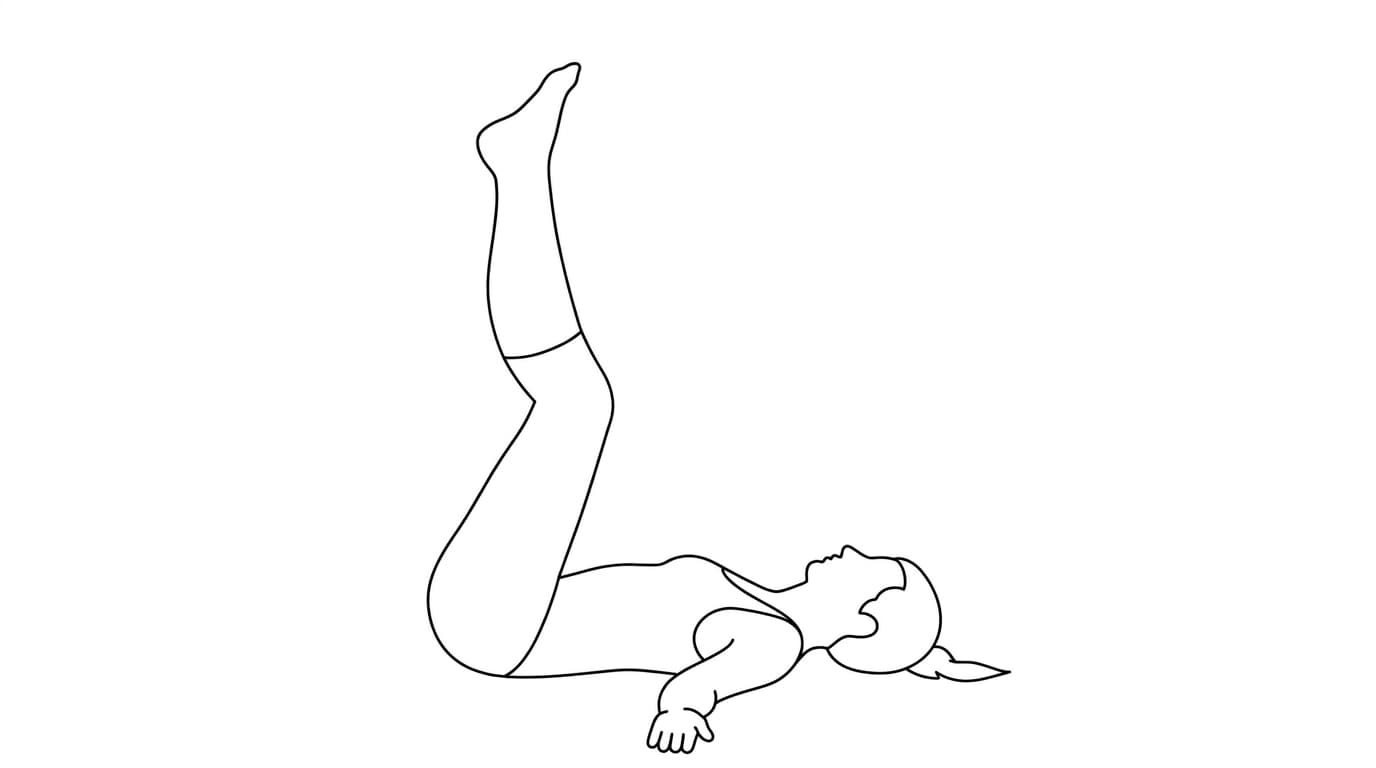
What is Waterfall Pose?
Supta Dandasana is used by some teachers for a supported reclined position with the legs elevated. Because names vary, treat this as a general restorative setup rather than a universal pose definition.
How do you set up a supported leg rest?
Use a wall or sturdy chair and a comfortable padded surface.
- Sit beside a wall and lower onto one side before rolling onto the back.
- Rest the lower legs on the wall or chair seat; knees may remain bent.
- Adjust the distance so the lower back and hamstrings feel comfortable.
- Rest the arms beside the body and breathe naturally.
- To leave, bend the knees, roll to one side, and sit up slowly.
How can you modify the position?
Place a cushion beneath the knees, keep the feet on the floor, or use a reclined chair. Do not hold the legs overhead if that strains the back.
When should you stop or modify?
Change position for numbness, tingling, back discomfort, or dizziness. This draft awaits qualified review.
Common question: Must the legs be straight up?
No. A supported bent-knee position may be more comfortable.
Références et lectures complémentaires
Ces références fournissent un contexte général. Elles ne valident pas chaque indication de cette page et ne remplacent pas les conseils d’un enseignant qualifié.
- Yoga: Effectiveness and Safety National Center for Complementary and Integrative Health (NCCIH). General context on yoga safety and adapting postures; not pose-specific instruction.