
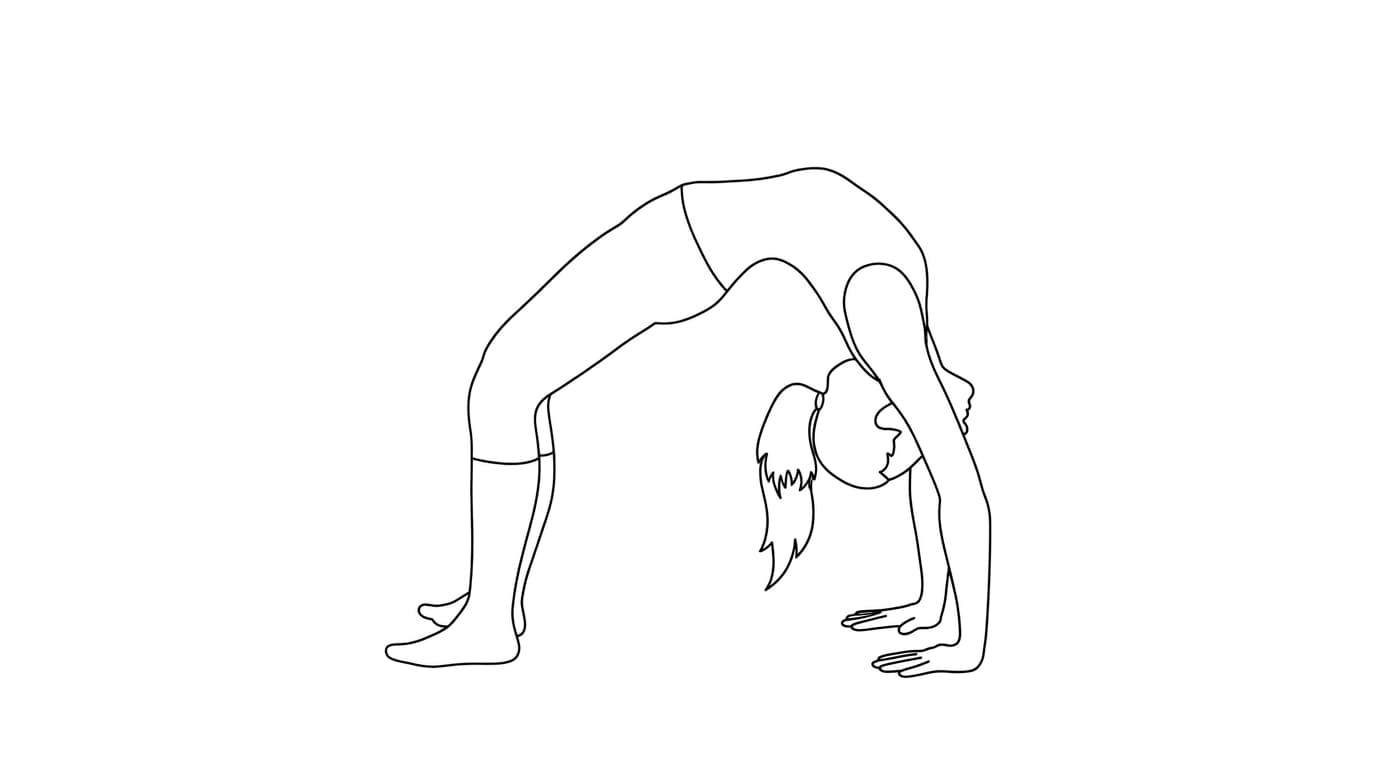
Wheel Pose is a deep backbend supported by the hands and feet. It requires preparation and controlled entry; do not push into it from text alone, and stop for back, wrist, shoulder, or neck pain.
What is Wheel Pose?
Urdhva Dhanurasana is a demanding backbend that lifts the body onto the hands and feet. The full posture should be learned directly from a qualified teacher, not from a written entry sequence.
How should this posture be approached?
Do not attempt the full pose without appropriate preparation and in-person guidance.
- Use a teacher-approved warm-up and exit plan.
- Do not push through the hands or feet if the wrists, shoulders, or back are strained.
- Avoid forcing the neck to turn while weight-bearing.
- Rest immediately for pain, numbness, dizziness, or breathing difficulty.
What is a gentler alternative?
Use a low supported Bridge Pose or a small, comfortable chest-opening movement while lying down.
Common question: Should I press up into Wheel if Bridge feels easy?
Not automatically. Readiness and technique require qualified assessment.
Références et lectures complémentaires
Ces références fournissent un contexte général. Elles ne valident pas chaque indication de cette page et ne remplacent pas les conseils d’un enseignant qualifié.
- Yoga: Effectiveness and Safety National Center for Complementary and Integrative Health (NCCIH). General context on yoga safety; not pose-specific instruction or endorsement.