
Wild Thing is a side balance that transitions into a backbend and may place substantial load on one shoulder and wrist. Learn the transition directly from a qualified teacher; use a grounded side-reach alternative if the support or rotation feels uncertain.
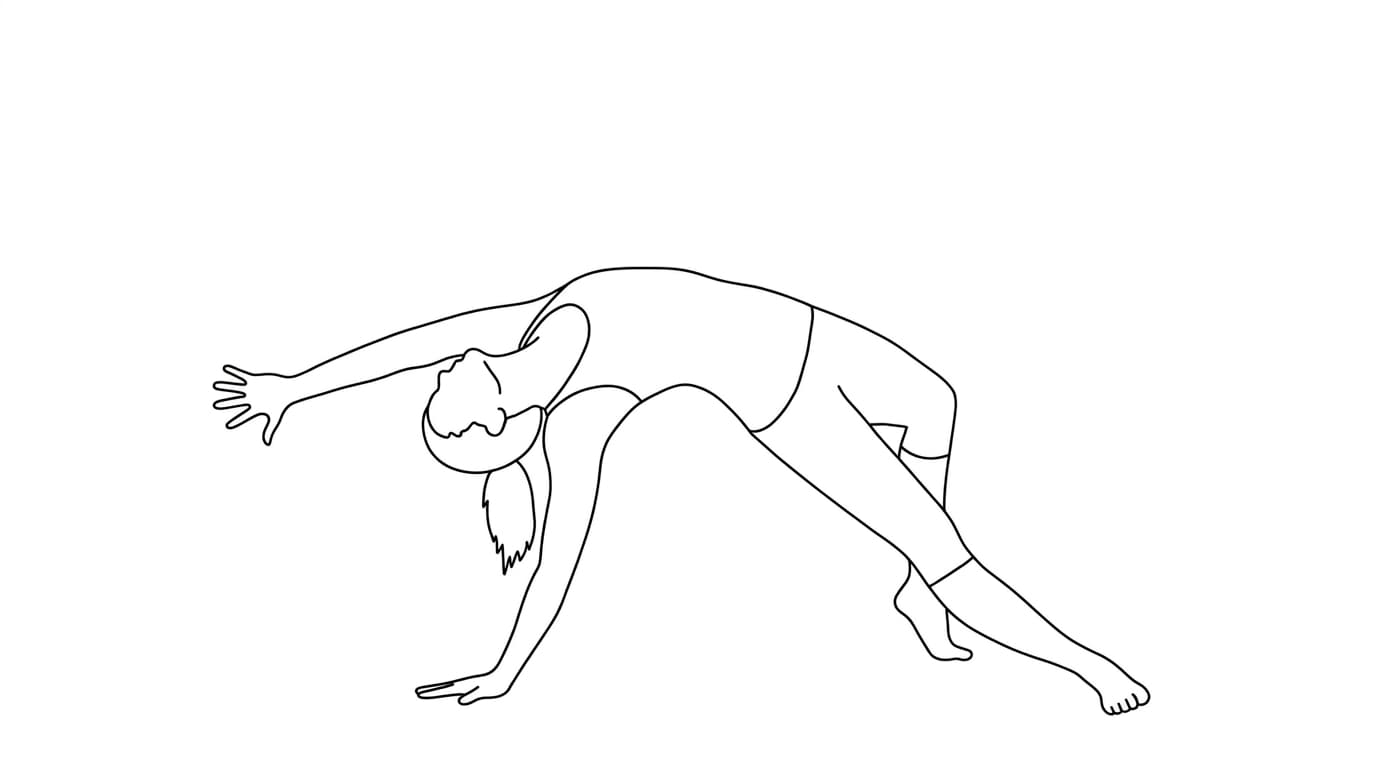
What is Wild Thing?
Chamatkarasana is a dynamic side balance often entered from Side Plank or Downward-Facing Dog. The transition and shoulder position vary, so this page does not teach the full movement.
How should it be approached?
Practice the transition only with direct instruction from a qualified teacher.
- Do not rotate into the pose if the supporting shoulder or wrist feels unstable.
- Avoid dropping the head backward or forcing a deep backbend.
- Keep a stable base and return to a neutral position with control.
- Stop for pain, numbness, or balance loss.
What is a lower-demand alternative?
Practice Side Plank with the lower knee down, or a standing side reach with both feet grounded.
Common question: Can I flip into this pose from Downward Dog?
Do not attempt a dynamic transition from text instructions; learn it in person or choose a supported alternative.
参考文献与扩展阅读
这些参考文献提供一般背景信息。它们并不验证本页中的每一项要领,也不能替代合格教师的指导。
- Yoga: Effectiveness and Safety National Center for Complementary and Integrative Health (NCCIH). General context on yoga safety; not pose-specific instruction or endorsement.