
Pyramid Pose is an asymmetric standing forward fold with the feet set apart along a stable stance. Shorten the stance, bend the front knee, and use blocks or a chair rather than forcing the torso toward the leg.
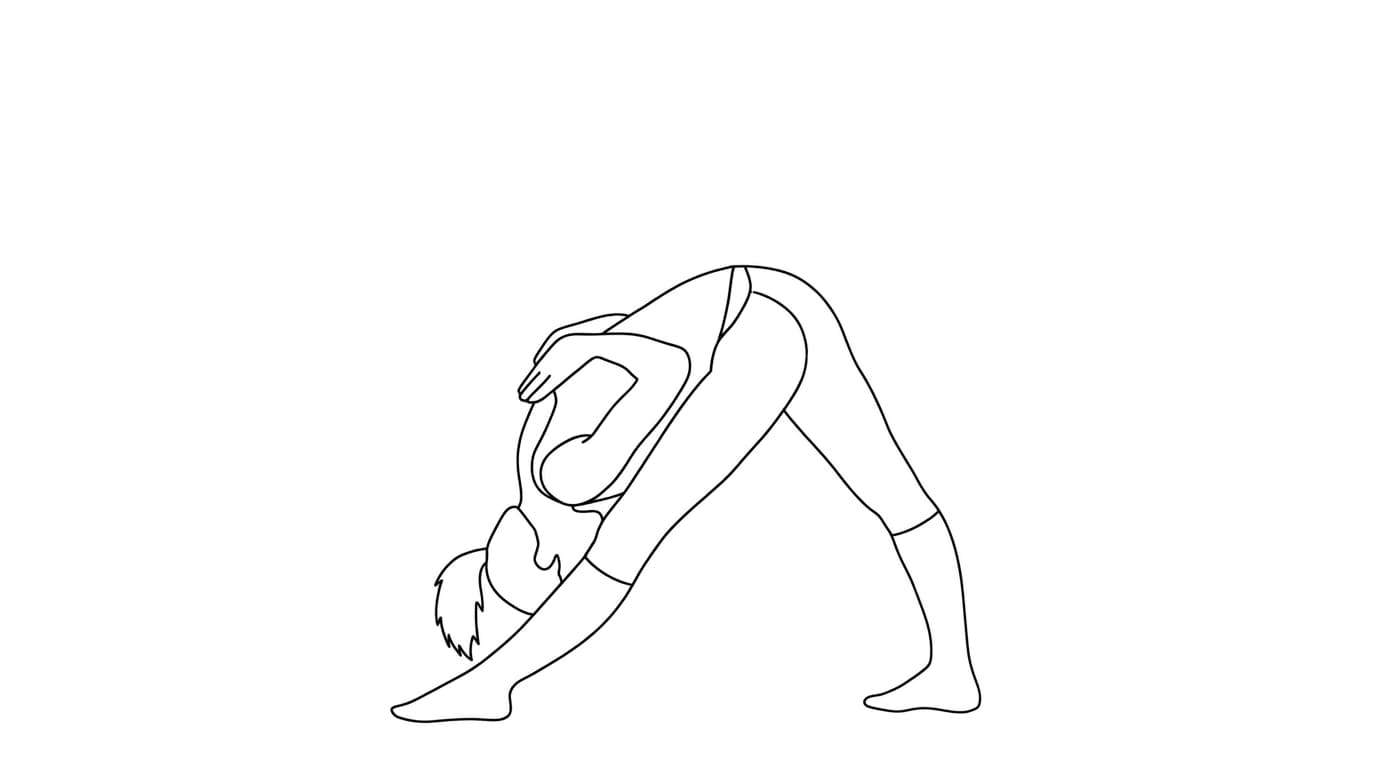
What is Pyramid Pose?
Parshvottanasana is a standing forward fold with the feet separated front to back. Stance and hand position vary; hands may rest on blocks or a chair instead of meeting behind the back.
How do you practice a supported version?
Stand on a non-slip surface and begin with a shorter stance than a full lunge.
- Step one foot forward and the other back, leaving enough width between the feet for balance.
- Keep both knees soft and place the hands on blocks, a chair, or the front thigh.
- Hinge forward only a little from the hips, keeping the chest supported by the length of the spine.
- Stay for a few easy breaths, then rise by bending the front knee.
- Step the feet together and repeat on the other side.
How can you modify Pyramid Pose?
Shorten the stance, bend the front knee, widen the feet side-to-side, and raise the hands to a stable support. Skip the reverse-prayer arm position if the shoulders do not allow it comfortably.
When should you stop or modify?
Stop for sharp back, knee, or hamstring pain, dizziness, or numbness. This draft is general education and awaits teacher review.
Common question: Do both legs have to stay straight?
No. Soft knees are a useful adaptation.
参考文献与扩展阅读
这些参考文献提供一般背景信息。它们并不验证本页中的每一项要领,也不能替代合格教师的指导。
- Yoga: Effectiveness and Safety National Center for Complementary and Integrative Health (NCCIH). General context on yoga safety and adapting postures; not pose-specific instruction.