
Pindasana is an advanced bound posture often associated with a shoulderstand or lotus-like leg position. It can place load on the neck and knees; do not attempt the full form without qualified in-person instruction.
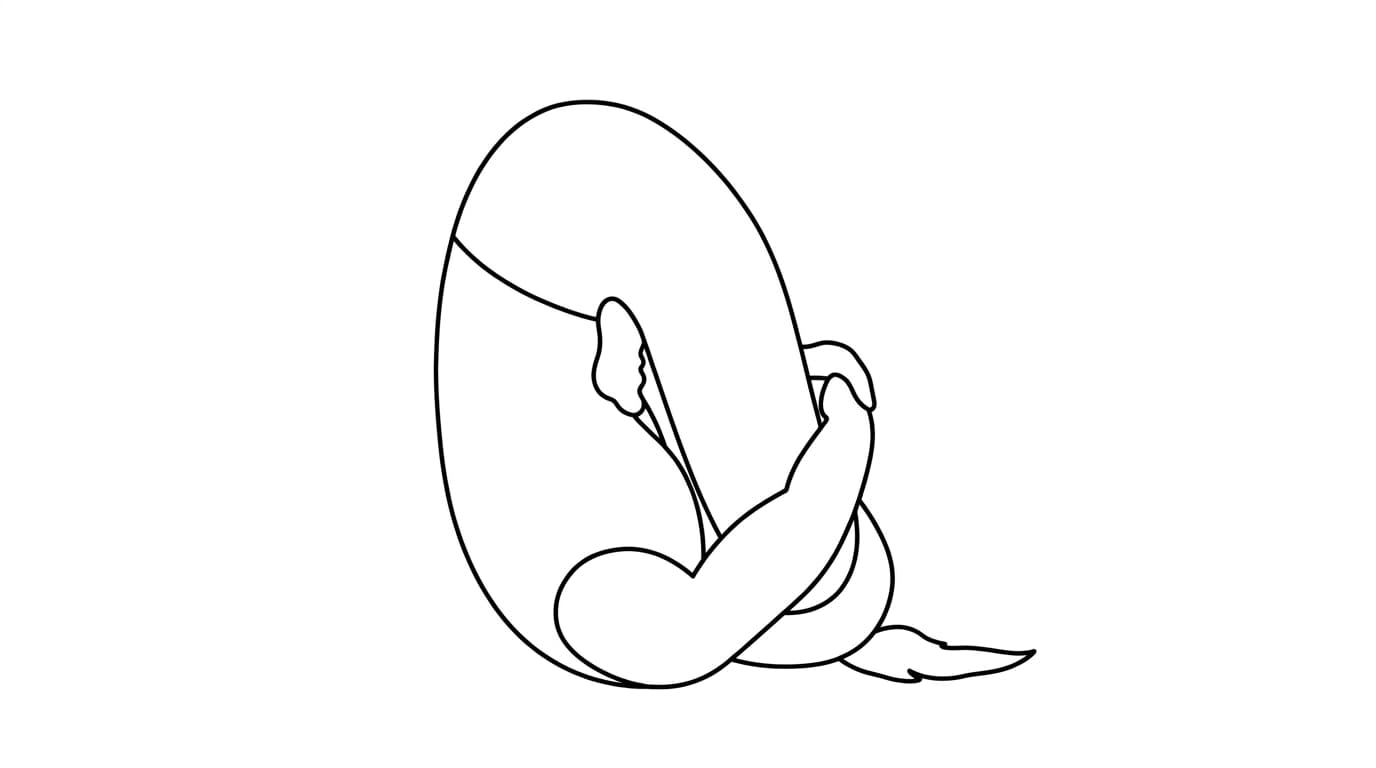
梵文名称Pindasana
练习类型Bound inverted posture
建议级别高级
在舒适的范围内练习本指南仅供一般教育参考,不构成针对个人的医疗建议。如果感到剧烈疼痛、麻木、头晕或呼吸困难,请立即停止。
What is Embryo Pose?
Pindasana is used for a compact, bound posture, often in an inverted context. Variations differ, and shoulderstand or lotus components should not be improvised from text.
How should this posture be approached?
Do not attempt an inverted bind without direct qualified instruction and a clear exit plan.
- Never place uncontrolled weight on the neck.
- Do not force a lotus leg or bind the knees tightly.
- Stop for neck pressure, pain, numbness, dizziness, or breathing difficulty.
- Avoid practicing alone or near hard objects.
What is a lower-demand alternative?
Choose a neutral supine rest or a teacher-approved supported posture that keeps the neck free of load.
Common question: Can I fold into this pose from Shoulderstand?
Do not attempt that transition without direct instruction; this page does not provide an inversion sequence.
参考文献与扩展阅读
这些参考文献提供一般背景信息。它们并不验证本页中的每一项要领,也不能替代合格教师的指导。
- Yoga: Effectiveness and Safety National Center for Complementary and Integrative Health (NCCIH). General context on yoga safety; not pose-specific instruction or endorsement.