
Wide-Legged Forward Bend IV is a named form of Prasarita Padottanasana, with details that vary across teaching methods. Use a stable wide stance, soft knees, and raised supports; do not assume the head, hands, or elbows need to reach the floor.
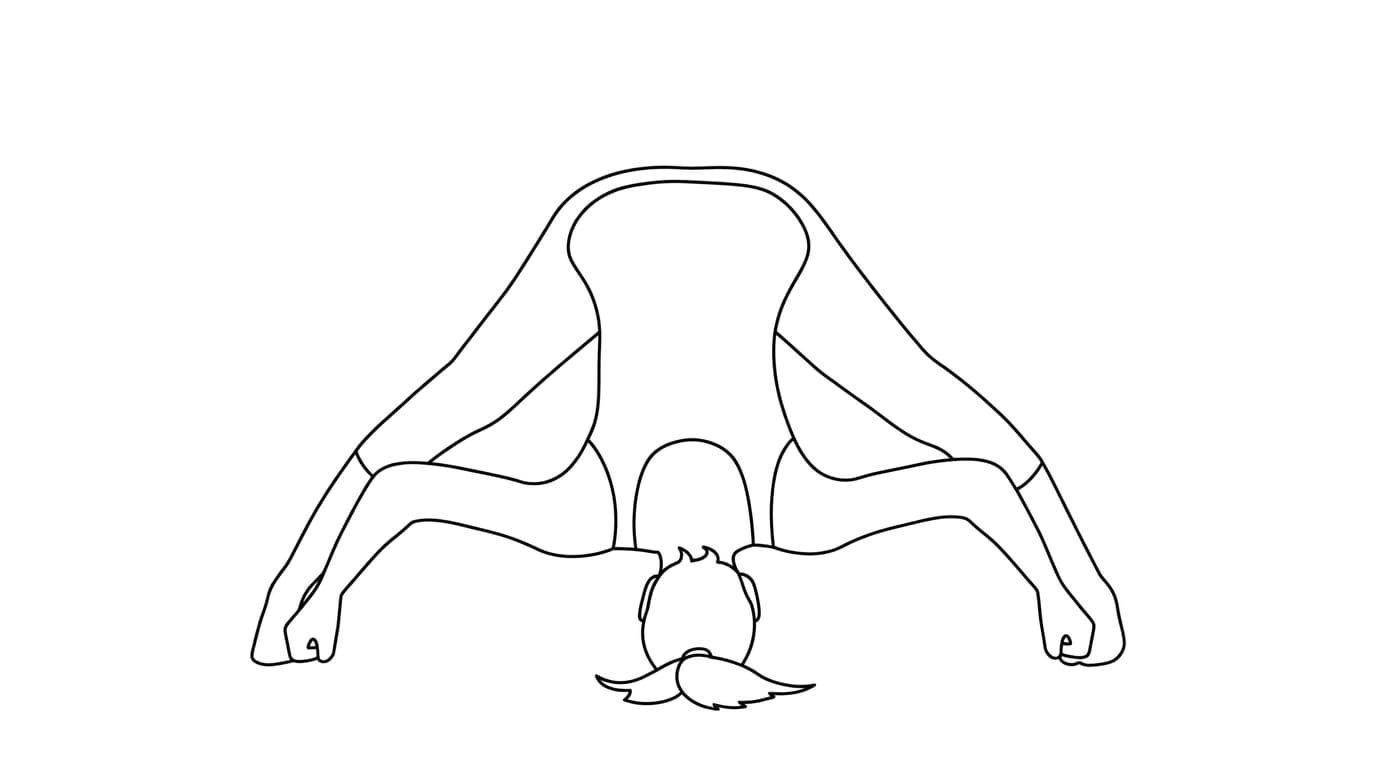
What is Wide-Legged Forward Bend IV?
Prasarita Padottanasana D is one named variation in a family of wide standing folds. The exact arm position should be confirmed with the specific yoga method being followed.
How do you explore the base posture?
Practice a supported, shallow hinge before attempting any method-specific arm position.
- Stand with the feet apart at a width that feels stable.
- Keep the knees soft and place the hands on the hips.
- Hinge forward a small amount and put the hands on blocks or a chair.
- Keep the neck easy and avoid pressing the head toward the floor.
- Rise slowly using the hands at the hips.
How can you modify this variation?
Keep the torso upright, narrow the stance, bend the knees, and omit any bind or deep fold.
When should you stop or modify?
Stop for pain, dizziness, or numbness. This draft awaits source clarification and qualified review.
Common question: Is the deepest fold the goal?
No. A supported range that remains comfortable is the appropriate choice.
参考文献与扩展阅读
这些参考文献提供一般背景信息。它们并不验证本页中的每一项要领,也不能替代合格教师的指导。
- Yoga: Effectiveness and Safety National Center for Complementary and Integrative Health (NCCIH). General context on yoga safety and adapting postures; not pose-specific instruction.