
Upward Plank is a seated reverse-support posture that can load the wrists and shoulders. Begin with a small supported chest lift and knees bent; the hips do not need to rise into a full plank.
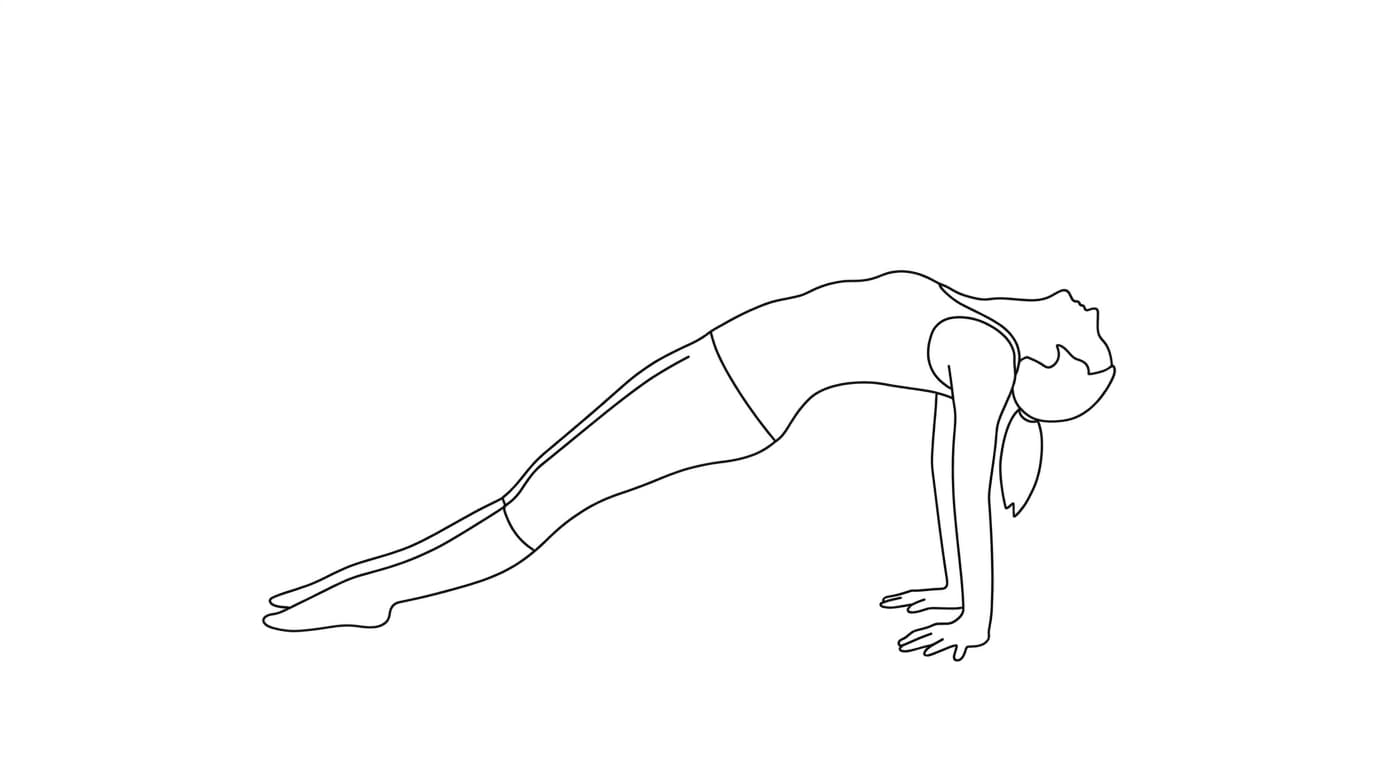
What is Upward Plank?
Purvottanasana is a seated reverse-support posture with the hands behind the body. Full hip lifting can be demanding, and a smaller chest-opening movement is a valid adaptation.
How do you explore a low-range variation?
Sit with the knees bent and feet grounded on a non-slip surface.
- Place the hands behind the hips at a distance that is comfortable for the shoulders.
- Keep the fingers oriented in a comfortable direction and soften the elbows.
- Press lightly through the feet and hands to lift the chest a small amount; hips may remain on the floor.
- Keep the neck neutral and breathe normally.
- Lower the torso before the arms become strained.
How can you modify Upward Plank?
Keep the hips down, bend the knees, place the hands on blocks, or practice a seated chest-opening movement without bearing weight.
When should you stop or modify?
Stop for wrist, shoulder, elbow, or back pain, numbness, or breath restriction. This draft awaits qualified review.
Common question: Do the hips need to lift high?
No. A supported chest lift can be enough.
参考文献与扩展阅读
这些参考文献提供一般背景信息。它们并不验证本页中的每一项要领,也不能替代合格教师的指导。
- Yoga: Effectiveness and Safety National Center for Complementary and Integrative Health (NCCIH). General context on yoga safety and adapting postures; not pose-specific instruction.