
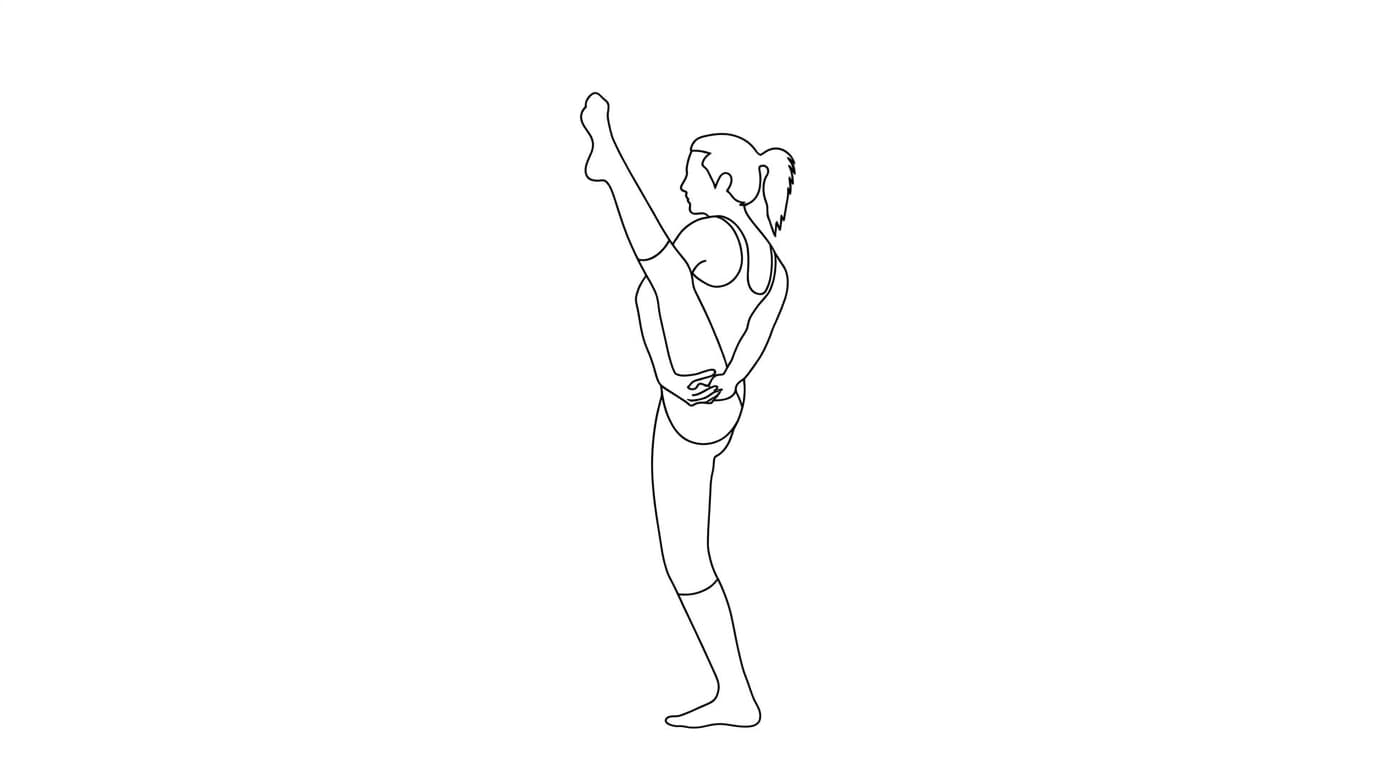
Bird of Paradise combines a bound standing balance with one leg lifted and extended. The bind and balance are advanced and method-dependent; use a wall, keep the lifted knee bent, and learn the full entry and exit directly from a qualified teacher.
What is Bird of Paradise?
Svarga Dvijasana is commonly described as a bound standing balance with one leg lifted. The full shape combines shoulder binding, hip mobility, and balance, so this guide does not teach the complete entry.
How should it be approached?
Learn the bind, transition, and exit in person from a qualified teacher. A written description cannot check whether the shoulder or standing leg is under strain.
- Use a stable wall or chair nearby.
- Keep the lifted foot low and knee bent during any supported exploration.
- Do not yank the arms together or force the leg straight.
- Release the bind before lowering the leg if stability changes.
What is a simpler alternative?
Practice a supported standing balance with hands on a wall, or a shoulder-opening movement without standing on one leg.
When should you stop or seek instruction?
Stop for shoulder, hip, knee, ankle, or back pain, dizziness, or instability. Do not attempt the unsupported full pose without direct instruction. This draft awaits review.
Common question: Is the bind essential?
It is part of many full versions, but forcing the bind is not appropriate; use a supported alternative.
参考文献与扩展阅读
这些参考文献提供一般背景信息。它们并不验证本页中的每一项要领,也不能替代合格教师的指导。
- Yoga: Effectiveness and Safety National Center for Complementary and Integrative Health (NCCIH). General context on yoga safety and balance modifications; not pose-specific instruction.